

Taking accountability means being responsible for your actions, and willing to own the results. In the context of daily habit tracking, we see this play out as self-accountability, which helps you stay honest with yourself. It also means you stop waiting for perfect motivation and start paying attention to what you actually do each day, not just what you planned.
This article explains why accountability matters and how it helps with achieving consistency with habit formation. You’ll also see how tools like Everyday can help by making progress easy to see and simple to log across devices. Let’s learn!
The definition of accountability in daily habit tracking
The term ‘accountability’ refers to ‘the obligation to account for ones activities, accept responsibility, and disclose results transparently’ (Investopedia). So when you hear the word ‘self accountability’, we’re talking about the practice of taking full responsibility for your own actions, choices, and progress without making excuses or shifting blame (Flown), and in habit tracking that’s really important. It’s absolutely not about shame. It is about seeing what really happened. You set a habit, and then honestly check whether you followed through.
Accountability works largely because humans are social. When someone else knows your goals, skipping a habit doesn’t feel like an invisible guilt trip to bear. That awareness makes it harder to shrug the motivation slump off.
People often think that sounds too basic to help, but it usually does. Research shared by George Mason University found that people who wrote down their goals were 42% more likely to achieve them. The same research also found that people who gave weekly progress updates had a 76% success rate. For people who kept goals private, the rate was 43%, a pretty big difference (George Mason University, GroupHabits).
People adhere better when they are held accountable, particularly when they are held accountable to people they respect and who care about them.
That still matters even when someone is working alone. Daily habit tracking creates a quieter kind of self-accountability. A checked box or even a missed day works like a mirror. It shows your effort clearly, which makes it easier to spot what is working and what is not. That is one reason simple tools can be so useful.
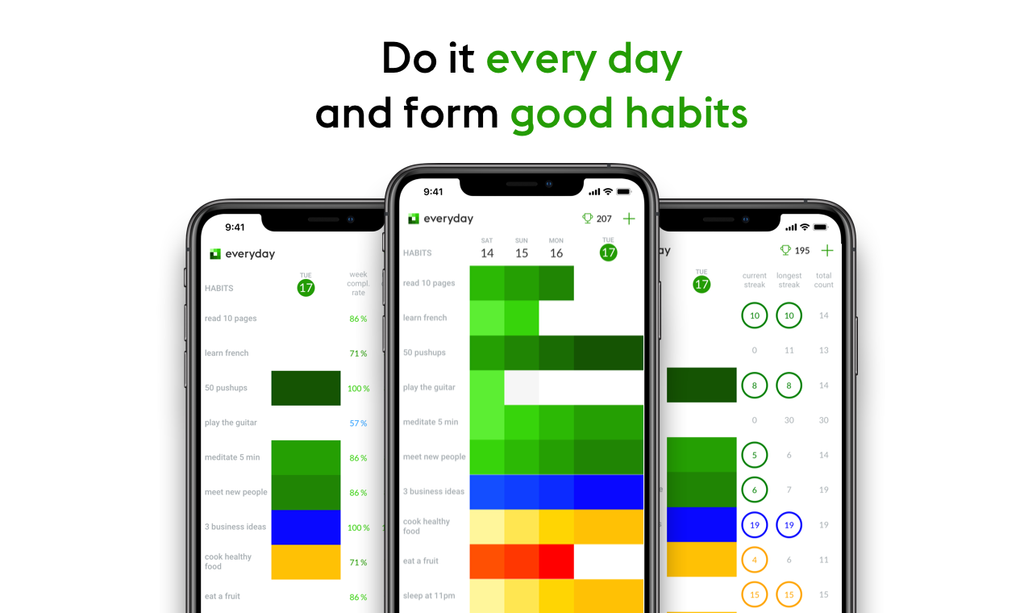
Modern habit tracking apps make accountability much easier to handle. Platforms like Everyday make it easy to visually track consistency over time instead of guessing. It also stays in sync across devices, which helps when routines shift, like checking off a habit late and seeing it carry through. Simple and sustainable.
Self accountability turns goals into visible actions
A goal like ‘get healthier’ doesn’t really tell you much or get you anywhere… but a smaller one like ‘walk for 10 minutes’ does! We call these ‘micro habits’. They lower the mental barrier to getting started. The idea is consistency: effort is minimal, which makes it more likely for you to perform the habit each day, which in turn helps create long-term change for you.
Habit apps are getting more attention for this exact reason: people want structure and a simple way to see progress, even if that progress is very minute. The habit tracker app market was valued at $1.7 billion in 2024 and is expected to keep growing in the years ahead; people are clearly moving towards tools that help them with taking accountability so they can stay on track.
A clean habit board makes it easier to see what is working (and what’s not!). Tools like ours at Everyday support self accountability by keeping habits visible with a beautiful interface, showing streaks, and making progress easy to spot across days. You also get a simple view of how consistent you’ve been. Seeing that strong, vibrantly coloured chain can make it easier to keep the habit going and not lose the rhythm.
New to habit tracking? Start small, but make sure you do it everyday! Track one or two habits – don’t track ten. Keeping it nice and light makes it so much easier to stick with it. You can find out more on that here: Daily Routines: How to Track Your Habits for Maximum Impact and Micro Habits: Small Changes for Big Impact on Daily Productivity. Additionally, How to Build Good Habits When Your Energy Changes Daily offers great advice for adapting your daily habit tracking to different energy levels.
Taking accountability without the self-blame spiral
Real self accountability is just noticing what happened and making a small adjustment; it doesn’t have to be strict or harsh. If you missed a habit, ask why. Was it too big? Was the cue unclear? Maybe your day changed, which happens. Maybe something got in the way of your routine. That’s normal and it’s ok!
James Clear breaks habit design into four questions: making a habit obvious, attractive, easy, and satisfying (James Clear). If a habit feels hard to start, tracking on its own won’t fix much. What helps is a system that works in real life, not just on paper, and that difference matters.
Stop judging yourself. Take your aspirations and break them down into tiny behaviors. Embrace mistakes as discoveries and use them to move forward.
This can help a lot after a missed day. The point is not perfection. It’s making sure one miss doesn’t quietly turn into a pattern. If that feels familiar, there’s more on it here: Daily Habits That Survive When You Miss A Day.

Make accountability part of your daily routine
George Mason University says completion odds can rise to 95% when someone has a specific accountability appointment (George Mason University). You can make checking in with your everyday habit app that appointment - easy peasy.
Pressure is not the point here. Being able to see your progress is. Habits often grow faster when you can see them clearly. Daily habit tracking gives you that view. Self accountability helps you stay honest with yourself, and taking accountability can make it easier to respond with action instead of excuses.
If you’re ready to start and want an easy place to begin, we put together a beginner-friendly 7-day habit formation challenge we think you’ll love, along with a guide on pairing tiny actions for greater impact through habit stacking. It all adds up when it comes to taking accountability. You’ve just gotta do it every day!
Your Questions, Answered
Does taking accountability mean I always have to track my everyday habits? No. Consistency matters more than perfection! If you miss a day, be kind to yourself: just notice it and ask why – don’t punish yourself for it. One missed day doesn’t undo a habit. Just try not to miss two days in a row!
Is there a difference between self-accountability and self-criticism? Self accountability is about acknowledging a situation transparently. Self-criticism is about judging yourself for it.
Can a habit tracker really help with accountability if I’m working alone? Yes, because seeing your progress changes how you relate to it. A visible streak or a logged skipped habit is a record of what you actually did — not what you planned.