
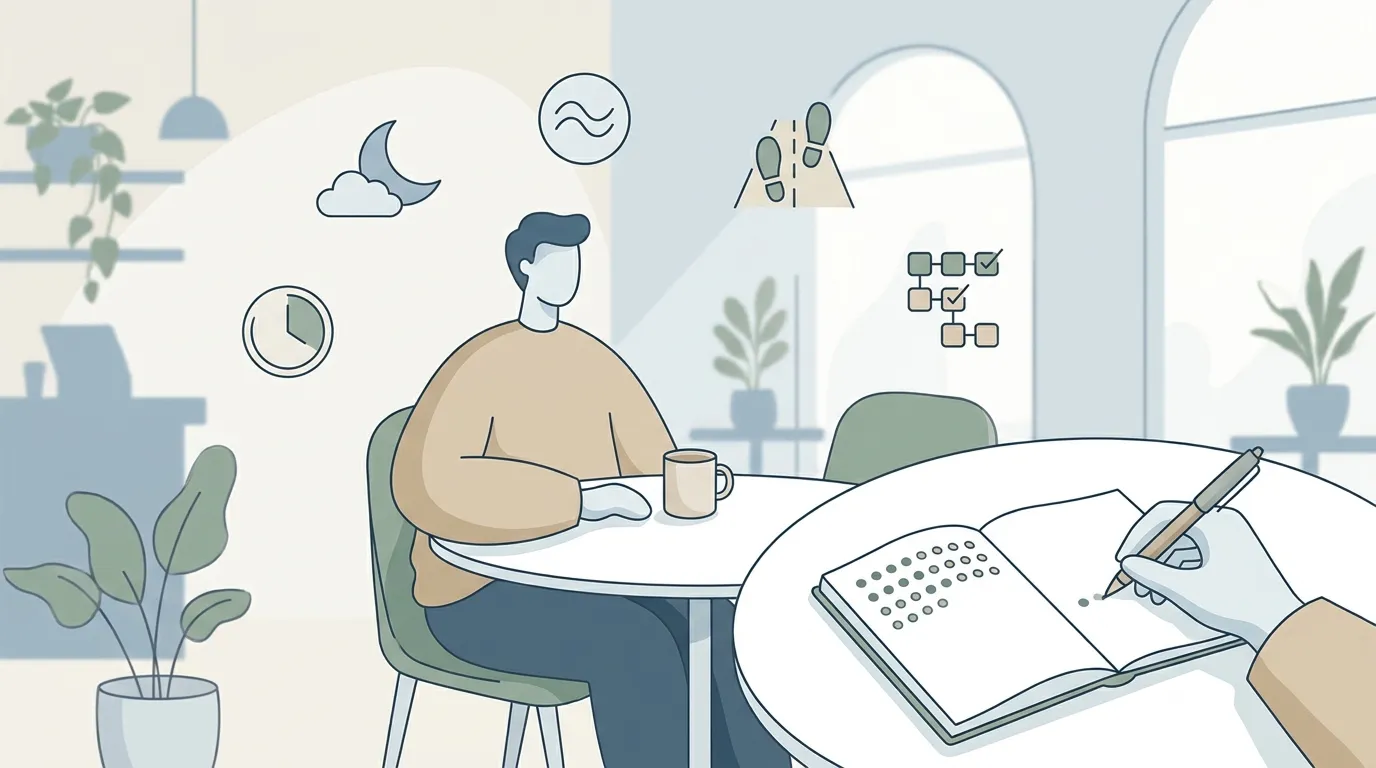
No time? No stress! Here’s the TL;DR: The article suggests that stress reduction works better when it’s based on small, measurable habits instead of broad goals like “relax more".
The research cited – the Mayo Clinic, the CDC and Harvard Health – suggest that mindfulness and better sleep, along with a bit more movement, are realistic ways to lower stress.
The article suggests that you should keep stress-reduction habits small, and offers a simple 7-day routine to help you on your way to successfully reducing your stress and tracking your progress.
Stress is a bit of a tricky beast. One day everything feels manageable. The next, your mind feels full, and even small tasks seem strangely hard. That’s why stress reduction doesn’t necessarily depend on willpower or motivation. It’s more about systems that actually hold up. Real ones. The kind that still work when energy is low or burnout shows up. And these systems matter most on the days you don’t feel like pushing at all.
This guide looks at which stress reduction habits are easiest to measure and why small habits usually work better than big plans. It also explains how to track progress without adding more pressure. You’ll look at mindfulness, sleep, movement, and weekly reflection, along with common mistakes and a few simple ways to stay consistent over time, because that’s often where people get stuck.
Why measurable habits make stress reduction easier
A lot of stress advice is too broad. “Relax more” sounds nice, but it’s very vague. Habits you can measure, or ‘track’, work better because they give you something clear to aim for. So instead of saying you want less stress (and hoping something positive will happen), you can track one minute of breathing, or maybe aim for 7 hours of sleep.
The American Psychological Association says researchers reviewed more than 200 studies and found that mindfulness-based therapy helped reduce stress, anxiety, and depression (American Psychological Association). The Mayo Clinic also says that short bursts of practice can help: just one minute of focused breathing can lower stress levels significantly and help you think more clearly. Ten minutes of mindfulness can also make a clear difference, which is especially helpful on busy days (Mayo Clinic).
Researchers reviewed more than 200 studies of mindfulness among healthy people and found mindfulness-based therapy was especially effective for reducing stress, anxiety, and depression.
Micro habits tend to work well within this context. On a stressful day, a two-minute habit is much easier to keep than a 30-minute wellness routine, and that makes it more likely that you’ll stay consistent.
The best stress reduction habits to track first
You really don’t need lots of new habits. Start with one or two. The best ones feel simple, are easy to notice, and easy to repeat, so they’re easier to stick with.
1. Mindfulness minutes
Keep a note of how long you spend on mindfulness each day. Some days that might be ten minutes, other days barely one – and one is fine. A single, restful minute is a perfectly good place to begin. If the day is shaping up to be a hectic one, a short breathing reset after lunch might be all you can manage, and that still counts!
2. Sleep hours and sleep timing
Sleep is one of the easiest stress-reducing habits to keep track of The CDC recommends that adults get 7 or more hours of sleep and keep a regular schedule to support mental health (CDC). You can track your total hours and also note whether you got to bed close to your target time.
3. Walking or movement blocks
Harvard Health says walking at least two miles a day, or breaking movement into 10- to 15-minute chunks, is far more realistic for a lot of people. It also suggests strength training and stretching two to three times a week (Harvard Health).
How to make each habit easy to measure
Tracking should feel light, not like homework or setting up a lab. The point is just to notice a pattern.
Here’s a simple way to measure stress reduction habits and make it easy for you:
Use yes-or-no logging for daily actions
Keep the daily questions simple:
- Did I do one minute of breathing today?
- Did I walk for 10 minutes today?
- Did I get 7 or more hours of sleep?
For most people, this works better than complicated scoring and feels much simpler. Clear checkmarks lower mental load and make it easier to stay consistent, which helps a lot.
Add one weekly number
Once a week, do a quick stress check-in, and rate it from 1 to 10. That alone can help you spot patterns over time.
A 2025 study in Frontiers in Psychology found that the stress intervention group’s median stress scores dropped from 26.00 before the intervention to 19.00 after it (Frontiers in Psychology). You do not need to use that exact scale in daily life. A simple weekly personal rating can still show if your habits seem to be helping.
Use anchors
Habit stacking works well here. Link your new habit to something you already do, since that makes it easier to start:
- After brushing your teeth, do one minute of breathing
- After lunch, walk for 10 minutes
- When you plug in your phone at night, start your sleep routine
What progress really looks like over time
Stress reduction rarely looks dramatic. It usually shows up in quieter ways.
On a busy morning, you may notice that you react less sharply, even if it is easy to miss. Maybe you fall asleep a little faster. Or things stop feeling equally urgent all the time.
The mindfulness practice we mentioned earlier is a good example. One peer-reviewed review found that mindfulness meditation had a moderate effect on sleep quality, with even stronger effects at follow-up months later (PMC).
Research shows that mindfulness is a simple and practical way to lower stress, improve focus and support overall health.
Real progress also includes imperfect days. Missing once does not erase what you have built. The bigger risk is missing twice and falling out of the pattern. Systems with reminders and visible progress can help you avoid that. If a calmer approach sounds useful, this is covered here: How to Track Habits Without Stressing Yourself Out.
Common mistakes to avoid:
- Starting with too many habits at once
- Making the habit too hard early on
- Tracking too many details
- Treating one missed day like failure
- Reviewing your progress with judgment instead of curiosity
Tools and trends that make stress management more measurable
It’s getting a lot easier to track stress-related habits nowadays. Instead of trying to measure stress itself, tools now focus on the behaviors around it, like sleep duration, daily movement, bedtime consistency, and recovery patterns.
That change also works well with habit tracking. Rather than asking, “Am I less stressed yet?” you can look at questions that are easier to answer and more useful from week to week:
- How many days this week did I walk?
- How often did I get 7 hours of sleep?
- How many times did I do a mindfulness session?
- Did I keep my bedtime consistent?
Apps built around pure performance often raise stress over time. Tools focused on simply showing up are usually easier to live with and often support mental resilience, too.
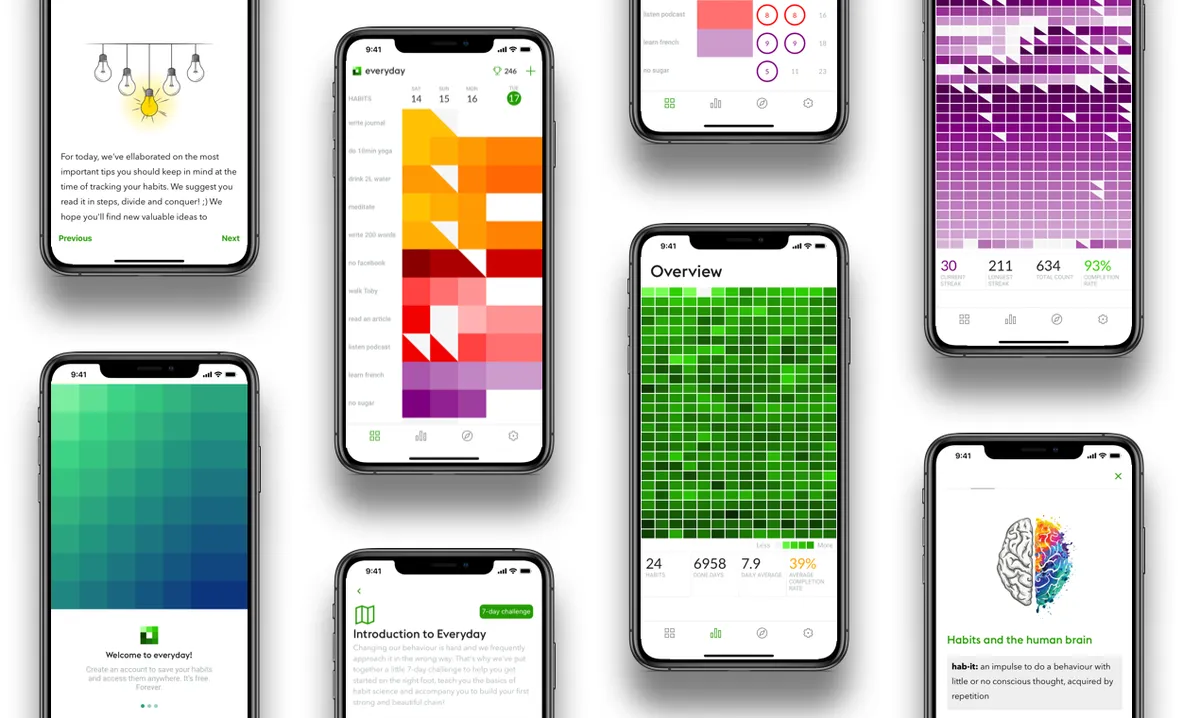
Simple habit apps have become more popular for that reason. Research shows people who feel supported are twice as likely to report lower burnout, and a habit tracking app can be a low-pressure option. It remembers habits for you, giving your brain a short break when your mental load is already at capacity. Everyday was built to do exactly that!
Want a low-stress habit tracking app?
A simple 7-day plan to start now
If you want structure, try this one-week plan. It’s simple, easy to begin, and you can start now.
Day 1-2
Pick one small habit and keep it easy.
- 1 minute of breathing
- Lights out at the same time every day (yes, every day)
Day 3-4
Add a reminder to help.
- After breakfast
- After lunch
- Before bed (easier to remember)
Day 5
Right after you do it, track it - don’t wait.
Day 6
Rate your stress from 1 to 10 – just trust your gut.
Day 7
Take a minute to look back at the week. Ask:
- What helped?
- What got in the way?
- Does the habit need to be smaller?
If rough seasons make things harder, Stress Reduction Habits That Survive Burnout can help you keep habits going when energy is low, which happens. It’s really helpful.
Questions people usually ask
How many stress-reduction habits should I start with?
One habit – maybe two – is plenty when you’re starting out. Keeping it small makes it easier to get started, and helps prevent overwhelm.
What if I miss days when tracking habits?
Missing days happens, and that’s okay. Get back in there and try not to let guilt overtake you. Just make sure you avoid two days in a row!
What habit is easiest to start to reduce stress?
Breathing habits are often the easiest; even one minute of slow breathing can help you get started, and it’s easy to do.
Can micro habits really lower stress?
Yes. Even one minute of focused breathing or ten minutes of mindfulness is helpful.
Is sleep really part of stress reduction?
Absolutely. Sleep affects so many things: mood, focus, recovery, emotional control. The CDC recommends 7 or more hours of sleep per night, along with a steady, predictable schedule.
Do I need an app to track stress reduction habits?
Paper can work. But if you want easy access wherever you are, streaks, reminders, and a clear, beautiful visual board, Everyday is the perfect habit tracker to support consistency without added stress.
Put this into practice this week
A stress reduction plan only helps if it still works on a tired Tuesday, which is usually the real test. So keep it small, measurable, and easy to stick with – nothing complicated.
Choose one habit today – whatever feels doable right now. Track it for seven days, then look back at what changed. Was your focus a little better? Did evenings feel calmer? Did your stress score go down at all?
The most helpful idea here is that stress reduction doesn’t need a perfect system. It often works better when the system is kind, and honestly, that detail matters more than most people think. That kindness shows up when a setup plans for low‑energy days instead of pushing against them.