
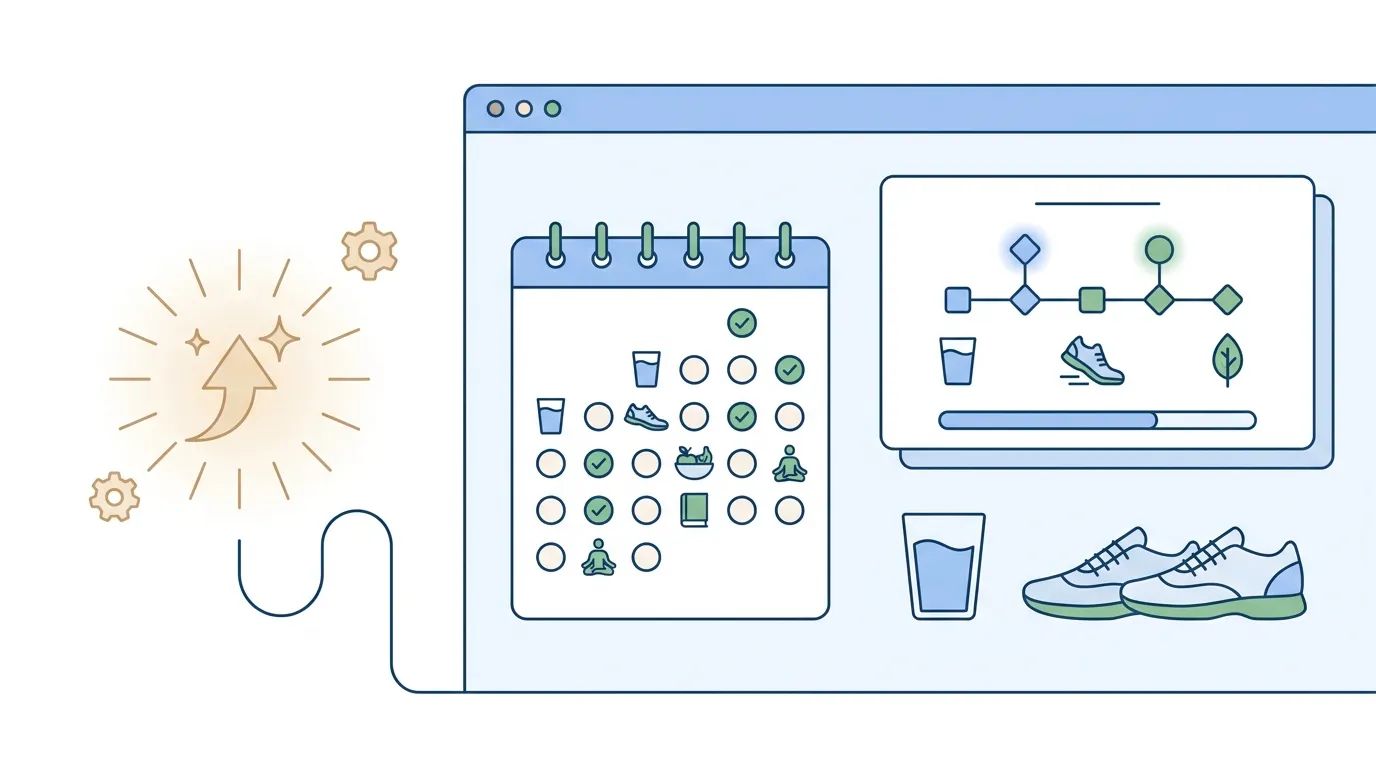
If you want better healthy habits, this guide helps you choose an approach that fits: motivation, self discipline, or some mix of both. If you’re short on time, here’s the lowdown: motivation helps you get started on building healthy habits, but self discipline does more of the work when it’s time to put in the effort and show up. The goal is to rely less on both options by turning repeated actions into habits. That’s what makes consistency easier later on down the track, not just for a few days at the start.
Most people don’t miss their goals because they never had any. The bigger issue is depending on feelings that can change from one day to the next. One morning, everything clicks and you feel ready. The next, you don’t. If a routine only works on days when you feel inspired, it usually won’t last.
This mini-tutorial shows you how to use motivation to start and self discipline to keep repeating the behavior. It also goes through building a system that makes good choices feel easier over time. Ready? Let’s go!

Before you start
Here’s what to have ready before building better habits:
- One habit to work on: pick just one. Anything from a 10-minute walk to reading one paragraph of a book – as long as it feels small and easy to do
- A clear daily cue: connect it to something that already happens every day, like brushing your teeth, making coffee, opening your laptop, or another regular part of your routine
- A way to track progress: paper, a notes app, a spreadsheet, or a habit tracker can all work, as long as it’s something you’ll actually use
- A realistic timeline: habit formation often takes a lot longer than 21 days. A common benchmark is about 66 days on average (American Scientist)
- A beginner mindset: keep the habit small enough that you can still do it on a tired day, even when you don’t have much energy or motivation
Our top tip: Starting with five habits at once almost always makes it harder. One is enough!
Step 1: Decide what you actually need, a spark or a self discipline system?
Start by asking one question: Do you struggle more with starting, or with staying consistent?
If you have lots of excitement at the beginning but stop after a week, your issue isn’t actually motivation. It is lack of structure. Motivation gives you energy, sure, but it comes and goes. Self discipline, on the other hand, helps you act even when the endorphins are gone!
Habits are like frozen self-discipline, automatic self-discipline
So here is your first action:
- Write down one habit you want.
- Write why you want it in one sentence.
- Write what usually stops you.
- Decide if the main problem is starting or repeating.
Step 2: Pick a tiny healthy habit and make it smaller
Pick the smallest version of the habit.
If the goal feels too big, it starts to take a lot of effort every day, and that gets old fast. That usually does not lead to a system you can keep up with. A better option is to make the habit feel almost ridiculously easy, on purpose.
Use these exact examples:
- Instead of ‘work out every day,’ choose put on your walking shoes and walk for 5 minutes
- Instead of ‘eat healthier,’ choose eat one piece of fruit with lunch
- Instead of ‘meditate daily,’ choose take 3 slow breaths after sitting down at your desk
- Instead of ‘sleep better,’ choose put your phone away 15 minutes before bed (or at the very least, put it on airplane mode!)
Smaller actions work because they lower resistance. They are easier to start, which makes them easier to do again. That is the idea behind micro-habits and habit stacking, two approaches that help keep things manageable. Make the next step clear and easy. More on that here: How to Form New Habits: For Beginners Who Hate Routines. You can also explore Mini Habits: The Science Behind Starting Small for Big Changes for more examples of tiny repeatable actions.
Use this rule
On a bad day, make the habit so small you can still do it, even if it’s just a little.
Exact action
Write your habit like this:
After I do X, I’ll do Y for 2 minutes or less.
Example: After I brush my teeth, I’ll stretch for 30 seconds.
Step 3: Attach the habit to a cue you never miss
Self-discipline feels easier when your habit is tied to something already built into your day. Instead of trying to remember it from scratch, connect it to an action that already happens on its own.
Good anchor cues include:
- brushing your teeth
- making coffee or tea
- sitting at your desk
- eating lunch
- getting into bed
- opening your laptop
This is called habit stacking. The old habit becomes the reminder for the new one, so each repetition feels less like starting from zero.
For example:
- After I make coffee, I will drink one glass of water
- After I eat lunch, I will walk for 5 minutes
- Once I open my laptop, I will write my top task for the day
- After I brush my teeth, I will do 10 squats
Our top tip: Choose a cue that usually happens around the same time each day. “When I feel motivated” does not count as a cue.
Common mistake: making the stack too long. Keep it to one cue and one action. That is enough.
There is more on this kind of routine design here: Why Are Habits Important? Automate Behaviors & Save Mental Energy Now
Step 4: Use self discipline in the right way
Self discipline isn’t about being hard on yourself. It’s about sticking to a clear rule, even when your mood shifts, which it will.
A good rule here is: do the minimum version no matter what.
That means:
- still do 5 minutes, even if you skip the full workout
- still read one page, even if you can’t read a chapter
- still log the habit when the day feels messy
- keep the habit going in some small way
Being consistent usually matters more here than going all in once in a while. And long-term research suggests self-control is tied to real-life results far beyond a single habit. In a 40-year study discussed by American Scientist, people with stronger self-control early in life had better adult outcomes with money, health, and behavior, which is pretty striking.
Self-discipline is self-caring.
Think of discipline as support for your future self, not punishment.
A common mistake is trying to “prove” discipline by making the habit harder. But harder doesn’t mean better. It usually makes the habit more difficult to repeat, and that’s where people often get stuck.
Step 5: Track the behavior, not the result
Tracking gives you proof that you showed up. It pulls your attention away from big outcomes and back to actions you can actually repeat, which is the part that matters here.
A simple yes-or-no check each day is enough:
- Did you walk for 5 minutes?
- Did you put your phone away – or at least on airplane mode – before bed?
- Did you drink water right after waking up?
- Did you do the habit you planned?
That’s enough. Really.
Habit tracker tools keep getting more popular for a pretty simple reason: people like having a record they can see. Market forecasts point to solid growth in habit-tracking apps, and a big part of that comes from accountability, reminders, and streaks instead of trying to trust memory on its own (Straits Research).
For a low-friction option, Everyday keeps things simple with beautiful visual streaks, reminders, and syncing across devices. It’s clear and easy to use, and that can help if more consistency sounds good but turning your routine into a whole project does not.
A few tracking rules:
- Log the habit right after you do it.
- Track daily for at least 2 weeks before changing anything.
- If you miss one day, no worries – just focus on not missing two.
- Review your streak once a week instead of checking it every hour.
If progress tracking tends to make you overthink, there’s more on that here: How to Track Habits Without Stressing Yourself Out
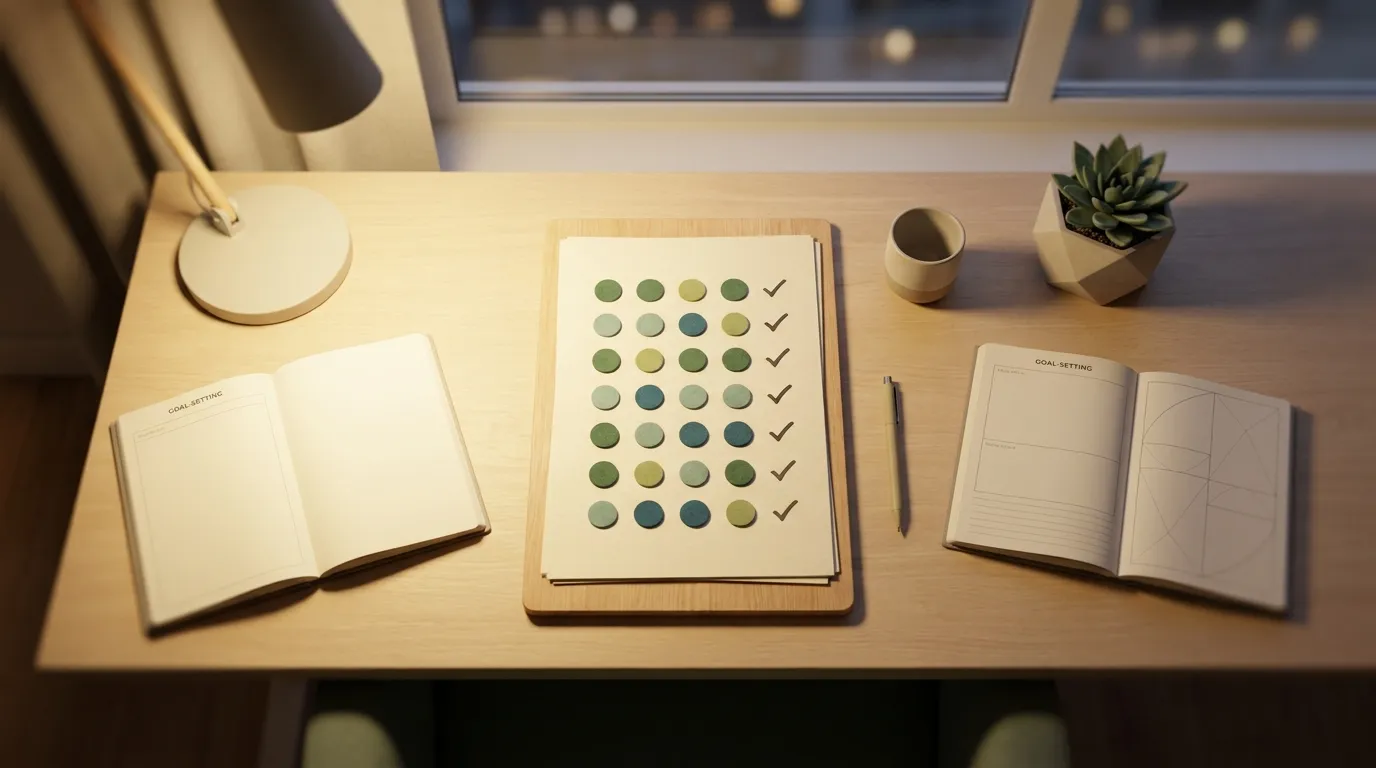
Step 6: Plan for bad days before they happen
Your system only really counts if it still works when you’re tired, busy, stressed, or, dare we say it – bored.
So set up a backup version now, you’ll be glad you did.
Use this exact format
- Normal version: walk 20 minutes after lunch
- Low-energy version: walk for 2 minutes or stand outside
- Normal version: cook a healthy dinner
- Low-energy version: eat a simple protein plus fruit
- Normal version: no phone for 1 hour before bed
- Low-energy version: phone off 15 minutes before bed
This also matters for physical and mental health. Regular movement can help lower the risk of depression and anxiety, which matters a lot. It also helps with thinking and learning (CDC). Even very simple habits still count. They help keep your routine going, so it doesn’t fade out. If this is something you struggle with, How to Build Good Habits When Your Energy Changes Daily has more practical examples to consider.
Our top tip: Build for real life, not an ideal version of it.
FAQs on motivation, self discipline and habit tracking
Is motivation or self discipline better for healthy habits?
Motivation gets you to the starting line. It’s useful there, and it is not reliable much beyond it, because the feeling that made Monday easy has usually gone by Thursday. Self discipline is what you fall back on then. Start with one, continue with the other.
Can you build healthy habits without feeling motivated?
Yes, and a habit that needs motivation isn’t really working yet. Make it small. Attach it to something you already do. Track it somewhere you’ll see. Then the low days cost you almost nothing.
What is the biggest mistake people make with self discipline?
Making the habit too big, then trying to force it. Anything that takes real effort every single day is one bad week away from collapse. Shrink the action until it survives a bad week.
Do habit tracker apps really help with consistency?
They can, especially when they stay simple. A tool like Everyday can help you see streaks, log quickly, and notice when a routine starts slipping.
What should I do if I miss a day?
Don’t treat it like failure! We forbid it :) Just return to the habit the next day, even in the smallest version. Missing once is normal. Missing twice in a row is where habits often start to slide. You can also read Daily Habits That Survive When You Miss A Day for more strategies on getting back on track.
Put this into practice this week
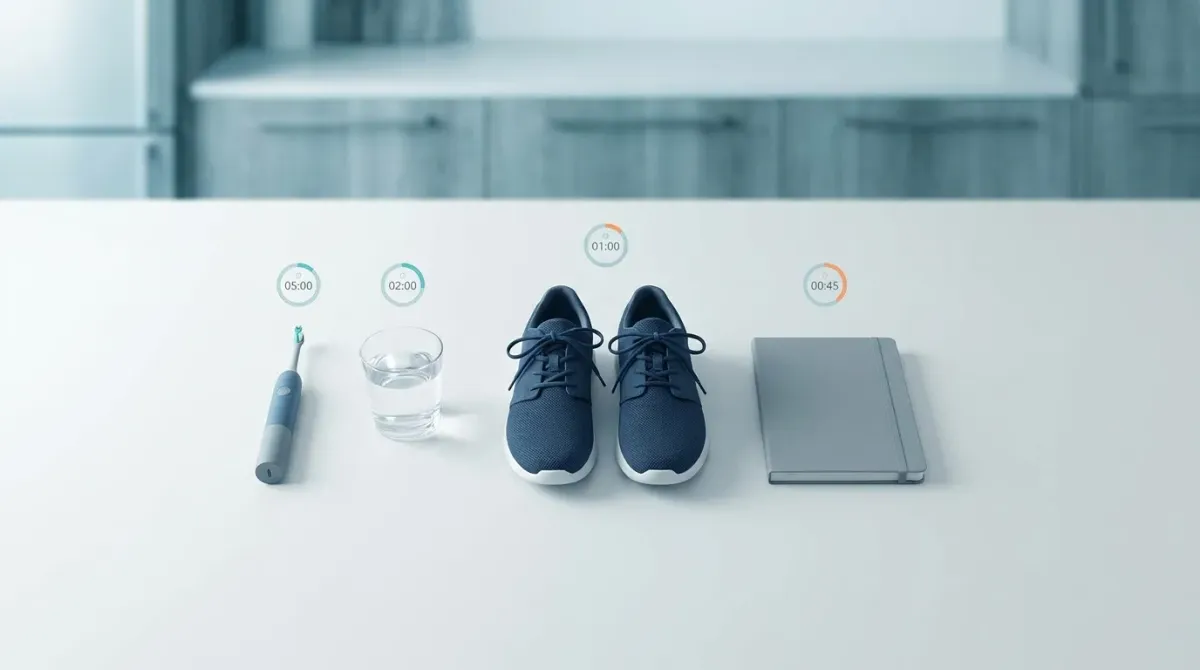
So what works better for healthy habits: self-discipline or motivation? Motivation helps you start, but self-discipline is what gets you to come back tomorrow, and the day after that. After a while, your dialled-in habits start doing the work for you every day. That’s how people stop relying on perfect moods. Real routines usually look more like this: not fancy, just easy to repeat.
Want to go a little deeper after this? The Power of Keystone Habits: Transform Your Daily Routines is useful if you want to learn how one habit can shape the rest of the day. Our article on Common Habits Of Successful People gives examples you can borrow and try.
You don’t need a new personality; just one small action you can keep repeating. Start there today, and keep it small. Every day!