

Self-development usually starts with a promise. Wake up earlier. Study more. Stop letting stress run the day. Stay organised, this time for good. Then real life barges in, and the whole plan falls apart. Sounds familiar, right?
Habit tracking helps here because it closes the gap between what you mean to do and what you actually do. Instead of holding a big, vague goal in your head, you break it into something small enough to do today, maybe even right away… then do it again tomorrow. Repetition then builds the habit.
A good goal tracker isn’t only a list you feel guilty about ignoring. It shows you what you actually did, and that feedback changes behaviour over time. Students building study routines, professionals protecting their few focused hours, people working on sleep or stress or simply feeling less scattered… tracking helps when motivation drops, which it does for everyone. The aim isn’t a perfect week. It’s a system that keeps working regardless.
Digital tools have become central to how people manage this. The habit tracker app market reached USD 1,281.2 million in 2025 and is still growing (WiseGuy Reports). This guide looks at how to use a morning routine checklist, protect your focus time, find the best habit tracker app for how you actually live, and make progress that sticks.
Why smart self development starts small
Most people fail at self-development because the goals they set are too big to act on. “Get healthy” sounds good until 7:10 a.m. on a busy Tuesday, when it means nothing practical at all. Shrinking the goal helps more than refining it. Drinking water after waking up, reading one page before bed; these mini habits feel almost too small to bother with, which is why they work. The bar is low so you actually get the thing done!
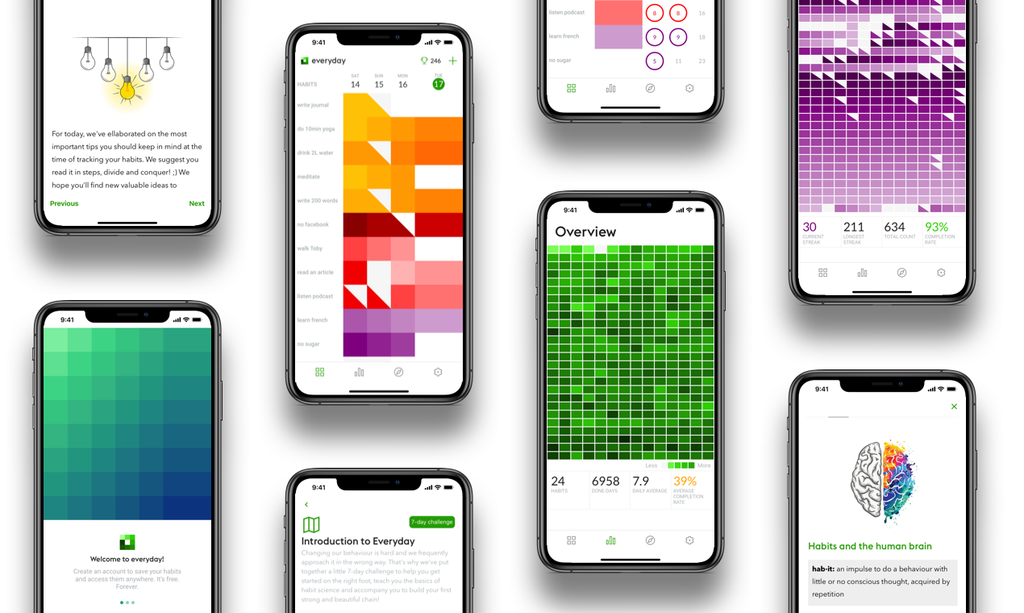
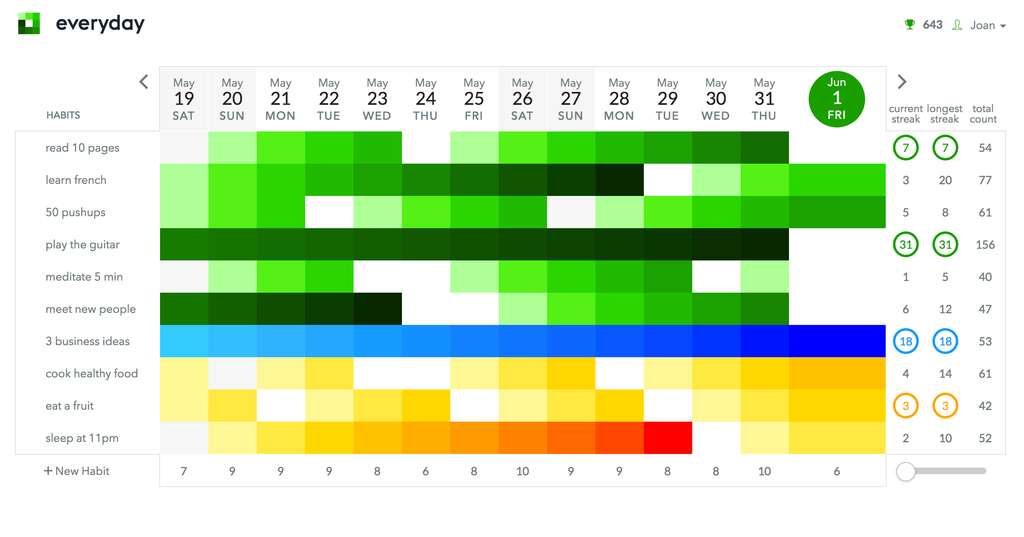
A habit tracker app like Everyday supports that process. It keeps daily actions visible, and watching a streak build makes the effort feel real. Miss a day and a simple system helps you start again rather than abandon the whole thing. You get something concrete to check, so progress is visible rather than assumed.
Habits are the compound interest of self-improvement.
Small actions don’t look like much on a single day. That’s usually when people stop. But a short term goal takes how long to achieve exactly? Sixty-six days is the figure researcher Dr Phillippa Lally cites before a behaviour starts feeling automatic, though it shifts depending on the person and the habit, sometimes significantly. Some get there faster, some take longer. The figure matters less than showing up often enough to find out.
If you want a closer look at daily progress systems, there’s more in this guide on goal setting vs goal tracking and in Habit Loops Explained: How To Make Goal Tracking More Effective.
 ve
ve
Build a morning routine checklist for self development and protect your focus period
A good morning routine checklist should be short enough to finish even on a hard day, not just when everything goes right. That usually means 3 to 5 actions at most. Keeping it simple makes it easier to do again:
- Make the bed
- Drink a glass of water
- Stretch for 2 minutes
- Review your top task
- Start one focus period
This kind of checklist lowers mental load because there’s less to decide in the moment. You follow the list and keep going, which makes the routine easier to stick with over time.
Focus time works the same way. Plenty of people set goals, but the work never gets put on the schedule. A focus period helps fix that. For example, a student might track one 25-minute focus period. A professional might log 45-minutes of focus time before opening their email. A wellness user might set aside 15 minutes for quiet breathing or journaling, then go through their morning routine checklist.
Research suggests self-improvement is part of how many people spend both time and money. Americans spend about $176 per year on self-improvement and around 2.5 hours each week on personal development (ZipDo). Gen Z now also makes up 28% of self-help book sales, up from 19% in 2019 (ZipDo).
If routines still feel messy, there’s more help here: daily routines: how to track your habits for maximum impact and How to Build Habit Tracking Into Your Wellness Routine.
What to look for in the best apps for goal setting
The best goal-setting apps don’t need to do much. What helps most is being able to track progress without barriers, notice habits more easily, and avoid apps that pile on the judgement and extra guilt when life gets busy.
Here’s what actually matters:
- Easy daily check-off
- A clear streak view
- Flexible reminders
- Cross-device sync
- Space for a goal tracker and repeat habits
- Support for focus time or a planned focus period
Support for focus time stands out even more now. People want tools that help them actually do the work, not just plan it. Market analysts also point to strong growth in habit apps, since many users want mental wellness support and self-improvement tools together in one place, which makes sense.
The Global Habit Tracker App Market is poised for significant growth with an expected CAGR of 10.6% from 2025 to 2035, driven by increasing awareness of mental health and self-improvement.
That is part of why Everyday is one of the best goal tracking apps for modern self development. The process stays simple: take a big goal, break it into small repeated actions, and track them somewhere you’ll notice. Then do it again. And again. Yep, everyday!
More on that here: Best Apps for Self Improvement: Your Ultimate Guide, Best Habit Tracker Apps for Mental Resilience and Stress Reduction, and Habit Tracker Ideas: What to Track (and How to Stick With It).

Put habit tracking to work every day
A self development plan only helps if it’s easy to repeat, so start with one habit instead of ten (seriously, just one). Use a morning routine checklist that feels simple to follow, and add a daily focus period. Track the action itself, not just the goal.
82% of high-performing professionals attribute their productivity improvements to self-improvement practices, such as time blocking and goal setting.
It should feel encouraging, not stressful or perfect. What really helps is something that makes it easier to show up everyday. A simple habit tracker app can make progress easier to see and cut friction, which matters most when motivation starts to fade (that’s the hard part). Real self development happens one small checkmark at a time.
If you’re looking for the best habit tracker app for self development right now, start with the Everyday habit tracker. Download the app at https://everyday.app/ and try up to three habits today – completely free. Tick off that first day of habit tracking, and repeat. Every day!