TL;DR: Trying to grow without burning out? Spending time on personal development and wellness is not a reward after productivity!
Habit trackers, task capture, calendars and reflection all work – but only if each one fixes a real bottleneck instead of adding clutter. Choose tools that stay visible and still function on a bad day. Then start with one behaviour, one tool, one anchor, and review after a week: keep it or simplify it.
If you want your life to improve without turning every day into a self-optimization project, the tools worth having are the ones that take friction out. They make it easier to hold on to what matters and easier to see that you’re getting somewhere, without demanding much from you in a week that’s already going badly. That last part is what decides whether you keep the system or drop it. And the point of wellness isn’t only how you feel today – it’s whether the rest of your life runs better as a result.
This guide looks at tools that genuinely support personal development, from habit trackers and planning systems to focus aids and reflection practices. Useful stuff, really. It also shows how to choose tools that fit your energy, your schedule, and your real life instead of someone else’s ideal morning routine.
Why wellness now belongs inside personal development
Personal development is usually framed as a discipline problem. In practice it’s more often a design one. When your desk is buried, your reminders are scattered and your goals live across half a dozen apps, good intentions don’t stand much of a chance.
Behaviour follows environment more than it follows motivation. That’s the case for decent productivity tools: they cut friction, and they cut the number of small decisions you have to make in the moment – which is where most systems come apart.
Wellness fits into this because energy works like infrastructure. Sleep, movement, calm, and a fairly steady routine are not rewards you get after becoming organized. They are often part of what makes organization possible in the first place. The most helpful tools support performance while still leaving room for recovery, instead of keeping the pressure on constantly.
A simple way to look at it:
- Personal development is the direction you want to grow
- Productivity tools give that growth structure and make it easier to keep doing
- Wellness practices help keep everything sustainable over time
- They also help the whole setup stay steady in real life
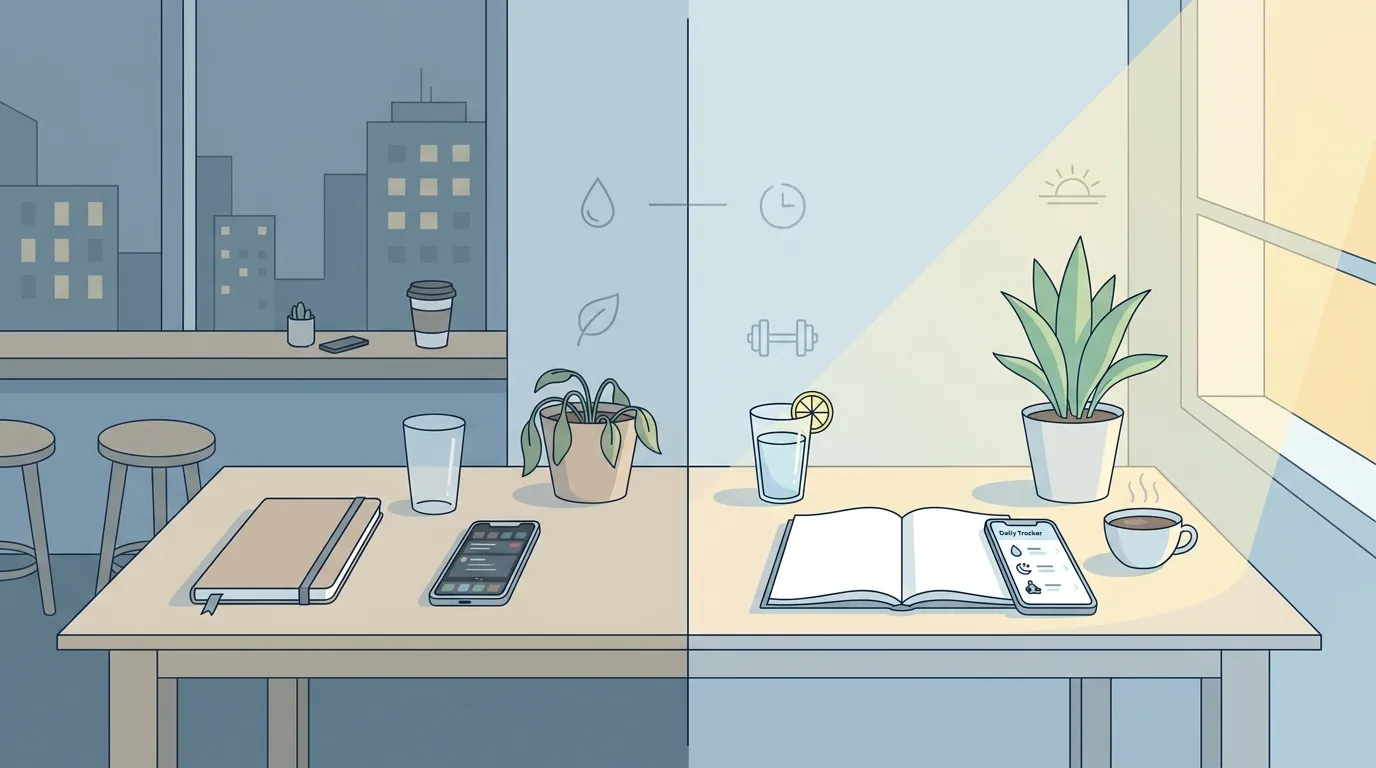
When all three are built together, progress usually feels steadier and much less fragile.
The most useful personal development tool categories for real-life growth
Not every tool really earns a place in your routine. Plenty promise big change, then leave you with more admin than action, and that gets old fast. The best ones usually fit a few practical categories, the ones that, in most cases, really help.
1. Habit tracking tools
Habit trackers help you see progress without adding complexity. They shift attention away from vague ambitions like “be healthier” and toward something repeatable: walk for 10 minutes, read one page. And a simple visual streak is often enough to carry a small behaviour through a low-motivation day.
If you want a calm, beautiful cross-platform setup, Everyday is a perfect example of a minimalist habit tracker – daily actions stay visible on mobile, web and in the browser.
For a deeper look at habit-based growth, Self Development The Smart Way With Habit Tracking connects really well with this approach.
2. Task capture tools
These help clear mental clutter from your head, which often matters more than it first seems. If you keep worrying you’ll forget things, your attention gets worn down before you even start, and that’s pretty common. A simple to-do list or inbox system can help protect your focus. Small shift.
3. Calendar and time-blocking tools
These help when the real issue is not knowing when a habit or task will happen, which is really common. A routine often feels more doable once it has a set time and place, like 7 a.m. at your desk. It usually feels much easier that way.
4. Reflection tools for personal development
Journals, note apps, and weekly review systems help people spot patterns, which is honestly really useful. They’re often the missing layer. In personal development, doing more usually matters, but so does noticing what actually works for someone and what probably doesn’t.
If a closer look at small, repeatable changes sounds helpful, this article on micro habits pairs really well with a tool-based approach.
How to choose personal development productivity tools without overwhelming yourself
One of the biggest mistakes people make is taking on too many tools at once. You might choose a planner, a meditation app, a goal tracker, a focus timer, and a journal app over one weekend. Then by Wednesday, they are wondering why none of it lasted. Hmmmmmmm ;).
A better way is to fit the tool to the specific bottleneck. It is simpler, and usually a lot easier to stick with.
Ask one simple question first
What keeps going wrong right now?
- If you keep forgetting your habits, a tracker usually helps.
- When your brain feels overloaded, a capture tool can take some pressure off.
- If your day keeps getting hijacked, putting things on a calendar often helps.
- If you repeat the same mistakes, a reflection system can make patterns easier to notice.
That probably sounds obvious, but it is very easy to skip, and that happens all the time. Personal development usually works better when each tool fixes a specific problem instead of just signaling a vague urge to “get it together.”
That is also why simple tools often work better than feature-heavy ones in real life. Every extra choice adds friction, and even small bits of friction can make a noticeable difference quickly.
A practical selection checklist:
- Can you use it in under a minute?
- Does it make progress visible?
- Will it still help on a bad day?
- Does it work across the devices you already use?
- Is it simple enough to keep up for months instead of only a few days?
Building a personal development stack that actually works
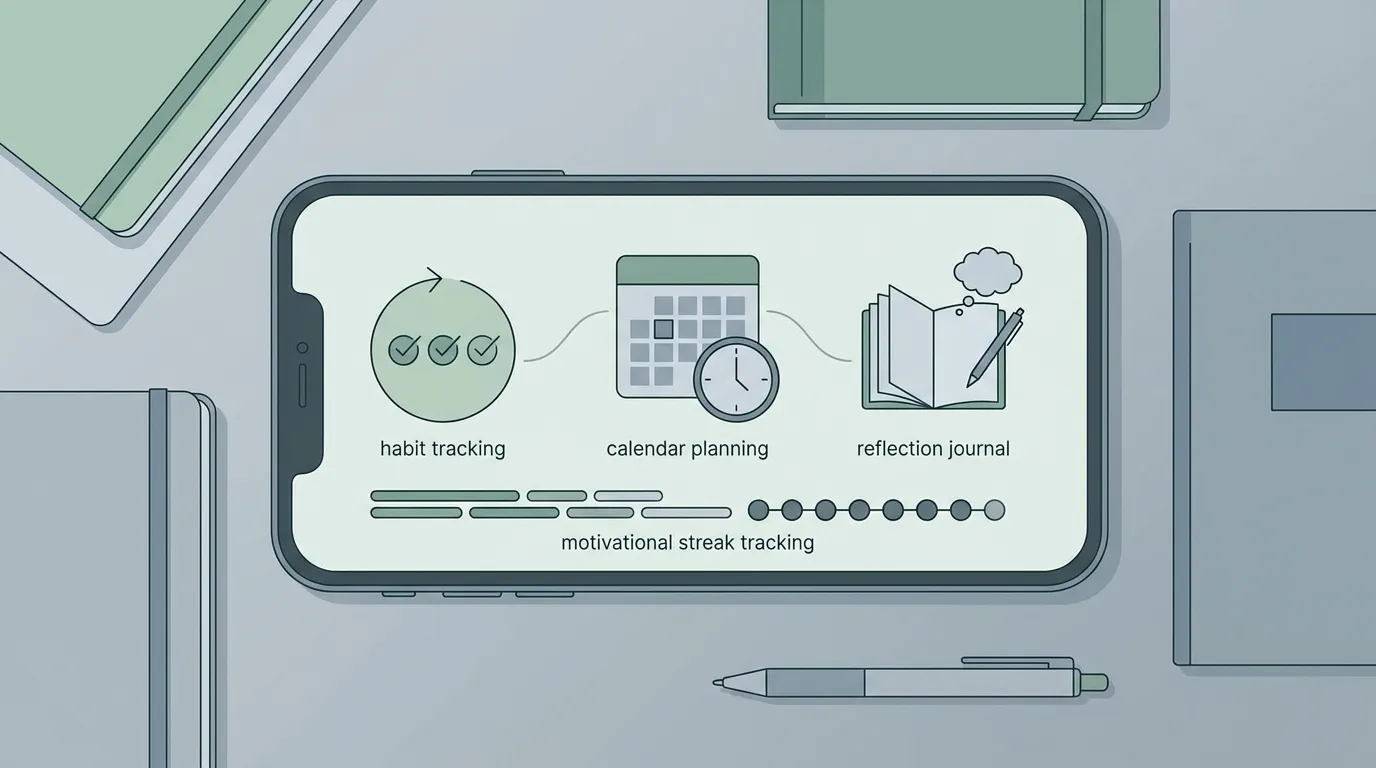
You probably won’t use a huge system, honestly. Most people usually do better with a small personal development stack built around four layers: track, plan, review, and reflect, because that usually works better in real life.
Track a few daily actions
This is your consistency layer, so keep it tight, seriously. A hydration goal, a short reading habit, and a shutdown routine can be enough to change how your week feels, honestly. It’s simple stuff, really, but adding more often creates decision fatigue, which you probably don’t need.
Plan your anchors
Choose fixed points in the day when things already happen naturally. Morning coffee, a lunch break, or the end of work can all work. Those anchors often remove the constant question of when to begin.
Reflect once a week on personal development
A weekly check-in gives you space to adjust things without slipping into self-judgment, which is honestly really important. Ask:
- What felt easy?
- What kept getting skipped?
- What needs to be smaller, or simpler?
- What gave me more energy?
This is often the point where tools stop feeling like simple reminders and start working more like feedback systems, which is pretty helpful. If your habit board shows that weekends are inconsistent, that usually is not failure at all. It is useful information you can use.
And if goal follow-through is the weak point, goal setting vs goal tracking is a helpful companion read, since it looks at the gap between intention and daily execution in a more concrete way.
You can also explore Goal Tracking with Everyday: Think Small, Achieve Big for another practical example of keeping progress visible without overcomplicating the system.
Common personal development tool mistakes that quietly slow your progress
One common mistake is choosing tools that reward planning more than action. Color-coding, organizing, and rebuilding an entire system can feel productive in the moment, but personal development usually only grows when the behavior actually happens in daily life. It can look like progress from the outside, sure, but that doesn’t always mean anything is really changing.
Another easy trap is tracking outcomes instead of actions. Goals like “lose 10 pounds” or “write a book” aren’t things someone can do today. A better setup focuses on repeatable actions such as meal prep, strength training, or 20 minutes of writing. Those are clear behaviors, and in most cases, they’re what actually creates momentum over time.
There’s also the problem of building systems that fall apart under pressure. If a routine only works when someone is well-rested and highly motivated, it’s probably too fragile. That usually matters most on busy workdays, stressful weeks, or low-energy days that show whether a system really holds up.
The answer isn’t more intensity. It’s resilience.
That’s why minimalist tools often work better. They keep attention on action, make check-ins quick, and make restarting after a missed day feel a lot easier. Instead of pulling someone deeper into setup mode, they help keep things moving. Articles like Keystone Habits: The Productivity Multiplier You’re Missing can help too, especially when they show how one well-chosen behavior can simplify several parts of life.
The future of productivity tools is calmer, not louder
A clear shift is happening across wellness and productivity. People are less interested in doing everything and more drawn to what they can actually keep up over time. That shift is changing the tools too, which is probably a good thing. Instead of more overload, there’s a stronger pull toward clarity.
You can see it in what’s gaining ground: minimalist apps, streaks that bend rather than break, fewer dashboards. What people want is a system that still functions when they’re travelling, or busy, or running on very little – something they can come back to without feeling they’ve fallen behind.
Underneath that is a better understanding of how behaviour change works. Consistency comes more easily when the process is visible and manageable and doesn’t punish you. Wellness is turning into a design principle rather than a separate category, and what comes out of it is a quieter version of personal development.
That’s where a simple platform like a minimalist cross-platform habit tracker fits naturally. It supports daily routines without turning self-improvement into one more source of stress, especially during busy stretches or lower-energy weeks.
For people interested in a calmer approach to awareness and consistency, How to Use Habit Reflection for Sustainable Change is another useful companion read.
A simple 7-day implementation plan
If someone wants to actually try this without overthinking it, starting small usually helps. And giving it one week is usually enough.
Day 1-2: Pick one outcome and a behavior
So instead of “be more focused,” they’d probably pick “start work with 10 distraction-free minutes” because it’s usually more specific.
Day 3: Choose one tool only
Pick a habit tracker, task app, calendar, or whatever will likely fit your biggest bottleneck best. Just one, seriously. Don’t add anything else yet.
Day 4-5: Set one anchor
It helps to link the action to something steady, like right after breakfast or just before you close your laptop.
Day 6: Review friction
What made it hard? Was it the timing, forgetting, low energy, or just too many steps? Cut the barriers, and don’t add more pressure.
Day 7: Decide whether to “keep, shrink, or expand”
That last step usually makes a real difference. A tool only helps if it truly earns its place in someone’s life, and that seems pretty clear here.
If delay feels more like the struggle than planning, procrastination tools can likely help find the right support early, before the habit fades away, which often happens.
FAQs That Actually Help
What are the best productivity tools for personal development?
The best ones support repeatable behaviour: habit trackers, simple task managers, calendars, reflection journals. Which you need depends on what keeps breaking down for you – not on what looks most impressive online.
How do I start personal development without getting overwhelmed?
Pick the one area that has the biggest knock-on effect for you elsewhere in your life. For most people that’s sleep or planning. Then choose one tool and one small daily action, so the system is manageable from the first day rather than by week three.
What makes Everyday useful for building routines?
It keeps habit tracking simple and visual, and it holds up across devices. If you want structure without a cluttered interface, that low-friction design makes a routine easier to stick with.
Should I use multiple tools or just one?
One to three is plenty. A common setup: one tracker for habits, one calendar for timing, one place to write things down. Beyond that you’re maintaining a system instead of using it.
Can productivity tools help break bad habits too?
They can, by building awareness and giving you a replacement routine to measure. Everyday works better on the behaviour you want to repeat than as a way of policing what you’re trying to stop.
Ready for some you-time?
The best version of wellness isn’t a perfect routine. It’s one you’ll still be doing in six weeks.
That gets a lot more achievable once you stop trying to change everything at once and start asking what would actually support you on a normal working day. In practice it means tracking one habit instead of a list of ten. It means fewer tools, not more. And it means building around the energy you’ve got rather than the energy you’d like to have.
One behaviour. One tool. One week. Start there.