
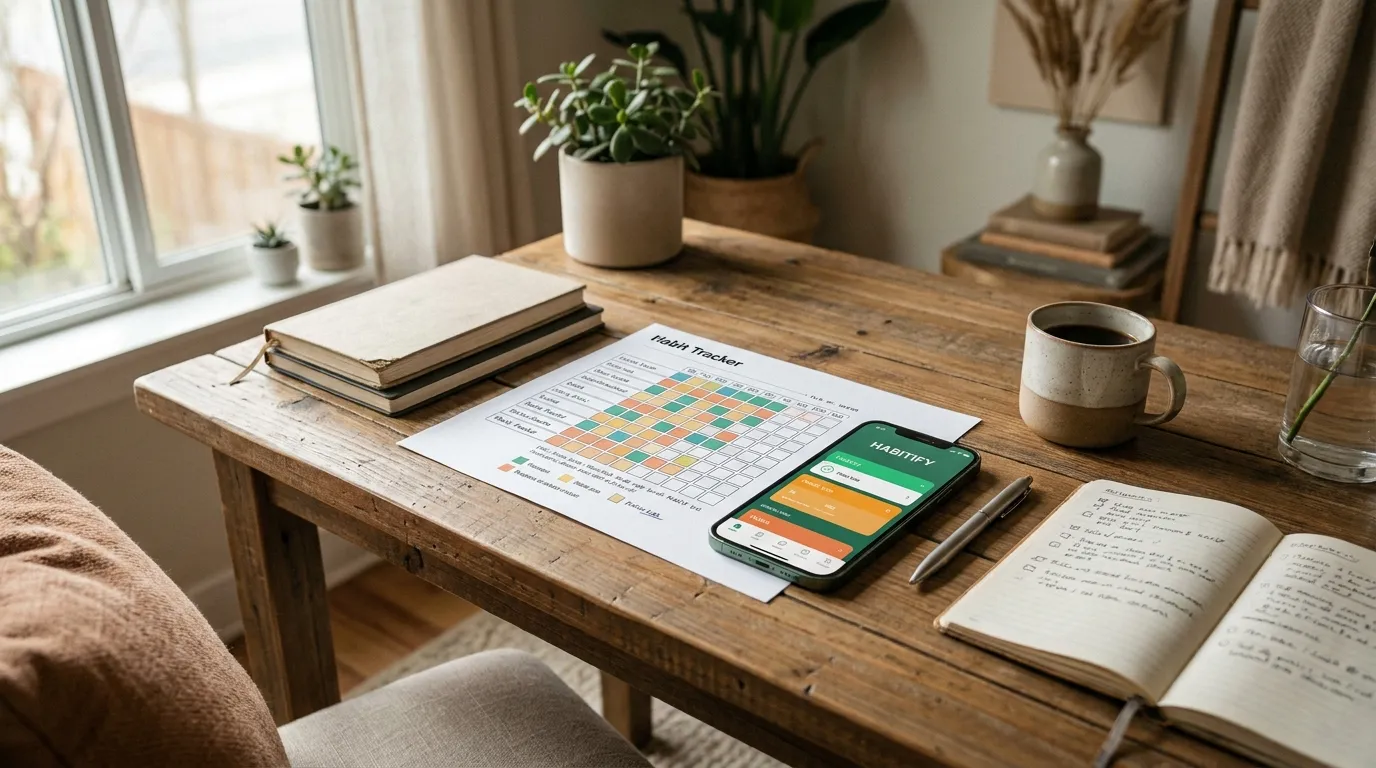
If you’ve ever printed a habit tracker printable template, put it on the wall, used it for three days, and then completely forgot about it, you’re definitely not alone. The same thing happens with a free habit tracker app you download with the best intentions, only for it to disappear into a folder next to your to do list app, your notes app, and a pile of self care apps you were sure you’d open every day. Most of the time, that’s not laziness. More often, it just means the system didn’t really fit the way your brain works.
Are habit tracker printable better than habit apps, though? Unfortunately there’s not a one-size-fits-all solution, as it depends on how your brain responds to visibility, reminders, distraction and rewards. For some people, a printable habit tracker feels calmer, more personal, and easier to keep up with because it’s more tactile. Other people find app-based habit tracking tools more practical or stimulating, and a lot easier to keep nearby. It goes with them, sends reminders at set times, and can make long-term progress easier to see.
In this guide, we’ll look at what a habit is in practical terms, how to track habits without making the process more complicated than it needs to be, where printables work especially well, where habit apps do better, and how to choose a system that fits real life. If you’re comparing a printable habit tracker with the best apps for goal setting, this should help you make a smart choice… or at least a more informed one!

What is a Habit?
A habit is a behaviour that you’ve repeated so often, you no longer notice you’re doing it. Psychologists define it as an automatic action acquired through repetition, and it can have positive or negative connotations – think nail-biting, going to the gym twice a week every week, checking your phone the moment you wake up, reaching for a biscuit at 3pm, or putting your toddler to bed at 7pm every night.
A 2025 meta-analysis from the University of South Australia found that habit formation can happen in as few as 4 days, or take up to nearly 335. For most people, it lands somewhere between 59 and 66 days – which is really just a long way of saying consistency is what gets you there. Habit stacking is useful at this stage because it builds in a reminder, which tends to speed things up.
Neuroscientists call this “cue-dependent learning.” Your brain starts pairing one action with another. Attach a new habit to something you already do automatically and your basal ganglia – the part of the brain that runs your routines – locks it in faster. Research on synaptic plasticity shows that repeating the same cue-and-action pairing strengthens the neural pathway behind it until it becomes genuinely difficult to undo.
What Actually Makes a Habit Tracker Printable Work?
Before comparing paper and digital tools, it helps to look at what makes habit tracking work in the first place. The format matters less than the behavior around it: repetition, cues, easy logging, and keeping it up over time. One peer-reviewed study followed 91 university students for six weeks and found that repeating a target behavior predicted automaticity. Motivational conflict also dropped as the behavior became more automatic, which honestly fits with how this often feels in real life (PubMed Central). Put simply, habits often start to feel easier when you repeat them often enough.
That’s why the best habit tracker printable or app is the one that feels almost too easy to use. Simple really matters here. If a system takes too many taps, needs lots of setup, or asks for too much emotional energy, people often stop using it. In most cases, something that lets you check off a habit in a few seconds works better than anything fancy.
The same idea applies to both formats. A printable habit tracker on your desk can act as a contextual cue, especially if it sits somewhere you’ll actually notice in the morning or during work. An app reminder that appears at the same time each day can do a similar job. If more beginner-friendly guidance would help, that’s covered here in this article on how to form new habits. You can also check Habit Tracker Ideas: What to Track (and How to Stick With It) for creative ways to use your habit tracker printable effectively.

When a Habit Tracker Printable Is Better
A habit tracker printable can be really helpful, especially when you’re trying to cut back on screen fatigue. Global average daily screen time is 6 hours 38 minutes (Source). That means that if most of the day is already focused around screens like laptops and smartphones, adding another app can easily feel overhwhelming instead of something that actually helps.
Physical visibility with a Habit Tracker Printable
A paper tracker on your desk or fridge is usually easy to notice. Unlike an app, it won’t get buried under notifications.
Less distraction
You check a printable, and that’s it. No social feed or email, no gamification, and probably no random app-switching spiral either.
More flexibility
A paper habit tracker template is easy to customize with notes, colors, symbols, and weekly reflections. You also aren’t stuck with digital presets, so you can shape it however you like to reflect your personality.
A more reflective experience
Handwriting naturally slow things down, which often makes the process feel more intentional instead of turning into just another box-checking exercise.
When a Free Habit Tracker App Is Better
A free habit tracker app really does have some clear advantages. That probably isn’t too surprising. There’s a reason these apps keep getting more popular: one market estimate valued the habit tracking app market at USD 13.06 billion in 2025, with growth expected to continue into 2026 and beyond (Global Growth Insights). The same source also says that more than 68% of smartphone users use at least one productivity or wellness app, and habit-tracking tools likely make up a big part of that group.
So why do people keep choosing apps?
Reminders cut down on forgetfulness
This is probably the biggest practical benefit. If remembering habits is hard, and it often is, an app usually helps with that right away.
Progress is easier to see
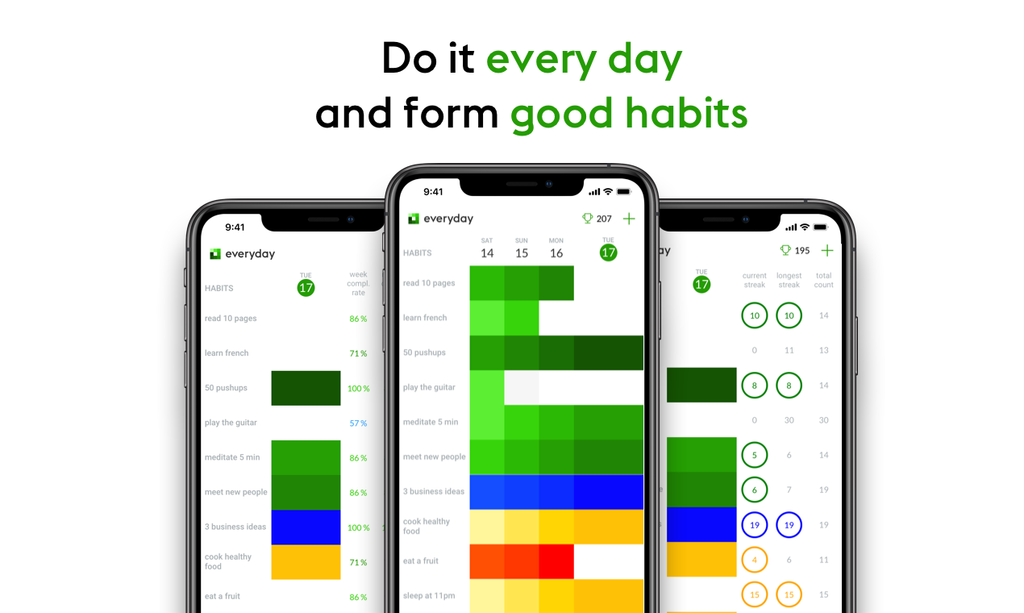
A lot of the best habit tracking apps show streaks, patterns, and clear progress data, which honestly helps. That kind of feedback can keep motivation going longer, and it makes progress easier to see. Bonus points for a beautiful interface – the Everyday app has you covered there!
Portability matters
Your phone is usually with you, so logging habits often feels easier, especially when you’re away from your desk or home. Cross-platform sync can be really useful too.
Gamification boosts engagement
Apps often use gamification with streaks, rewards, avatars, and small wins, which probably isn’t too surprising. It seems to work. Recent app roundups also point to Habitica, Habitify, and Streaks for exactly that reason (Source).
Better integration
A free habit tracker app can easily overlap with a to do list app, a calendar, or even self care apps, which is really handy. That usually helps most when goals are closely connected to daily planning and the routines that shape everyday life.
The best example of this is Everyday. It keeps things simple with quick check-ins, visible streaks, and cross-device access, instead of turning habit building into some big, complicated project, which it often doesn’t need to be. You can also explore Best Habit Tracker Apps for Mental Resilience and Stress Reduction for more examples of apps that complement a printable system.
The Real Decision Comes Down to Habit Tracker Printable vs App Friction
The better system is the one that feels easiest to keep using. But people tend to pick the one that looks super popular and sophisticated, which doesn’t always work! The real test, though, is whether it still works on ‘real life’ days.
A printable habit tracker tends to be lower friction if:
- you already keep a notebook or planner open on your desk or counter
- visual cues around you help
- your phone often pulls your attention somewhere else
- you enjoy writing things down by hand
A free habit tracker app tends to be lower friction if:
- your phone is always nearby
- reminders genuinely help you
- you like seeing streaks and charts (some people really do)
- you want your habits synced across devices
- you’re combining habits with goal setting or wellness check-ins
A lot of people struggle with choice. If that sounds familiar, this guide on how to track habits without stressing yourself out has you covered. Another helpful resource is How to Build Habit Tracking Into Your Wellness Routine.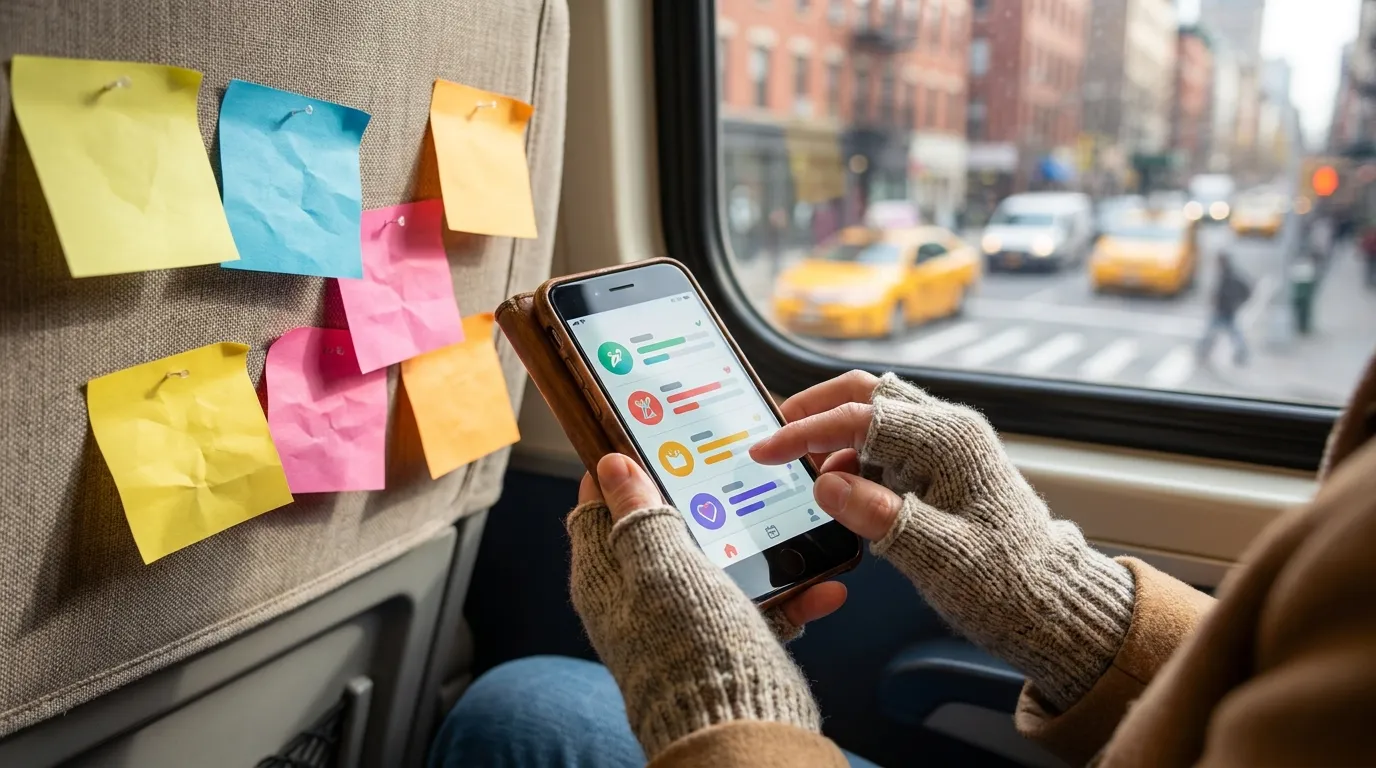
Printable vs App: Which Habit Tracker Printable Fits Your Personality?
This is where the comparison starts to feel less technical and more personal. People naturally prefer different tools, and that’s completely normal.
Choose a habit tracker printable if you are:
- visually motivated when paper is right in front of you on your desk, fridge, or planner
- easily distracted by digital noise
- someone who journals or plans on paper
- interested in a highly customizable habit tracker template, which can make the whole system feel more flexible
Choose a free habit tracker app if you are:
- mobile-first and rarely without your phone
- motivated by streaks, reminders, and gamification
- tracking habits tied to travel, work, or a schedule that changes often
- interested in combining habits with the best apps for goal seting habit tracking tools
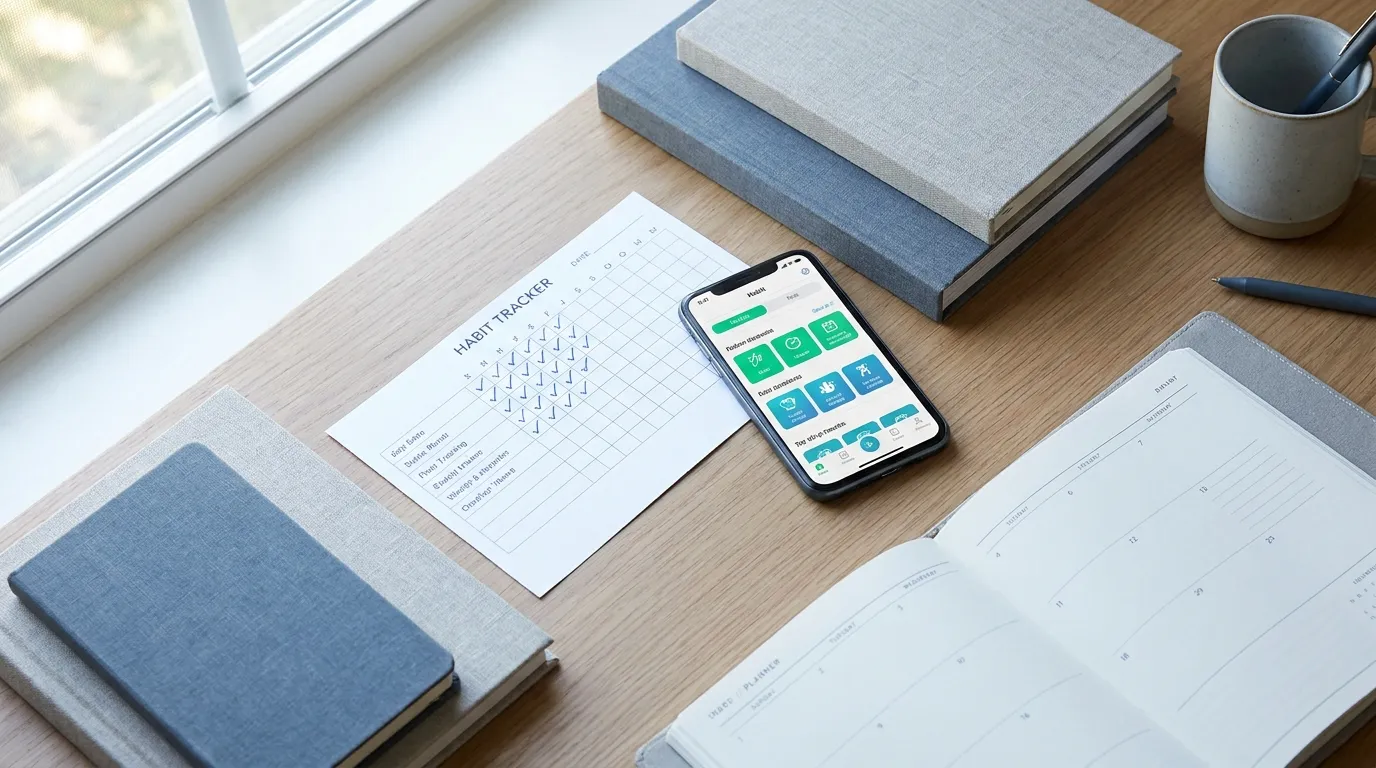
And yes, some people do better with a system that mixes both! They might use a printable habit tracker for morning routines at home, then switch to an app for workouts or study habits while they’re out. If it works, then that’s a smart setup – you’ve gotta do you!
Your Questions, Answered
Is a habit tracker printable more effective than an app?
Not by default. A printable can work better if you find that seeing it on your desk or fridge keeps you on track and you’d rather not add another app to your phone. An app might suit you more if reminders, portability and seeing your progress over time are what actually keep you going.
What is a habit?
A habit is a behaviour you repeat often enough that it starts to feel automatic. In habit tracking it usually means a small action linked to a clear cue – stretching after you get out of bed, reviewing your notes once class finishes.
Are self care apps better than paper trackers for wellness?
Self care apps are handy if you want reminders, mood tracking, journaling prompts or guided routines all in the one place. Paper can feel calmer and a bit more grounding if you’d rather slow down and reflect than tap through screens.
Can a to do list app replace a habit tracker?
To do lists are built for one-off tasks, but habits rely on repetition over time, every day. A dedicated habit system – paper or digital – makes recurring behaviour easier stick with and adjust when it isn’t working.
The Best System Is the One You Will Keep Using
You now know that choosing between a printable habit tracker or free habit tracker app isn’t rocket science. It simply just depends on what you need and what works well with your personality and life circumstances – not on which one is objectively better.
Paper tends to win when you want something a little more grounded and intentional, particularly if you’ve already clocked enough screen time by mid-morning. But apps do the things paper can’t really do: they remind you to do the habit when you forget, beautifukl c that show you what a month of effort actually looks like, a bit of gamification if that’s what gets you moving. Neither does the work for you. What they do is make today’s effort visible, which is often the nudge you need to repeat it tomorrow.
Most people lose more time deciding than doing. Pick one habit – something small enough to feel almost embarrassing. Pick whichever format feels least like a faff. Give it a fortnight. If it’s not landing, switch. There are no loyalty points for sticking with paper or pixels.
If you want progress that lasts, choose tools and routines that work with your brain as it is. Download our free habit tracking app from Everyday now, tick off that first day of habit tracking, and repeat. You’ve got this!