

Most people assume people fail at goal tracking because they don’t care. They assume that habits live in their head via motivation, discipline, willpower, and grit. But it’s actually more likely that their goals feel too big or too unclear to matter on days where other things take priority,which is pretty normal. That’s where habit loops can help! When you can see that a cue starts an action, a routine makes that action easier to do again, and a reward gives your brain a reason to want it once more, goal tracking starts to feel a lot more helpful.
If you’ve ever wondered, “what is a habit loop?” the short answer is simple: it’s the pattern behind repeated behavior. The more useful answer, though, goes a little further. A habit feedback loop can help turn good intentions into something that becomes an ingrained part of daily life. Add goal tracking with an everyday goal tracker, and the loop becomes easier to repeat, and often much more satisfying, especially when progress is right in front of you.
This guide explains how habit loops work and why tracking can make them stronger. It’s a simple idea, but a helpful one! You’ll also learn how to use them for motivation goal setting, get started on your own everyday habit tracker, look at a few practical habit tracking ideas, and put together a simple morning routine checklist while knowing what to look for in the best apps for goal setting.
What habit loops really are
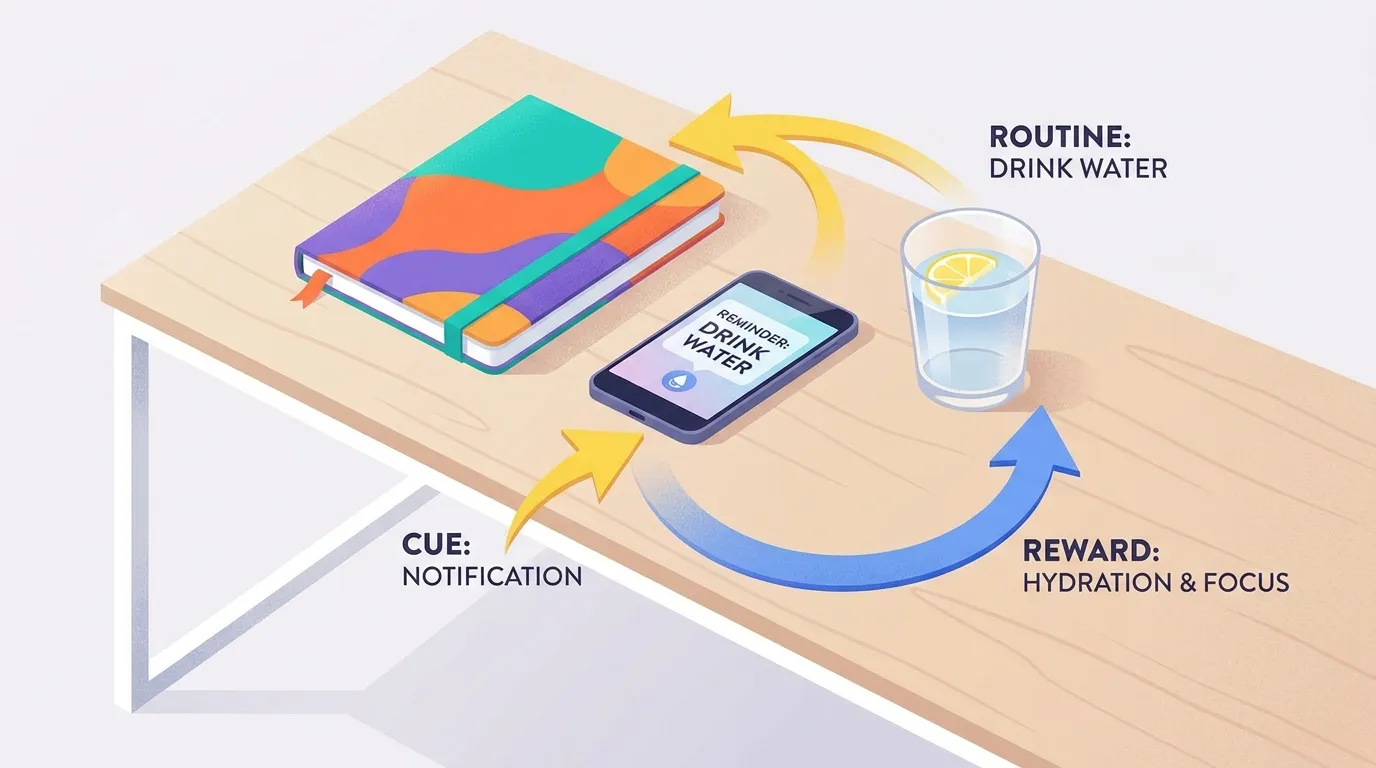
A habit loop has a few simple parts: a cue, a routine, and a reward. The cue is the thing that gets you going; the routine is the action itself. The reward is the helpful result or good feeling that tells your brain, “Do that again.” It’s a pretty simple model, and it shows up a lot in habit science and behavior coaching (Confide Coaching).
Here’s a simple example:
- Cue: Your alarm goes off
- Routine: You drink a glass of water
- Reward: You feel more awake. You also get to check it off in your tracker
It may sound small, but that’s exactly the point. A habit loop usually works better when the action is clear, obvious, and easy to repeat without much effort, and that’s often the part people miss. Keeping it small is done on purpose.
Research on habit behavior also suggests that 45% of daily actions are driven by habits (Shortform). So a big part of the day may already be running on automatic patterns. That also means better patterns can likely be built.
That’s why habit loops matter. One tiny action may not seem life-changing at first, but when you repeat it every day, it can shape health, focus, work, and mood over time (in my view, that’s the real value).
Why goal tracking makes habit loops stronger
Goal tracking is more than a way to measure progress. It can also become part of the habit feedback loop itself. In many cases, the tracker acts as the cue, logging becomes part of the routine, and seeing progress creates a reward, which can feel really motivating. That is often a big reason tracking works so well.
This is especially helpful because long-term goals can feel far away. If the goal is to get fit, write a book, study every day, or build any steady practice, the final reward may not appear for weeks or even months. That kind of delay can make motivation harder to keep up. Tracking helps by giving a small reward right when the action happens, and that immediate feedback is often what keeps the habit going.
According to research in the source set, habit tracking can improve:
- self-awareness
- accountability
- pattern recognition
- follow-through over time
These benefits appeared in a behavior summary tied to habit change and tracking (Shortform). A visible tracker can also act as a visual cue, helping keep the goal in sight on a desk, fridge, or phone screen (Energising Goals).
Simple tools often work the best. A habit board, checklist, app, or even a basic note can keep the next action visible. Instead of tracking a big result like ‘be healthier,’ it usually helps more to track one repeatable action like ‘walk for 10 minutes.’ That makes the goal feel less unclear and much easier to do day by day, especially when life gets busy.
We covered the idea of breaking big outcomes into small actions here: Goal Tracking with Everyday: Think Small, Achieve Big. Additionally, you can explore Goal Achievement through Habit Tracking: More Than Just Metrics for deeper insights on how habit loops support measurable progress.
How to build habit loops around real goals
The best habit loops are usually simple enough to repeat, even on harder days. So the system should help you actually do something, not just make plans. When a goal depends on feeling inspired, it will probably fall apart most of the time because that’s just too shaky.
Here’s a simple model you can try. We hope it gives you some inspiration!
1. Start with one small goal
Pick one result that matters most to you, such as:
- reduce stress
- improve grades
- exercise more often
- build a better morning routine
2. Shrink it into one daily action
Keep it small so it feels easy, really easy, almost too easy.
- reduce stress becomes ‘take 2 minutes to breathe’
- exercise more becomes ‘do 5 push-ups’
- read daily becomes ‘read 1 page’
3. Attach it to a cue you already have
A lot of people do pretty well with this part. It’s really simple: use something that already happens, because that’s often the easiest way.
- after brushing your teeth
- when you open your laptop
- after lunch
- when your evening alarm rings (you’ll probably notice it right away)
4. Choose an immediate reward
The reward can be practical or emotional, either one is fine. Whatever works for you, really.
- checking it off
- seeing a streak continue
- enjoying a cup of coffee after
- taking a short break without guilt, which honestly probably helps
5. Track it right away
Logging the action right after you do it gives your brain quicker feedback. That’s why many people like a daily habit tracker that’s fast and easy to use. Recording your success helps reinforce the action!

A simple morning routine checklist that uses habit loops
A morning routine checklist works well because mornings already have built-in cues. You wake up, use the bathroom, may make some coffee. Those types of existing, self-automated habits be great anchors!
Those small moments also often make new habits easier to add. They already fit into what happens each morning, so the routine usually feels simple and natural most days.
Here’s a basic example:
Morning routine checklist
- Make the bed
- Drink one glass of water
- Stretch for 2 minutes
- Review your top tasks for the day
- Avoid social media for the first 15 minutes
Each step can flow naturally into the next, which gives you a simple chain of cues that is really useful. A checklist can also help with motivation and goal setting because it removes a lot of the guesswork. There’s less second-guessing, and you don’t have to stop and ask, “What should I do now?” In most cases, you just move straight to the next step.
If you’re new to routine design, Daily Routine Design with Behavioral Feedback Loops explains the link between daily structure and habit psychology in a very practical way.
What to look for in the best apps for goal setting and habit loops
Not every app really supports the habit feedback loop, and that is often where things break down. Some are just too complicated. Others make tracking feel like a chore. We think the best apps for goal setting stand out because they make it easier to come back the next day.
Features we think are useful include:
- fast check-ins
- reminders that act as cues
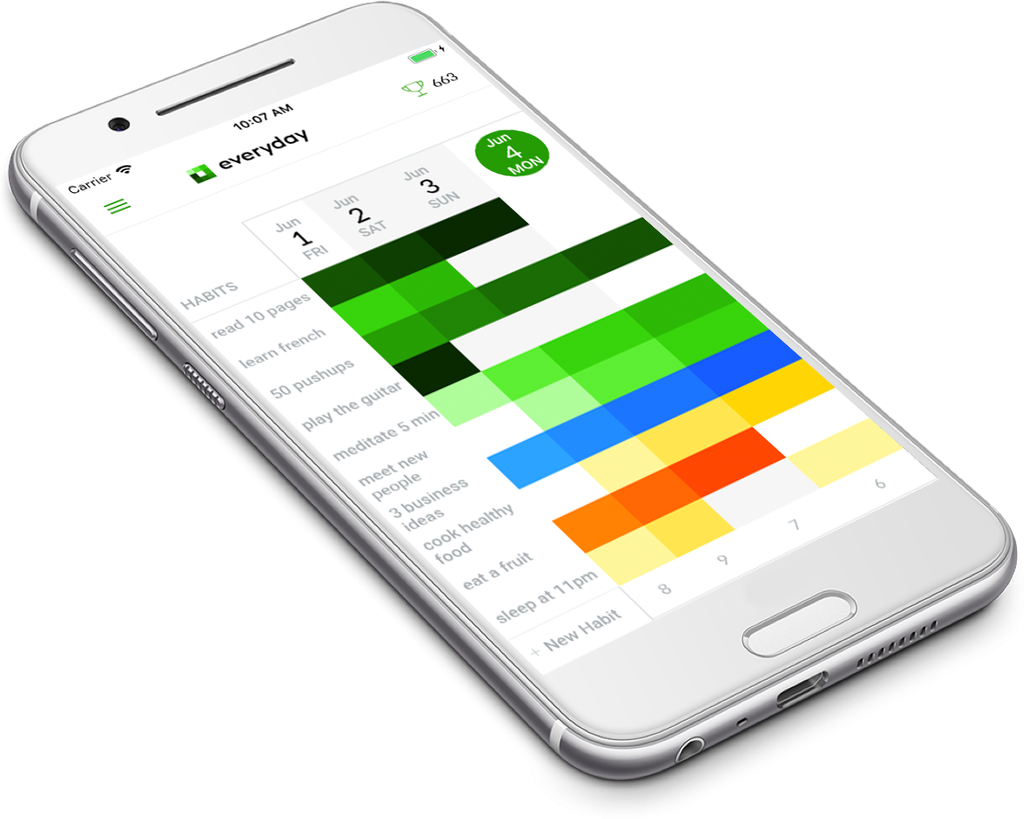
- streaks or visual chains
- weekly and monthly views
- flexible skips for travel or illness
- sync across devices
- a simple design that keeps attention on action
Recent app trend coverage also points to growing interest in progress charts, analytics, reminders, AI insights, and gamified rewards. Sources like IFTTT and Pattrn point to that shift. Helpful, yes. But these features usually only help when the app still feels simple and easy to use, because otherwise people probably will not stick with it.
That is why a focused app often does more in real life than an overloaded one. Everyday keeps the focus on simple daily tracking, visual streaks, and syncing across devices. You can also check Best Reclaim.ai Alternatives 2026: Cheaper, Better Habit Apps for options that align well with habit loop-based tracking systems.
FAQs
What is a habit loop in simple terms?
A habit loop is a three-step pattern: cue, routine, and reward. Something in your environment nudges you, you do the action, and then you get a result that makes the action easier to repeat next time.
How does goal tracking help build habits?
Goal tracking is great for offering you fast feedback. It helps you see progress, stay accountable, stay motivated, and notice patterns. It also creates a small reward when you check off a completed action.
Can a tracker itself become the cue?
Yes. A visible checklist, reminder, or app notification can act as the cue. Our Everyday habit tracker can be super effective when used consistently!
Put habit loops to work
Habit loops give behavior some structure, and goal tracking adds feedback to that setup. When you use them together, they create a practical system that can still help when motivation drops, which will probably happen sometimes.
The main ideas are simple. Make the cue easy to notice. Keep the routine small enough to actually do. Make the reward immediate. Then track it so you can spot the pattern early, while it is starting to form. Over time, those small repeats begin to feel like part of who you are. Just remember to give yourself a small reward, and then mark it complete on your Everyday habit tracker!
If you want your system to last, it often helps to focus less on huge goals and more on what you repeat each day. That is how habit loops make goal tracking work better. You’ve just gotta do it every day!