

No time to read cos you’ve gotta get up early? Here’s the TL;DR, stat! The article treats early rising as a systems problem: get the setup right and motivation matters far less. That means one realistic wake-up time instead of shifting between several, and one small morning habit to begin with rather than a whole routine.
Habit formation usually takes around 66 days, not the popular 21, so judge your progress in weeks rather than days, however impatient you are for results. A simple routine that bends around real-life obstacles will outlast a perfect one you can’t keep up.
If you’re an early riser, or trying to become one, we here at Everyday are here to help you create a morning habit tracking system that actually fits your flow. And not just for a few days, either! Being awake before 6 a.m. is not actually the norm: just over 30% of Americans are up by then on weekdays. So if you’re building an early riser routine, you’re clearly not doing it because it seems popular. You’re trying to build a system that works with your schedule, your energy, and your goals – and you need the right tools that are there with you for the ride!
Around 52% of people drop a new habit within 30 days, which is exactly why the way you set things up matters so much. So if you’re ready to get some long-term change happening, keep reading as we discuss out how you can choose the right morning habits for you, connect them to reliable cues, track them without any guilt, and help you recognise when you need to adjust the system so it keeps working long after that first enthusiastic week. The early bird catches the worm – let’s go!
Before your early riser routine starts
A bit of groundwork is what makes an early riser habit stick. Before you set the tracker up, get these in place:
- A reason you’re doing this. Exercise, reading, a bit of planning, some quiet time before the house wakes up. Whatever it is, be clear on it, because that’s what gets you up on the mornings you’d rather not.
- A wake-up time you’ll actually hit. Don’t leap an hour ahead. 15 to 30 minutes earlier than you manage now is enough to feel like progress without wrecking the first week.
- One small thing to track, not five. A glass of water, maybe a stretch. Pick the one you could do half asleep.
- A tracker you can open in a second, on your phone or the web. If it takes effort to find, you won’t try to find it.
- Handy but not essential: a little evening prep the night before and a visible cue in the morning, so you’re not leaning on willpower alone.
Keeping it simple always works better. Early mornings often aren’t the best time for a complicated system, and that can backfire pretty easily. A minimalist tool is likely a better fit here. Everyday is built around visual streaks, quick logging, reminders, and access across devices, which makes it a good option for morning routines, especially when you check it right after waking up.

Step 1: Pick one outcome for your early riser morning
The first thing to figure out is what waking up earlier is actually for.
Try not to start with “become a morning person.” It’s too vague to measure, and honestly, that often makes it harder to stick with. A better way is to choose one clear result for your mornings, something specific you can actually do.
Good beginner options include:
- Read for 10 minutes
- Drink one full glass of water
- Stretch for 2 minutes
- Plan your top tasks
- Sit at your desk and start one pomodoro work block
This helps because habits usually stick better when they’re concrete. In most cases, it’s easier to follow through when the action is clear and the timing is obvious. Habit research summaries support that idea: specific implementation plans can greatly improve follow-through, and one reported finding showed that people using clear “if-then” plans exercised at a 91% rate, compared with 35% to 38% in control groups.
People who wrote specific ‘if-then’ plans exercised at a 91% rate, compared to 35, 38% in control groups.
One simple way to write the goal is: If it is 6:30 a.m., then I drink water and open my tracker.
Common mistake to avoid
Don’t pile on too many new habits at once, it’s really easy to do. Early risers often create a super-perfect morning routine, then end up burned out by around day five, which happens a lot.
Quick tip
If you’re not sure what to pick, the best choice is the habit that makes the rest of your day easier. It’s simple and probably your best anchor.
Step 2: Choose a wake-up time that fits your real life
Now it’s time to pick your wake-up time, and the main thing is to keep it realistic.
A lot of early-riser advice online still pushes extreme routines, but behavior trends have been shifting away from the whole “5 a.m. or fail” mindset. In most cases, slow, sustained consistency is better. So if you currently get up at 7:15, a more realistic first step is setting your new wake-up time for 6:45 or 7:00. Then keep that going for at least two weeks before changing it again.
Your bedtime matters too, and often more than people think. Waking up earlier usually works best when it’s part of your full sleep routine, not just a choice about when the alarm goes off. Recent reporting has linked earlier bedtimes with more movement the next day, including 23 extra minutes of moderate-intensity activity. And in some short-sleeper groups, moving bedtime earlier was also linked to 41.5 more minutes of moderate-to-vigorous activity the next day, which is honestly a pretty noticeable jump.
So if mornings keep falling apart, your early riser tracker should probably include an evening support habit too. Nothing complicated. For instance:
- Put your phone away an hour before bedtime
- Set your clothes out before bed
- Fill your water bottle at night
- Open your tracker before sleep so it’s ready in the morning

Common mistake to avoid
Don’t set an early alarm unless you also move your bedtime cues earlier (I think this matters). It sounds productive, sure, but it usually just builds sleep debt and looks like a productivity plan.
Quick tip
If weekends throw you out of whack, it helps to keep your wake-up time within an hour of your usual weekday time. Try not to let it blow out!
Step 3: Create one reliable cue and one tiny initial action
This is where a habit tracker starts to feel truly useful, instead of just keeping track of all the times nothing happened, which can feel discouraging pretty fast.
Research on behavior change keeps pointing to cues as helpful. For an early riser, strong cues often look like this:
- Alarm off
- Feet on the floor
- Bathroom light on
- Kettle or coffee maker started
- Desk lamp turned on
From there, connect the cue to one tiny action. At the start, keep it under two minutes. Smaller than most people expect is often better.
Examples:
- After I turn off my alarm, I drink water
- After I brush my teeth, I stretch for 60 seconds
- Once I start the kettle, I open my habit tracker
- After I sit at my desk, I write down my top task
What makes this useful is that it reduces negotiation. There is no pause to wonder what feels manageable that morning. The script is already there, and in many cases that makes it easier to begin, especially on mornings when energy or focus has not really shown up yet.
Want to read more about attaching habits to existing routines? It is covered here: habit stacking for wellness
Common mistake to avoid
Don’t make the first action too big. “After my alarm, I’ll do a 45-minute workout” sounds nice, but it’ll probably feel hard right away, and that usually matters. It’s too much, too soon.
Quick tip
If the habit feels almost too easy, that’s usually a good sign. Small habits are often the ones people really repeat. That’s what matters.
Step 4: Set up your early riser tracker so logging takes seconds
At its core, your habit tracker only needs to answer one question fast: Did I do the habit today? Seriously, that’s all it needs to do. Extra features can be fun, but in the end, this is honestly all you need.
A good setup looks like this:
- Create a single habit, such as ‘Wake + water’ or ‘Morning plan’
- Turn on a reminder for your wake window
- You can add another reminder for your bedtime prep window
- Keep the tracker pinned, bookmarked, or on your home screen so it’s easy to open
- Log yes or no right after you complete the habit
- Review your streak at the end of the week – not every hour!
There’s a reason this works. 65% of U.S. adults are actively monitoring routines, and the habit tracker market is still growing, reaching $1.94 billion in 2025. People are clearly looking for support, and usually the most helpful kind is simple and easy to understand. In many cases, extra features don’t lead to better follow-through and can actually slow things down.
The best habit tracker for an early riser is often the one that opens quickly when someone is half-awake and not in the mood to mess with settings. That tends to be more useful than a feature-packed tool that won’t get opened at 6 a.m.
For a broader look at what makes a good tool, there’s more here: Best Habit Tracking Apps For A Better Way of Life.
Common mistake to avoid
Trying to track too many details at once can be really overwhelming. Logging deets on mood, energy, sleep score, hydration, gratitude, and five sub-habits before 7 a.m. are… well… a lot! Start by tracking just one behavior first. I know it sounds boring, but if it works, it works!
Quick tip
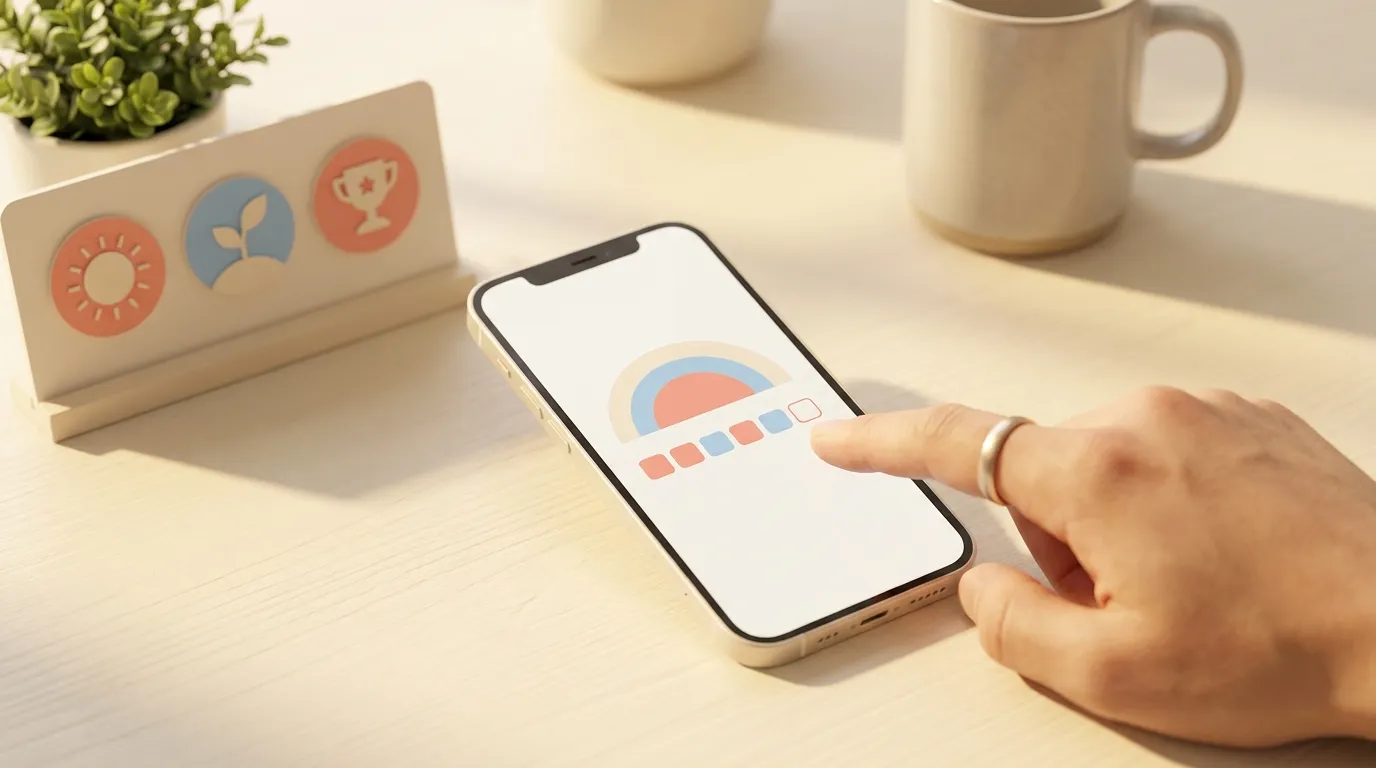
Visual streaks help because they make it pretty easy to spot consistency. The board also becomes a cue, which usually helps, I think. And it keeps a record too.
Step 5: Follow the 66-day mindset, not the 21-day myth
A lot of people expect a habit to feel automatic after three weeks. When it still takes effort, they think something is wrong or that they’ve failed. But the number with better support is much longer, and that changes how we perceive our progress day to day.
The most-cited research, from Phillippa Lally at University College London, found an average of 66 days for a behavior to become automatic. The range was 18 to 254 days.
So it helps to think of the first two months as a build phase instead of some kind of test of character. If an early riser routine feels clunky on day 12, that’s completely normal, and often more normal than people expect.
Early riser weekly review questions
A practical weekly rundown can look like this:
- Did I wake at my target time at least 4 times this week?
- Did I complete my tiny first habit, even on low-energy days?
- Was bedtime actually the issue?
- Did weekends break the chain, or throw things off more than I expected?
If motivation drops, there’s already a gentler reset approach here, and it may help before things get worse: Burnt Out? How To Find Motivation With Everyday.
Common mistake to avoid
Don’t restart your whole system after one missed day; it happens. A better rule is “don’t miss twice.” One slip is usually normal. But when it happens two days in a row, that’s often when a pattern begins, and you probably feel it.
Quick tip
If you miss three mornings in a week, it’s best to lower the goal. Make it easier, seriously, even if you initially feel bad about it. That almost always works better than making it harder.
How to verify your system is working
After 2 to 3 weeks, a few real signs of progress will start to show, even if the habit still doesn’t feel fully automatic yet, which is completely normal. That stage often just needs a little time.
A simple way to tell is by noticing things like these:
- You wake up with less decision fatigue
- Your first action happens faster
- Logging feels easy instead of annoying
- You can clearly see where the routine breaks
- Your morning feels more stable, even on busy days
Success usually does not mean perfect streaks. Here, it means the early riser system is easy to see and repeat, so the steps are easy to notice, it is clearer where things slip, and it keeps working even when mornings get busy.
FAQs to help get you started
What is the best habit to track first if you want to become an early riser?
Pick the smallest thing that tells you the morning has actually started – perhaps a glass of water, or just opening your planner. Any of those beats committing to a big workout on day one, because at this stage you’re proving you can show up, not proving you’re disciplined.
Should you track bedtime too, or just your wake-up time?
If you keep missing your morning target, track bedtime support habits as well. Early rising usually fails at night first, not in the morning, so evening prep can make your tracker much more effective.
What should a good early riser habit tracker include?
Look for things like easy logging options, visible streaks, gentle reminders, and seamless access across devices.
Now put your morning system into practice
If you want to become an early riser, don’t start with pressure, guilt, or some perfect schedule that looks good on paper and then usually falls apart. Keep it simple… and then make it even more simple. Choose the smallest habit that actually improves your mornings. Then adjust based on what actually happens, not what you expect should happen.
And remember, a habit tracker is not there to impress you with a pile of data. It is there to help you notice repetition. Once the pattern is easy to see, improving gets easier too, because you’ll notice what is working and what keeps getting skipped.
Your next steps are straightforward:
- Choose tomorrow’s wake-up time
- Write one if-then plan
- Track one morning habit for the next 14 days
- Review what gets in the way
- Keep going long enough for consistency to work
Ready to be a morning person? Head to the everyday.app homepage and download our beautiful habit tracker. You can get started for free with your first three habits - perfect, right? See you at sunrise!