
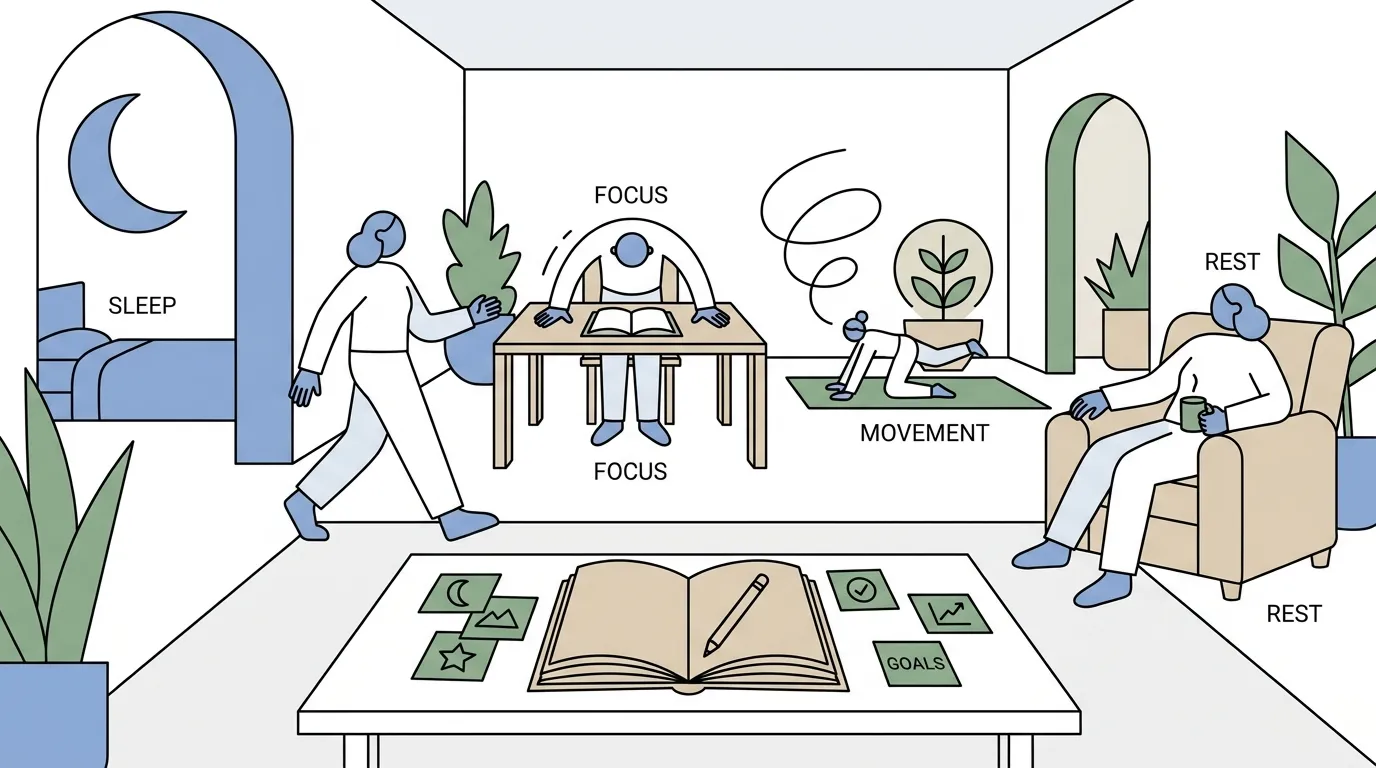
Some days feel clear and productive. On other days, the smallest tasks can feel like a lot. That’s completely normal: Energy doesn’t stay the same from day to day, so good daily habits can’t rely on feeling great all the time.
Energy changes – sometimes a little and sometimes a lot. Habits need enough flexibility to handle that without falling apart. Simple actions paired with clear cues help. It also helps to have a way to track progress that doesn’t make life feel like a constant performance review!
This helpful guide explains how to choose which habits to track and how many goals to take on at once. It also covers ways to stay consistent when motivation drops. You’ll also see how tools like Everyday can help by making progress easy to see and simple to log across devices.
Start with smaller daily habits than you think you need
If your energy changes from one day to the next, the best habit usually isn’t the biggest one. It’s the version you can still do on a low-energy day, because those days count too.
That matches what habit research keeps finding. One widely shared figure reports a median habit formation window of about 59 to 66 days (ScienceDaily). Knowing this helps when setting realistic expectations: tracking progress matters because results aren’t instant, and slower change doesn’t mean you’re failing. If it takes time for a habit to start feeling automatic, going all in isn’t really the point. What helps more is repeating something you can actually keep doing.
There’s another useful stat too: self-selected habits have a 37% higher success rate than habits people feel pushed into (Habi). In plain terms, habits usually stick better when they fit your real life instead of working against it, because forcing a routine usually doesn’t last.
That’s also why tiny actions are often easier to keep doing:
- Read one page instead of ‘study for an hour’
- Stretch for two minutes instead of ‘do a full workout’
- Write one sentence instead of ‘journal every night’
We can use decision‑making to choose the habits we want to form, use willpower to get the habit started, then, and this is the best part, we can allow the extraordinary power of habit to take over. At that point, we’re free from the need to decide and the need to use willpower.
When a habit stays small, getting started doesn’t take such a huge burst of willpower. This makes it a lot easier to come back to again tomorrow!
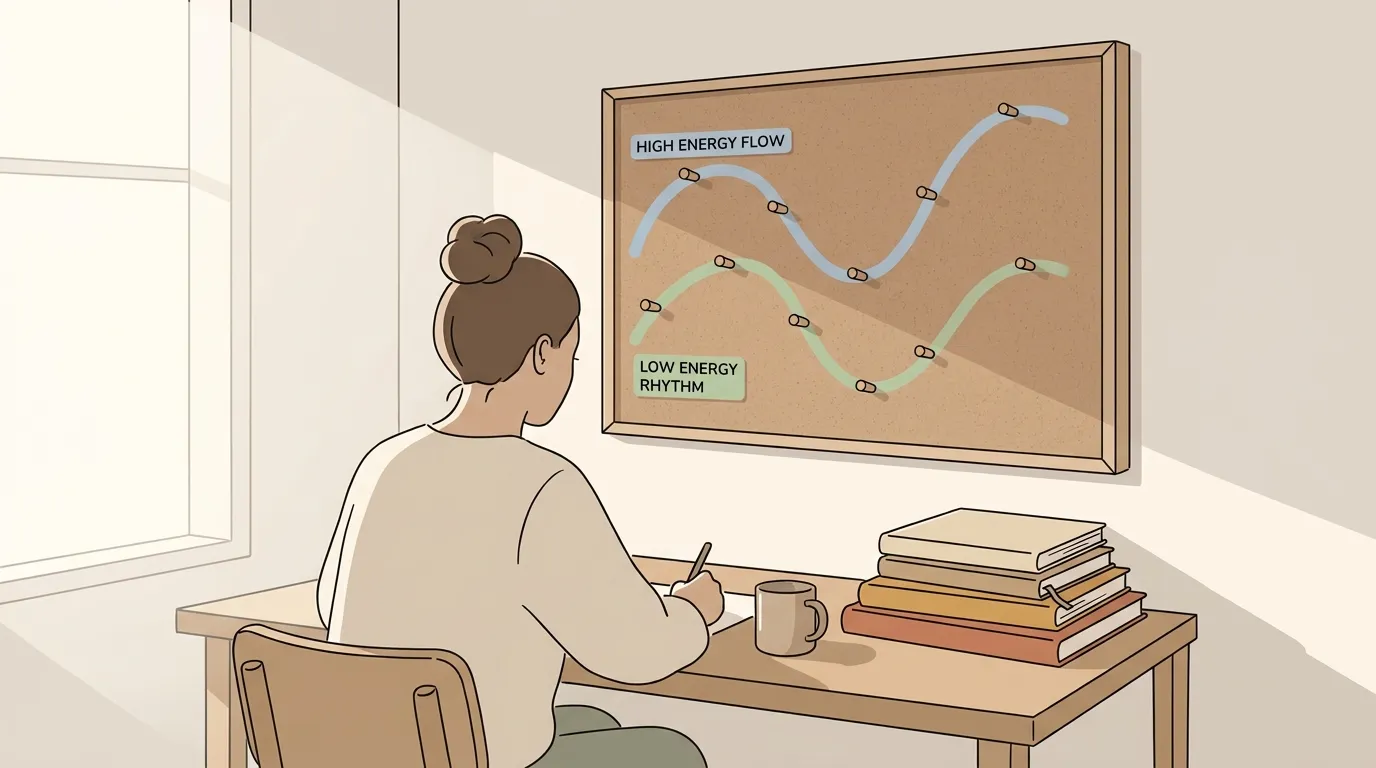
Build an energy-aware version of each daily habit
The core of habit formation is that you’ve got to do the same action every day. But when your energy changes from one day to the next, it’s more effective to keep the habit the same, but adjust how much you do. That way, each habit can have a few manageable levels depending on how you feel.
Level 1: low-energy version
For tired, stressed, or busy days, this version keeps things simple.
Examples:
- 5 push-ups
- Review 3 flashcards
- Drink some water
- Write a short task list
- Take 3 slow breaths
Level 2: normal version
This is the usual plan for a regular day. It keeps things simple (nothing fancy).
Examples:
- 15-minute walk
- 20 minutes of focused study
- Get lunch ready for tomorrow
- Read 10 pages
Level 3: high-energy version
This is for days when you feel strong and want to do more: the bigger days.
Examples:
- Full workout
- Focused work block for 60 minutes
- Long review session
- Batch cook for the week
It helps protect consistency because you’re still doing the habit, but you’re now matching the effort to your energy. It also cuts down on all-or-nothing thinking, which is rarely sustainable – if only the perfect version counts, momentum fades fast. If the small version counts too, the chain stays alive, and you don’t have to start over every time.
Choose the right daily habits to track
A lot of people get stuck before they really start because they try to track everything at once. Sleep, fitness, reading, water, meditation, work, study, gratitude, meal prep, and screen time – all the usual suspects!
If you’re not sure how many goals to focus on, the safest move is to start with one or two keystone habits. These are small, low-pressure actions that work to improve several areas of life at the same time, reducing stress and saving energy.
Daily habits to track when your energy changes from day to day can include:
- Sleep consistency
- Bedtime routine
- Daily movement
- Hydration
- Focused work blocks
- Study sessions
- Breaks taken
- Mood or energy rating
- Screen time limits
- Short mindfulness practice
These tend to help with both output and recovery. Newer habit reports show that 64% of users adopt habit trackers for wellness goals and 46% use them more for productivity-focused tracking (Habit-Streak).
A simple weekly setup with wellness in mind might look like this:
- One habit for your body: walk 10 minutes
- One habit for your mind: 5 minutes of structured breathing
- For work or school, start one focused block
- Keep the setup small
For more guidance on tracking, check out How to Track Habits Without Stressing Yourself Out and Best Habit Tracker Apps for Mental Resilience and Stress Reduction.
Use structure to reduce stress, not add more pressure
A habit system should make daily life feel calmer. If tracking starts to feel stressful, the system needs to change.
That link shows up in stress reduction too. Research and market reporting suggest digital wellness tools are already part of everyday life for lots of people. One report found that 47% of U.S. adults use digital wellness tools weekly, and 61% have downloaded habit-building or goal-tracking apps (360 Research Reports).
Recent coverage also points to practical habits linked to lower stress, including movement, better sleep, mindful breaks, and less impulsive tech use (U.S. News). Cambridge researchers found that mindfulness-based urge monitoring reduced impulsive technology use by 37% over 8 weeks, while perceived energy and focus improved by 24% (University of Cambridge). That is a clear shift for something built around everyday behavior.
So for a calmer day, it helps to track recovery, not just output.
Helpful stress reduction habits include:
- Taking a short walk after work
- Putting your phone away during study time
- Logging bedtime, not just wake time
- Taking one real break every hour
- Doing a one-minute reset before a tough task
If burnout is already part of the picture, we covered this here: Stress Reduction Habits That Survive Burnout.
Create strong cues for work habits and better study habits
A big myth about consistency is that people make time for what they want. Sometimes that’s true. But actually, people make time for what already has a clear place in the day, and that usually makes a bigger difference than people think.
Cues help because they tell your brain, “It is time.” That cue might be a certain time, a specific place, something you already do, or one small action that helps the next step start.
For work habits, cues can look like:
- Open your laptop, then write down your top task
- After coffee, start a 15-minute focus sprint
- After lunch, clear your desk for two minutes
- Sit down and put out what you need before you begin
For better study habits, try:
- After class, review notes for five minutes
- When you sit at the library desk, put your phone away first
- Before homework, fill your water bottle
- Put your notebook where you can see it
Stacking daily habits this way takes away some of the guesswork. It also makes lower energy days easier, since you don’t have to keep making new decisions. Starting first thing in the morning can help a lot too, but the routine doesn’t need to be long or perfect; it only needs to be something you can repeat.
The way you begin your day sets the tone for everything that follows. A simple, consistent morning routine can act as a reliable ‘on switch’ for your brain, helping you focus, regulate energy, and reduce stress.
Let tracking show patterns, not just streaks
Tracking does more than help you tick boxes. The helpful part is seeing patterns in what really happens from day to day.
You may start to notice things like:
- Mondays work well for focused work
- Afternoons are hard for studying
- Energy drops when sleep slips
- Stress leads to more scrolling
- Short breaks help focus last longer
Research reviews on behavior change keep finding the same thing: tracking is one of the strongest tools for sticking with something, even when the system stays very simple (PubMed Central).
An excellent free habit tracker app option is ours from Everyday, which was built paying special attention to simple logging, unobtrusive reminders, easy access across devices, and a setup that doesn’t feel like work. Ease of use usually matters more than fancy features. If logging gets annoying, people usually stop using it, so we made sure we designed it to be as streamlined and beautiful as possible!
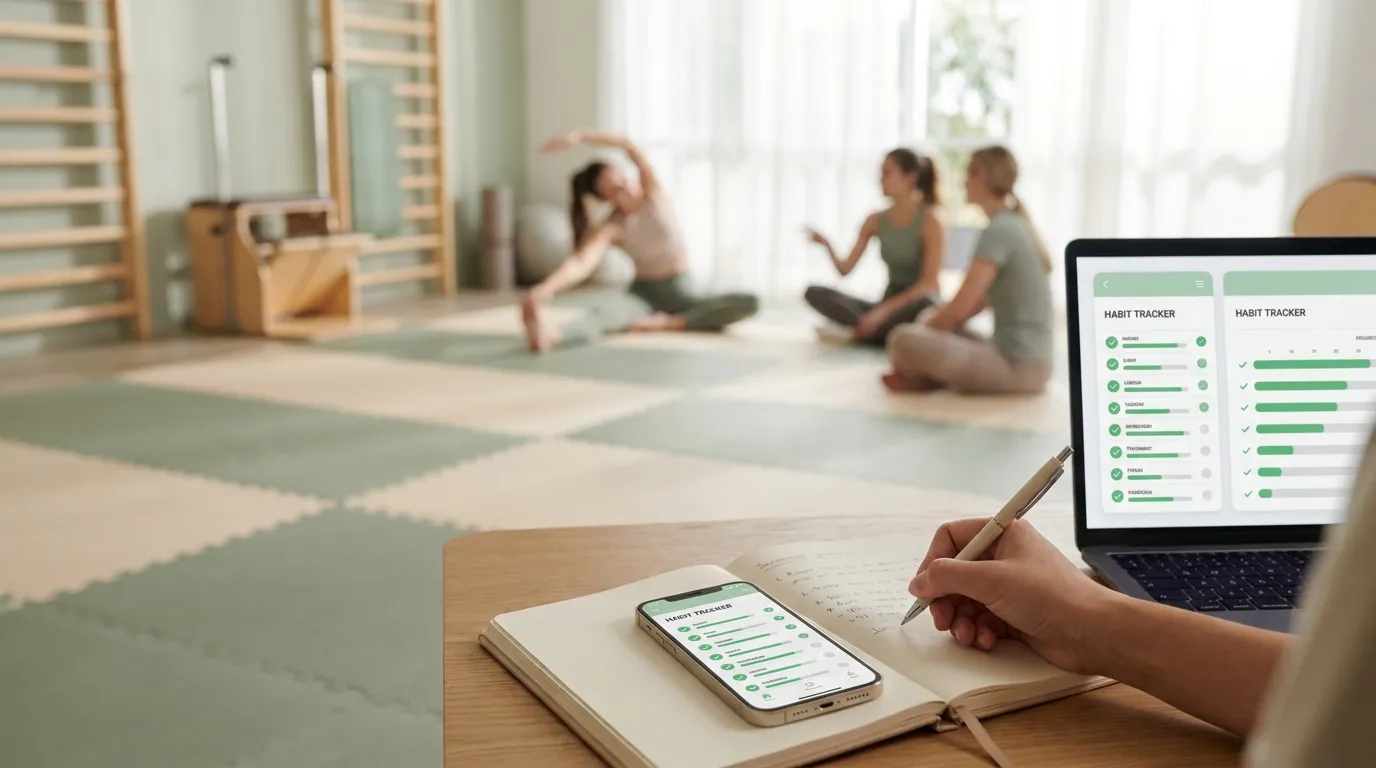
For more ideas on what to log, there is more here: Habit Tracker Ideas: What to Track (and How to Stick With It), Daily Routines: How to Track Your Habits for Maximum Impact, and Daily Habits That Survive When You Miss A Day.
Make your daily habits fit your real life
The habit tracking plan that works best usually isn’t the one that looks great on paper. It’s the one you can still do after a bad night of sleep, or on days when your focus is low.
Pick daily habits that really fit you. Choose what to track based on what actually helps your energy, stress, work, or study life. It also helps to have low and medium versions for harder days, and one option for higher-energy days too. Use cues and notice patterns. Your habits should make life easier, not punish you for being human.
Try downloading the Everyday habit tracker app free version, and starting with one tiny habit today. Track it over the next week, then adjust it based on what your energy is telling you. That makes it easier to build something you can actually stick with. Every day!