
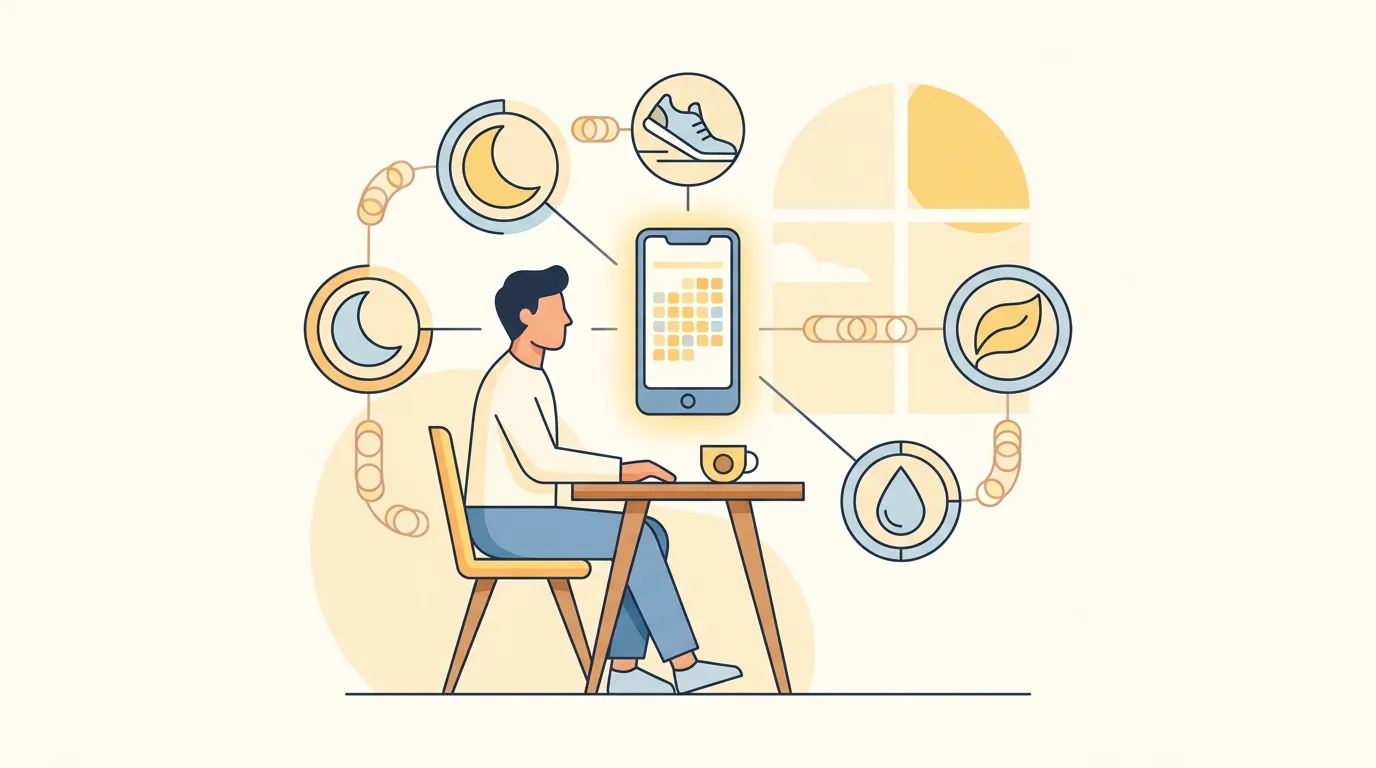
Searching for ways to change but maxed on time? We’ve got you covered with our TL;DR: The article says that people searching for ways to better themselves with good habits can benefit from habit tracking. Habit tracking helps turn common responses to the question ‘how do I better myself’ like less stress, more movement, or better sleep into small, repeatable actions that help people achieve sustainable self-improvement.
If you’re here because you’re asking ‘how do I better myself in a real, lasting way’, the team at Everyday has one thing to say: we got you! Habit tracking is one of the easiest tools to use to get you on the self-improvement train. It doesn’t magically make anyone disciplined, obviously, but it does make it easier to see what’s actually happening from one day to the next.
Most goals focused on betterment collapse at the same spot. They never get small enough to act on. You decide to walk more or drink more water or get to bed at a reasonable hour, and then the goal just sits there as a wish, never turning into a thing you do even when you are tired.
We’re happy to say that habit tracking is proven to close that gap! You break the goal into one small action, you log it, and then you do it again tomorrow, and that strong chain of checkmarks starts doing the remembering for you. If that sounds like something for you, join our conversation by reading on - we’re so glad you’re here!
Why habit tracking actually helps you change
The biggest benefit of habit tracking is feedback. It gives a clear answer to one simple question: did I show up today? Once you can see your consistency, goals usually feel a lot less abstract and much less fuzzy.
That matters because habits often take longer to stick than people expect. Recent summaries put the median habit-formation timeline at around 59 to 66 days, not 21 (Habi.app). So if a new bedtime routine or step goal still feels awkward after two weeks, that is completely normal, and probably more common than it seems at first.
If you pick the right small behavior and sequence it right, then you won’t have to motivate yourself to have it grow. It will just happen naturally, like a good seed planted in a good spot.
That idea is really at the center of smart habit tracking. Rather than tracking huge life changes all at once, the aim is to implement small behaviors you can actually repeat, the kind that fit into a normal day and do not depend on perfect motivation. That might look like:
- taking a short 5-minute walk after lunch
- putting your phone away half an hour before bed
- doing three deep breaths when stress spikes
- filling your water bottle every morning
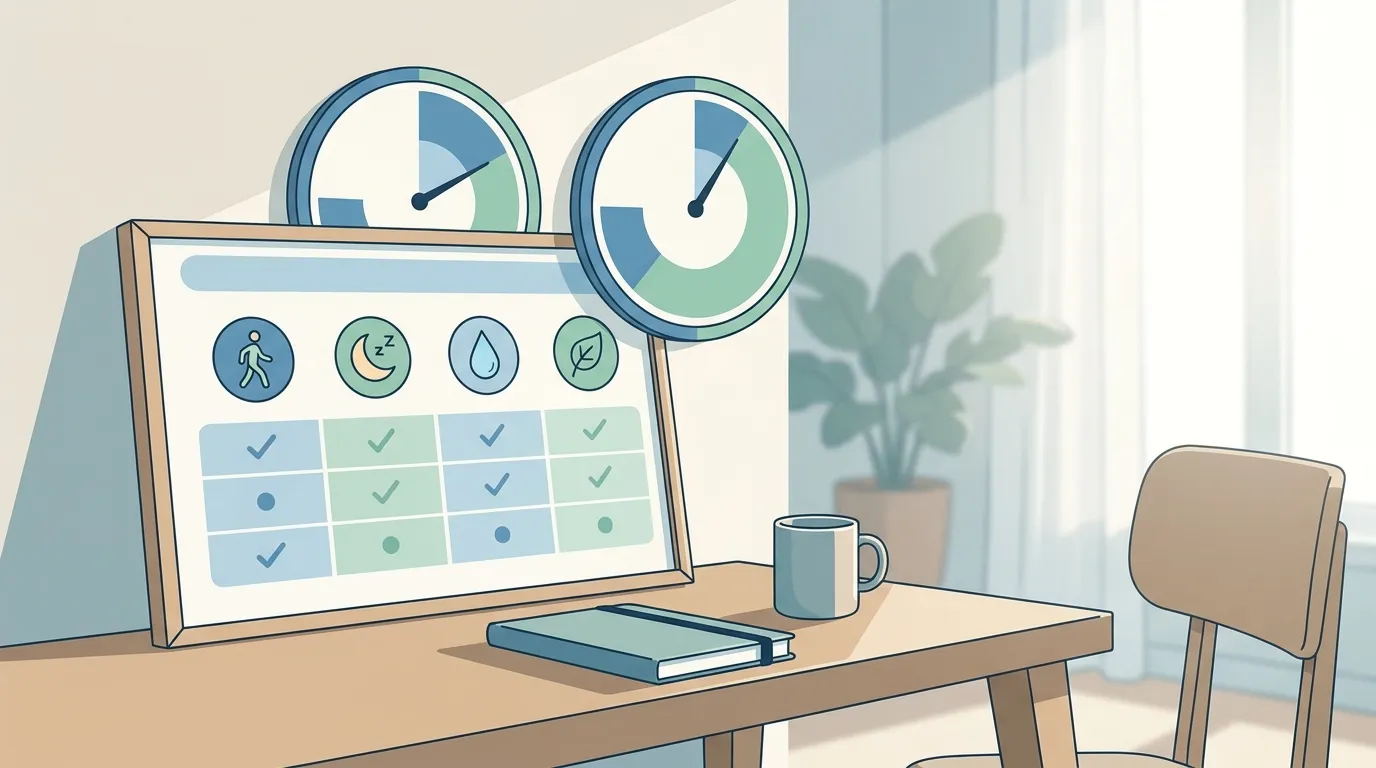
If this idea connects, it also helps to understand why habits are important when the goal is to save mental energy instead of relying so much on willpower, which usually runs out fast in everyday situations. You can also explore Micro Habits: Small Changes for Big Impact on Daily Productivity if you want more examples of tiny routines that are easier to repeat.
How to use habit tracking without making it complicated
Wellness research shows that people are moving away from all-or-nothing routines. Smaller routines, grouped together, are becoming more popular because they’re easier to keep up with in real life. Healthline also highlights studies showing that linking new behaviors to time-based or routine-based cues improved habit automaticity over 84 days (Healthline).
A simple way to start is with one part of life that would make things feel a little better overall. For a lot of people, that’s usually wellness: less stress, more movement, or better sleep, which honestly often helps with everything else too.
It also helps to keep the habit small enough that doing it again still feels easy, even on a busy day. For example, you could keep it simple, which here probably matters a lot:
Reduce stress
Try this: ‘Take 3 deep breaths after lunch’
Increase your step count
Try: ‘10-minute walk after dinner’, it’s easy, I’d say.
Get more sleep
Track: ‘screens off by 10:30 p.m.’
For a goal like this, an if-then plan often makes the habit easier to stick with because it’s very specific. Research summarized by Habi.app found that people who used clear if-then plans exercised at a 91% rate, compared with 35% to 38% in control groups (Habi.app). So instead of saying ‘I should walk more,’ try instead: ‘If I finish dinner, then I walk for 10 minutes.’
The concept of habit stacking is really useful here too, especially when you want the routine to feel a bit more automatic. With habit stacking, you link a new action to something you already do on autopilot. That older, established action becomes the cue. So instead of saying, “I should remember to stretch today,” you say, “After I brush my teeth, I will stretch for one minute.” The first habit triggers the second.
A simple tracker can help answer:
- Did I do the habit today?
- Which habit is easiest to keep?
- Do weekends break the pattern?
- Is the habit too big or set at the wrong time?
Everyday focuses on beautiful visual streaks, with views for current and longest streaks, reminders, and easy logging across devices. The point is to make things feel simpler, not harder, with less friction. The best systems also leave room for real life!
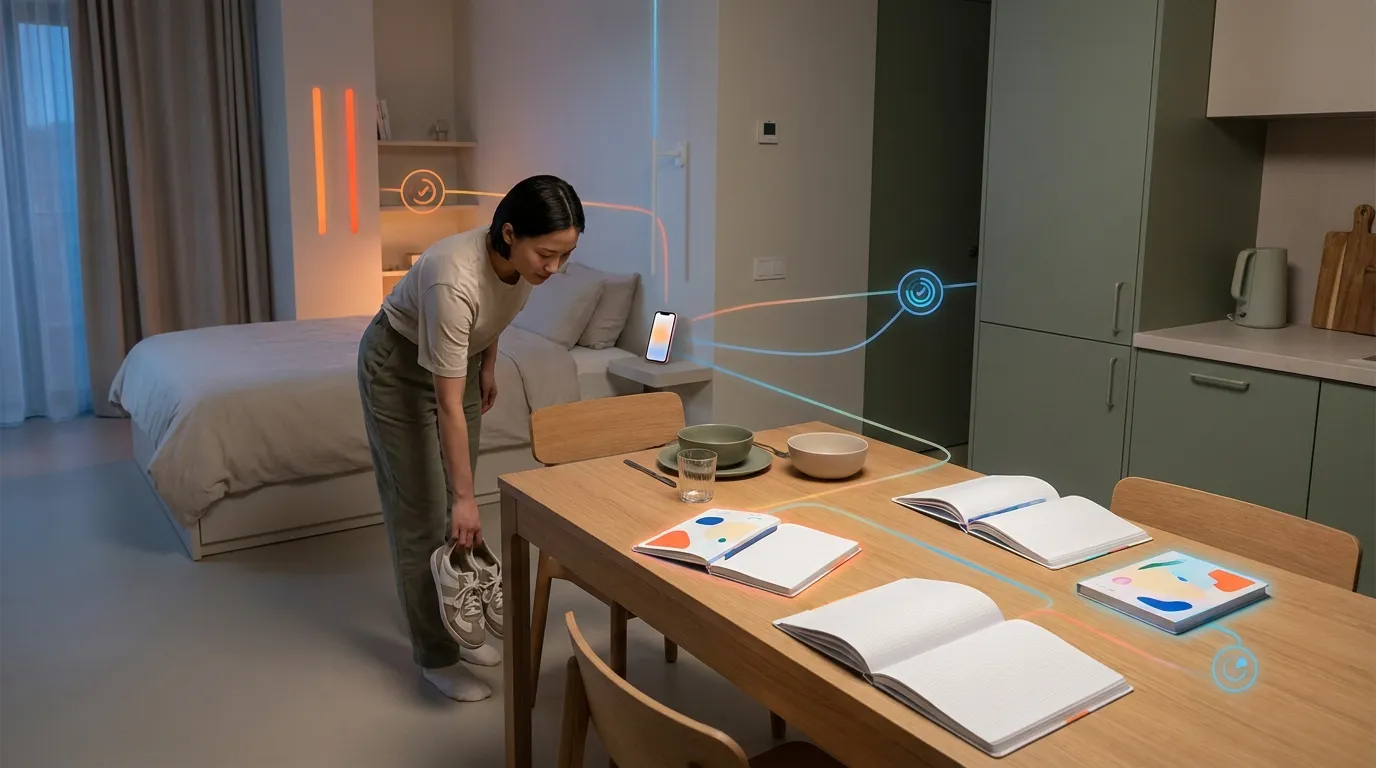
Track consistency not perfection
A common mistake is treating a tracker like it’s there to judge you. You miss one day, feel terrible, and then stop altogether, which happens pretty often. But that’s usually not how real habits actually get built.
Tracking usually works best when it helps you notice patterns:
- Do weekends usually mess up your sleep habit?
- Does your step goal work better in the morning or later in the day?
- Is your stress habit just too big for hard days?
- Are you probably expecting too much from yourself when life gets busy?
Only 9% of people fully complete New Year’s resolutions, while 88% don’t (Habi.app). That’s a helpful reminder here. Ambition by itself often isn’t enough, especially when routines get disrupted, and the system around a habit usually matters more day to day.
Once you understand that habits can change, you have the freedom, and the responsibility, to remake them.
A minimalist tool can help because it keeps the focus on the behavior itself instead of the app. Platforms like Everyday make that easier by showing streaks clearly, and quick logging across devices helps keep the whole process simple enough that people actually keep doing it.
If tracking starts to feel like too much and adds stress, btw, there’s more on that here: how to track habits without stressing yourself out. You might also like Stress Reduction Habits That Survive Burnout if lowering daily pressure is part of trying to better myself over time.
Frequently Asked Questions
What should I track if I want to better myself?
Pick one small habit that you can see yourself doing everyday. A short walk works, or maybe a fixed bedtime. Even just flossing after brushing your teeth is fine. Just log it and repeat!
How long does it take for good habits to dial in?
Usually longer than people hope. 59 to 66 days is the scientifically backed benchmark.
What habit is easiest to start to reduce stress?
Breathing habits are often the easiest; even one minute of slow breathing can help you get started, and it’s easy to do.
Do I need an app to track habits?
Not necessarily. A notebook or calendar can work. But if you want reminders, streaks, and access across web and mobile, a simple tool like Everyday can reduce friction and make daily check-ins easier.
What about if I miss a day?
Missing once is normal. Just try not to miss twice. A habit tracker that’s right for you should help you restart quickly, not make you feel like you failed.
Put habit tracking to work this week
Learning something new everyday doesn’t need a life overhaul, just consistency. Because every time you follow through you get a bit more proof that you are someone who chooses to grow. That is what self-improvement really looks like!
A simple format can make this easier: “After I do X, I will do Y.” Try tracking that for two weeks. A new routine can absolutely start there!
If you’re feeling like you’ve got a better handle on the general idea, why not have a go at downloading our Everyday habit app today. Start with just one habit – your first three are completely free! – and build your new ‘better myself’ routine from there.