
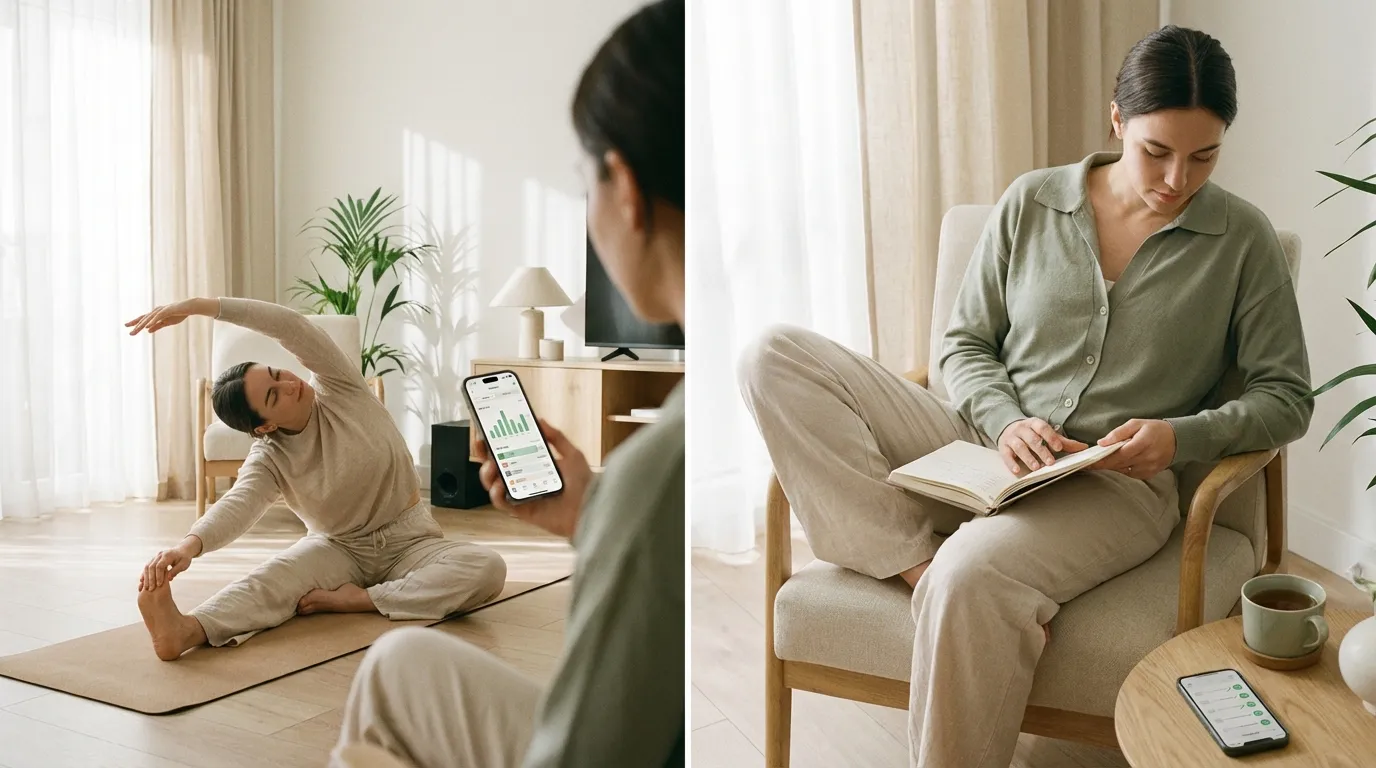
Most people want to wake up with reliable, science-backed habits dialled in, more energy, and to finally stop procrastinating… every day. The trouble is that good intentions often don’t last long. Motivation drops. Life fills the calendar. Before you know it, that healthy routine becomes another dropped plan. It happens more than most people admit!
Building habits isn’t about pushing harder. Habit research shows that small actions work best, especially when they’re connected to defined moments like when you wake up in the morning, or winding down after work. Simple tracking with a habit tracker helps as well.
This guide looks at habit techniques that work in everyday life, backed by science. It explains why habits stick, what causes them to fall apart, and how tracking supports long‑term change. It also shares personal goal examples, a few tracking ideas, and practical ways to reduce procrastination without guilt.
Why Science-Backed Habits Shape Most of Your Day
It can feel like every action is a new decision. That reaction makes sense, and the article even points to it. Still, research usually suggests something else. About two-thirds of daily behavior runs on habit for most people. These patterns often steer health choices and affect how focused or stressed someone feels during the day, even when they don’t notice it.
“Our study shows that two-thirds of what people do each day is sparked by habit, and the majority of the time those habits are intentional.”, Dr. Grace Vincent, Central Queensland University
This matters because habits save mental energy. When actions become automatic, the brain has less to handle. There’s no need to think through every small choice, like what to eat or when to check your phone, and those small choices add up. The result is often less effort and less mental clutter.
Time is another key idea from habit science. The familiar 21-day rule is a myth: ScienceDaily reports a median habit formation window of about 59 to 66 days (ScienceDaily). Knowing this helps when setting realistic expectations: tracking progress matters because results aren’t instant, and slower change doesn’t mean you’re failing.
Habit tracking supports your progress in two key ways:
- Clarity and feedback: You know what matters today and can see what’s working versus what’s not
- Accountability: Your actions stay visible, which creates a quiet nudge to show up
Everyday’s goal tracking app helps you with this by keeping goals visible all the time. The simple interface works like a friendly mirror, helping you notice effort and streaks… and where a small extra push would probably help.
For more insights on how habits drive daily routines, see Daily Routines: How to Track Your Habits for Maximum Impact.

Build Good Daily Habits That Are Clear and Easy
One of the strongest, research‑backed ways to build habits starts with keeping them small. Big goals often fall apart because they add friction and feel heavy from the very first day. Smaller habits lower resistance and feel doable, even on busy days, which is most days, honestly. There’s no pressure and no big setup, just something you can begin right away.
In a 2026 study, behavior researchers tested more than 20 habit‑building techniques. The ones that worked best were simple and specific, often things like drinking water or taking short walks. These habits reached over 90% consistency because people didn’t have to think much before starting. Less effort often means fewer excuses, and fewer plans that stall.
In real life, clarity beats raw ambition. Compare these two habits:
- Exercise more
- Walk for five minutes after lunch
The second works better because your brain knows exactly what to do and when. There’s no guessing.
This also ties closely to procrastination, which tends to come into play when tasks feel unclear and overwhelming. Smaller actions make starting feel safer, and once you just start, momentum builds step by step. If procrastination is a big challenge for you, we explain this in our guide on how to stop procrastinating, focusing on making the first step easier and closer to where you already are.
Research professor Brené Brown also points out that finishing small actions builds self‑trust over time. Each small success reinforces the following idea within yourself: “I am someone who follows through.” That identity shift doesn’t feel particularly dramatic in the moment, but it will add up to bigger changes over weeks and months.
Track What You Actually Do, Not Your End Goal
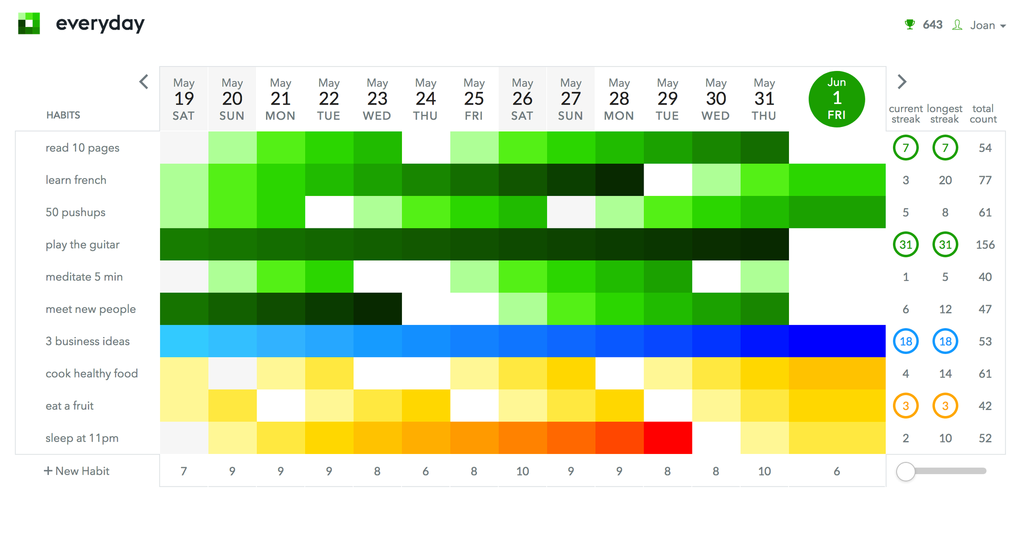
Habit tracking is genuinely one of the most practical ways to change behavior. When you track habits, your effort becomes something you can actually see. On the page. Right there. When progress is visible, the brain often stays more involved and even a bit curious. That usually helps after the first week, when early excitement fades.
This is why streaks work for many people. A simple visual chain gives a small daily reward and shows that you showed up on Tuesday morning or Sunday night, even on low‑energy days (we all have those). Seeing evidence often matters more than motivation.
A goal tracking app can help here. Less friction makes a difference: fast logging, progress at a glance, and syncing across phone and laptop, since habits don’t happen in just one place.
The Everyday habit tracker app is built around this idea. It acts like a simple mirror for behavior, keeping the focus on clear tracking that supports consistency over time.
Design Your Environment to Beat Bad Habits
Working out how to build good habits and break bad ones isn’t about pure willpower; it’s more about friction. When a bad habit takes extra effort, it tends to show up less often. When a good habit is easy to begin, it sticks around longer.
“Behaviours we want to reduce become easier to manage when they require more effort to initiate.”, Dr. Amanda Ferguson, University of Cambridge
Even small obstacles can break automatic behavior. A short pause, sometimes only a few seconds, can be enough to notice what you’re doing and pick a different action, which many people recognize once they start paying attention.
“Small barriers like removing apps from your home screen or logging out between sessions can break automatic loops.”, Dr. Amanda Ferguson, University of Cambridge
For building habits, the idea is straightforward and practical: don’t fight your brain, but rather work with it when possible. That’s why many wellness challenge ideas focus on environment changes, like walking meetings or hydration reminders, rather than asking people to “try harder.”
Make Your Wellness Routine Flexible and Forgiving
Missed days happen, and that’s normal, pretty common when real life gets messy. What’s interesting is that research by Phillippa Lally shows a skipped habit doesn’t wipe out your progress. It usually just slows how automatic the habit feels, which I find pretty reassuring.
That’s why a wellness routine that lasts needs some wiggle room built in. But remember: don’t skip twice! As Josh Waitzkin says, “the biggest problem of making a mistake is that it frequently leads to another bigger mistake”. That’s why the Everyday goal tracking app sends gentle reminders after a missed day; no loud alarms or pressure, just a gentle notification to start again.
This approach removes guilt. You’re not punished for missing once, and the focus stays on getting back into the habit. Moving forward, bit by bit, is what counts. We covered this idea in detail here: Daily Habits That Survive When You Miss A Day
Now It Is Your Turn to Build a Healthy Daily Routine
Science-backed habits usually aren’t about adding more to your plate. They work better when you do less, with more care, over time, which can feel like a relief. Small actions, done every day, slowly shape your health and focus. They also help build confidence, because you can see progress as it stacks up.
Why not start with one habit? One is often enough! Simple systems matter more when motivation drops, which happens a lot. Habit tracking helps, and so does your environment, like what’s on your desk. Clear identity-based goals can support the process, too.
If you’re ready to build science-backed habits that last, we built the Everyday habit tracker app just for people like you. Get started now, and start tracking your way to good daily habits.