

Overthinking has a sneaky way of convincing you that more thinking will lead to better outcomes, but chances are you already know that this isn’t the case! If you replay conversations in your head over and over, question your decisions, and worry over worst‑case outcomes (that most of the time, never happen), I’ll bet you then pile on the guilt, wondering how to stop overthinking the whole mess. By the end of the day, it’s no wonder your brain feels completely drained!
If this sounds sadly familiar, it doesn’t mean something is wrong with you or that you lack discipline. We often overthink the most when our mental load is already overflowing and too many choices are fighting for our attention at once. That pressure can build faster than you expect. Trying to “think harder” rarely helps and usually tightens the spiral. A more helpful option is to design your way out by choosing an approach that cuts down decisions and gives your mind some breathing room.
This guide explores how to stop overthinking by calming the mind with better habits. It explains why habits tend to lower mental noise, how small daily routines can slowly ease anxiety, and how to quiet your mind with tools like a daily habit tracker help by tracking actions and progress.
Why Overthinking Happens and Why Willpower Rarely Fixes It
Overthinking isn’t just a mindset thing. It’s usually connected to how the brain deals with uncertainty and the stress that piles up from making decisions all day long (which, let’s be real, is most days). When your schedule is full of choices, the brain looks for relief wherever it can. Often, that relief turns into analyzing everything around you, including tiny details that don’t really need that much focus. Way too much focus, honestly.
Research helps explain what’s going on here. A big chunk of daily behavior runs on autopilot. Neuroscience suggests that about 65% of behaviors are initiated habitually and 88% are executed without conscious thought. That’s a lot.
Professor Benjamin Gardner gives a great explanation as to why habits matter so much for mental clarity:
Our research shows that while people may consciously want to do something, the actual initiation and performance of that behaviour is often done without thinking, driven by non-conscious habits. This suggests that 'good' habits may be a powerful way to make our goals a reality.
This also explains why telling yourself to “just stop overthinking” rarely works. Instead of wasting energy debating every move, let your habit make the call. No drama, no spiral.
You can see the same idea in tools built around consistency, like a simple habit tracking app. By clearly showing what’s done and what’s next, they lower mental strain and remove guesswork. The brain finally gets a break, and most people notice that sense of relief pretty quickly.
How Better Habits Quiet Your Mind Automatically
Cutting down daily decisions is often one of the fastest ways to learn how to stop overthinking and quiet your mind. Habits handle that work for you. When a behavior runs on autopilot, your brain usually stops negotiating about whether or not to do it, which can be more draining than it sounds. With fewer inner debates, things feel lighter. In my experience, that’s often where real calm shows up in everyday life.
Think about a five‑minute evening reset. If you decide every night whether to do it, your thoughts can start racing. Once it’s a habit you track daily, though, it becomes the default. No stress, no overthinking. It just gets done. You no longer have to talk yourself into it, which is really the whole idea.
This is where habit building connects closely with mental resilience. Instead of asking, “What should I do right now?” your brain spots a familiar routine and moves ahead automatically. That often leads to less second‑guessing and, for many people, less physical tension as well.

Many people notice an impact on their anxiety levels after a few core habits are set. Life doesn’t suddenly become easy. The difference is that their mind isn’t weighed down by nonstop micro‑decisions. A daily habit tracker helps by giving clear visual proof that you showed up, even on rough days. And that still matters.
If you want to explore why this works, we wrote about it here: Why Are Habits Important? Automate Behaviors & Save Mental Energy Now.
Additionally, you can check Habit Formation for Beginners: A 7-Day Challenge That Works! for practical steps that align with learning how to stop overthinking through consistent routines.
Small Habits Beat Big Plans When You Overthink
Overthinking often pulls people into an all‑or‑nothing loop that’s very paralyzing. When a plan feels too big, the brain freezes, and that turns into more mental load. And then before you know it, nothing actually happens (most people recognize this pattern). It’s familiar, and it gets exhausting fast.
What usually helps isn’t tighter planning or yet another detailed system, but sustainable habit formation. Behavioral research suggests it takes about 66 days for a habit to start feeling automatic. This is why showing up usually beats going all out. For people who overthink everything, especially everything, micro‑habits make this much easier. These are actions that take one to five minutes and don’t leave much room for the brain to argue.
Rather than “fix my entire schedule,” you might just open your planner and leave it open. The steps feel almost too easy, which is often exactly why it works.
A habit tracking app like Everyday can help by shifting attention away from results and toward participation. It’s simple, and usually very calming.
If you’re curious, this idea is explored further here: Mini Habits: The Science Behind Starting Small for Big Changes, with examples designed to calm an overactive mind.
For additional insights on managing mental loops, see How to Harness Your ADHD Superpowers with Habit Tracking – it provides techniques that complement learning how to stop overthinking.
Using a Habit Tracker App to Reduce Mental Noise
When thoughts keep looping, a habit tracker app can give your mind a much needed break. A lot of people notice that simple tools work better when mental health is the goal, not looking productive. Large dashboards full of features often create stress and decision fatigue, too many buttons and too many choices. Everyday was created with this in mind, offering a simple, beautiful interface with clear prompts, colorful streaks and flexible rules feel easier to stick with. Opening the app is a quick moment to log and move on, not a chance to overthink the perfect setup.
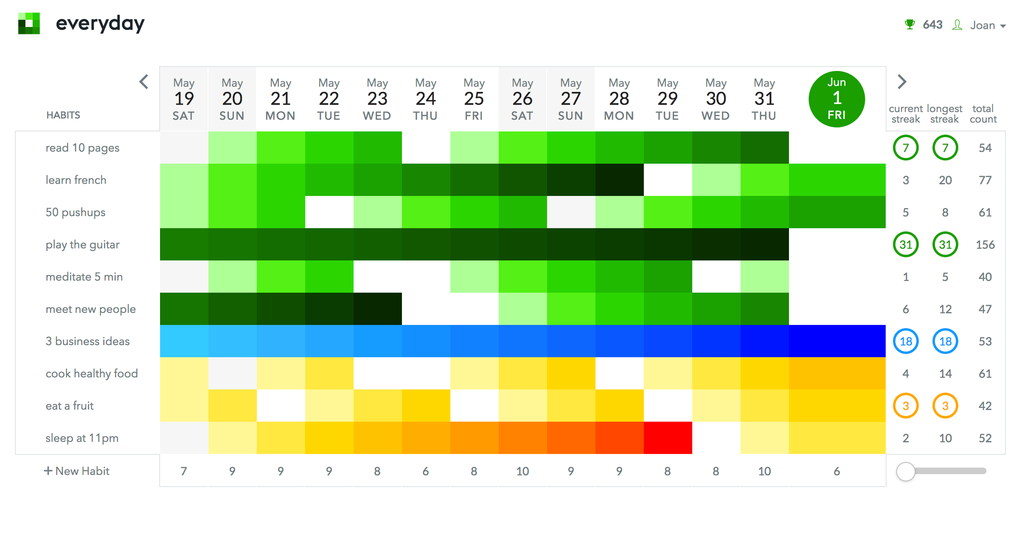
If missing days stresses you out, we covered that here: Daily Habits That Survive When You Miss A Day. And honestly, you’re not alone. We’re all human here. You can also explore Habit Tracker Ideas: What to Track (and How to Stick With It) for inspiration on building habits that specifically support you in how to stop overthinking.
Designing Your Environment for a Quieter Mind
Habits are rarely sustainable in isolation. The spaces around them often matter more than people expect, and they can decide whether a habit feels easy or quietly annoying. When a space is set up on purpose, habits get steady, low-key support and usually need less willpower, which is a real relief. Fewer distractions often lead to fewer internal arguments.
What’s interesting is how small changes can ease mental noise. Keeping a journal right on your desk or putting your phone out of reach during focus time sounds basic, but these choices lower friction on days when attention is already thin.
Environmental cues also help because they remove the decision-making process completely. This works well with habit tracking. Your habit tracker app mainly acts as a reminder and a small reward. You do the habit, log it, and move on, with less mental back-and-forth to drain your energy.
We covered this idea in more detail here: Harnessing Environmental Cues: How Your Surroundings Shape Your Habits, with examples of how small design tweaks can improve consistency.
Quiet your mind with the Everyday app.
Questions people often ask
How long does it take for habits to reduce overthinking?
Most people feel significant relief after a few weeks. Still, everyone moves at a different pace. You do you, and the rest will follow naturally. You’ve just got to make sure you do it every day!
Can a habit tracker app really help with anxiety?
Yes! It gets decisions and progress out of your head (which feels nice), calming rumination and cutting down the decision fatigue that can feed anxiety.
We like to recommend starting with a tiny habit, like one minute of breathing or a short evening walk. Why make it harder?
What if a day gets missed again?
Missing a day happens a lot (and it’s fine). What helps most is avoiding a consecutive 2-day repeat, and keeping the guilt low to prevents a spiral. We’re all human! The Everyday habit tracker app even has a ‘missed day’ function so you can keep your streak intact. Log it, forget it and move on!
Now It Is Your Turn to Quiet the Noise
Overthinking gets loudest under pressure and uncertainty; it grows there. Habits, on the other hand, bring clarity and calm by repeating daily and creating a steady rhythm.
You don’t need a perfect plan or nonstop motivation. What helps is one small habit and a system that makes showing up easier, even on off days. That’s where your daily habit tracker comes in: it gently pulls your focus from mental loops back to consistent action. If turning noise into forward motion sounds useful, this ties to what we covered in our article on ways to stop procrastinating and how habits can support you.
As Mark Twain famously said: “I’ve had a lot of worries in my life, most of which never happened”. So take a deep breath, get that habit dialled in, and start working on quietening your mind right away. You’ve got this!