

Goal tracking sounds simple on paper. Inspiration, motivation and big plans flow easily at the start; it often feels exciting. Then real life kicks in. Busy days stack up. Then all of a sudden, your great intentions are reduced to a forgotten note on your fridge. Sound familiar?
What makes goal tracking work is what happens after that initial rush. Guessing becomes a thing of the past. You start seeing where you actually stand sooner than expected, and that clarity can help keep things moving when motivation drops.
This guide looks at personal goal tracking with our simple, beautiful app, Everyday. Everyday is built around one clear idea: work on your goals, every day. Perfection isn’t needed, but showing up is required. This doesn’t have to be a big, scary commitment though – thinking small actually achieves bigger results. But you’ve gotta do it every day!
Why goal tracking works better than motivation alone
Motivation comes and goes, and that’s normal; very normal. Goal setting methods and systems that last the distance are the ones that don’t depend on how inspired someone feels on a random Tuesday.
What trips people up most of the time isn’t laziness. A study by the University of Scranton shows that 92% of people fail to achieve their goals without a clear tracking system. In real life, the bigger issue is memory and attention. On busy days (let’s face it; that’s most days), your brain drops anything that isn’t right in front of you.
This is where tracking makes a real difference. Goal tracking creates feedback. On average, it takes about 66 days for a behavior to feel natural, which is a long stretch to rely on motivation by itself.
Personal goal tracking supports your progress in two key ways:
- Clarity and feedback: You know what matters today and can see what’s working versus what’s not
- Accountability: Your actions stay visible, which creates a quiet nudge to show up
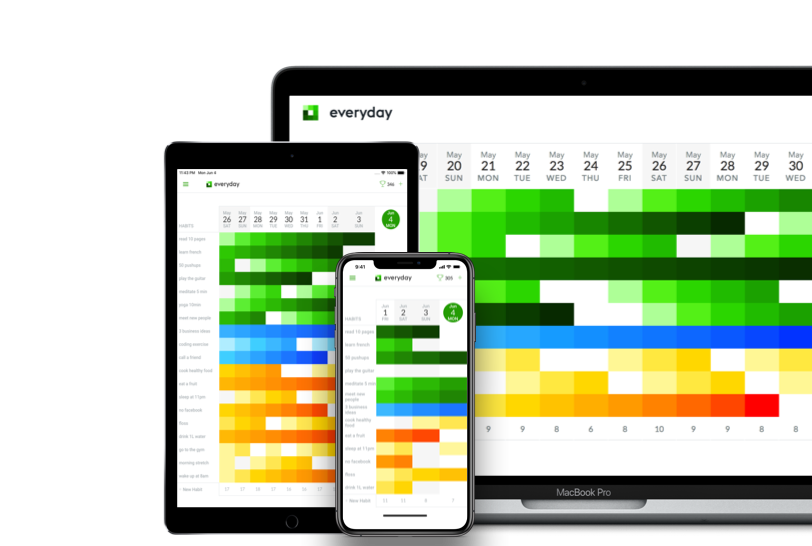
Everyday’s goal tracking app helps you with this by keeping goals visible all the time. The habit board works like a friendly mirror, helping you notice effort, streaks, and where a small extra push would probably help.
Turn big goals into small daily habits you can track
Big goals are often quite hard to track because they’re too complex. Punching in “Get fit” into your goal tracker sounds great, but it doesn’t help much on a random afternoon when you’ve only got 20 minutes to spare!
This approach is the core of practical goal setting. You take a long-term outcome and break it into small actions you can repeat. You track those daily actions instead of the far-off result. It’s simple, and it works because there’s less guessing involved.
With the Everyday goal tracking app, one simple, clear habit usually does the job. And it doesn’t need much structure:
- Start by defining a long-term goal
- Then pick one small daily action that clearly supports it
A couple of examples help explain this:
- Long-term goal: Reduce stress
Daily habit: Meditate for 5 minutes or do some stretching. - Long-term goal: Grow professionally
Daily habit: Learn one small thing, like reading a short article on a topic that’s relevant, or writing a quick note.
The Everyday goal tracking app keeps these habits on a single board that’s simple, beautiful and easy to navigate. The colors really help! Some people also separate habits, like wellness habits from work or learning, making patterns easier to notice at a glance.
If you’re new to this, the basics are also covered in Habit Formation for Beginners: A 7-Day Challenge That Works!
Build consistency with bold streaks and simple rules
Consistency is the real goal here.
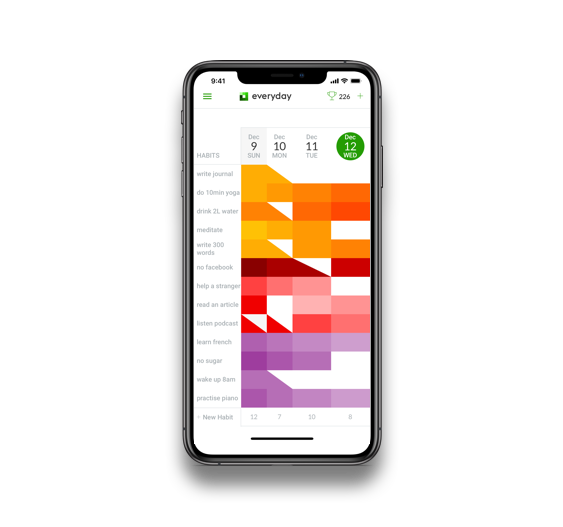
Everyday uses beautifully coloured streaks to make consistency easy to see. Each time you tick off a habit, your streak becomes stronger, the color gets deeper and more complex, and the chain becomes more and more complete. This is an intentionally simple concept: the brain responds to clear patterns it can recognize quickly.
There’s even a really forgiving ‘skip’ feature, represented by a little triangle, to help you continue on your journey without the guilt. Skips are a great way to be flexible and to continue on with training our brain to minimize the lows while keep upgrading the highs. There’s no complex system and no extra math, which many people find refreshing.
But remember: don’t skip twice! As Josh Waitzkin says, “the biggest problem of making a mistake is that it frequently leads to another bigger mistake”. That’s why the Everyday goal tracking app sends gentle reminders after a missed day; no loud alarms or pressure, just a quiet notification to start again.
This approach removes guilt. You’re not punished for missing once, and the focus stays on getting back into the habit. Moving forward, bit by bit, is what counts.
We’ve seen quite a few habit streaks in our time at Everyday, and one mistake that we see frequently leading to skipped days is tracking too many habits at once, or giving up after an imperfect week. We recommend you start with one to three mini habits that don’t take up a lot of your time or energy: five minutes on the exercise bike, one page of a book, maybe a short walk around the block. Over time, those small, repeated actions can change your perception on what you believe you can achieve in both the short and long-term.
If you want more ideas, we covered this here: Habit Tracker Ideas: What to Track (and How to Stick With It).
Use progress data to stay motivated long term
What usually keeps people going is actual proof they can look back on, not the initial inspirational high. Short-term motivation can fizzle very quickly, but seeing visual evidence of your progress gives you something tangible to return to.
The Everyday goal tracker puts your current streak, longest streak, and total completions into one place. Just clear numbers in a beautiful format. Having them side by side makes progress feel more real and tangible, which is far more motivating than good intentions floating around in your head.
That longest streak slowly becomes a personal challenge. It’s quiet and low-stress. You’re trying to beat yesterday, not other people, which keeps things doable for most folks.
You can also view progress by week, month, or year, and patterns tend to appear. Weekends might be tougher. Busy work periods often lead to slips, sure, but some habits will start to feel automatic before you even realise it.
Looking back like this helps people adjust without judgment. When a habit keeps breaking, it’s usually because it’s too big or not carefully defined enough, and making it smaller almost always helps. And because Everyday lets you skip days for holidays or illness without breaking your chain, you’re more likely to succeed, because rigid systems often fall apart when real life shows up.
If missing days worries you, we covered that in Daily Habits That Survive When You Miss A Day.
Why Everyday works as a goal tracking app
There are no shortage of habit and goal apps out there! But most of them try to do everything at once, piling on features, settings, and options to sound like they’ll fix ALL your woes. That can be really overwhelming for a lot of people, pushing you away from your goal rather than towards it!
What makes the Everyday goal tracking app different is our simple idea: do it every day! That single rule shapes the whole experience. Instead of making you manage the app, it stays simple and clear. That focus makes it easier to stick with goals, not just plan them.
The stand-out feature is that the design stays minimal, so your attention goes to action instead of menus. Visual streaks make consistency easy to get a handle on, and once they start growing into a strong and beautiful chain, you’ll start smiling every time you look at them! Your data also syncs seamlessly across your devices, so your progress stays visible on your phone, laptop, or tablet. And very importantly: logging is fast!
Everyday feels a lot like pen and paper: familiar and calm. That balance helps people show up more often, which is what we need for building strong, healthy habits!
If you’re curious about the science behind starting small, Mini Habits: The Science Behind Starting Small for Big Changes goes deeper and adds helpful context on how the full goal tracking experience can fit into your routine.
Now it is your turn to track what matters
Momentum keeps goal tracking alive, especially when you can see a streak growing day by day. That kind of progress matters more than pure motivation. Goals don’t fail because people don’t care; they tend to slip when there’s no system or structure, and most of us run into that at some point.
Goal tracking adds that structure. It turns intention into action and makes progress easy to see, which can help you trust yourself more over time. It’s slow, yes, but clear, and seeing real proof changes how you show up.
With Everyday, personal goal tracking fits into your day as a quick check‑in that takes about a minute, not a chore or a burden. Start with one simple habit, track it daily, and watch a small streak grow strong!