

Working out what the best apps for habit tracking are can feel harder than actually starting the habit! For some of you out there, the best choice is an app that makes habits feel fun and competitive, with lots of dopamine-hit rewards. Others do better with a clean layout with a slower pace and minimal pressure. Less noise can also mean less mental clutter, which for many of us is a non-negotiable when we’re considering adding yet another app or routine into our day!
This comparison of Everyday and Habitica is definitely worth a look if you’re wondering whether a gamified habit tracker will work better for you than the minimialistic Everyday habit app experience. One app turns your tasks into a role-playing game, while the other keeps things beautifully minimalistic and super calm. If you’re trying to work out how to build better habits, the right fit makes all the difference.
In this guide I’ll break down the pros and cons of Habitica vs the Everyday habit tracker in a practical, real-world way. It explains how gamification works, and why a gamified habit tracker may help at first but start to feel tiring over time. It also covers habit stacking, goal setting, progress visibility, and the kind of productivity app that is more likely to help people stay consistent for months instead of just a few days.
Why habit trackers work in the first place
Most of the time, people don’t fail at sticking to habits because they don’t care. Habits slip because they’re easy to forget, awkward to repeat, hard to keep up with when dealing with life challenges, and are sometimes are too big or vague to stay on top of. A good habit app lowers the barrier to entry on those problems. It shows you what needs to get done, makes it fast to check off, and lets users track their progress without making it feel like extra work.
There is also real science behind it. About two-thirds of daily behavior comes from habit! Habit app tools support loops built around cue, action, reward, and repetition, making behavior easier to notice, and cutting down the mental load of trying to remember everything. This then makes progress easy to read at a glance, and that matters when consistency depends on small choices made every day.
Habit stacking is another thing that a good habit tracker will help you with. This is where you connect a new action to something you already do automatically, like brushing your teeth or making coffee. By attaching (or “stacking”) it to something that’s already part of your day, it makes follow-through easier and gives the habit a better chance of sticking (Mindful Suite).
Habitica: a fun gamified habit tracker
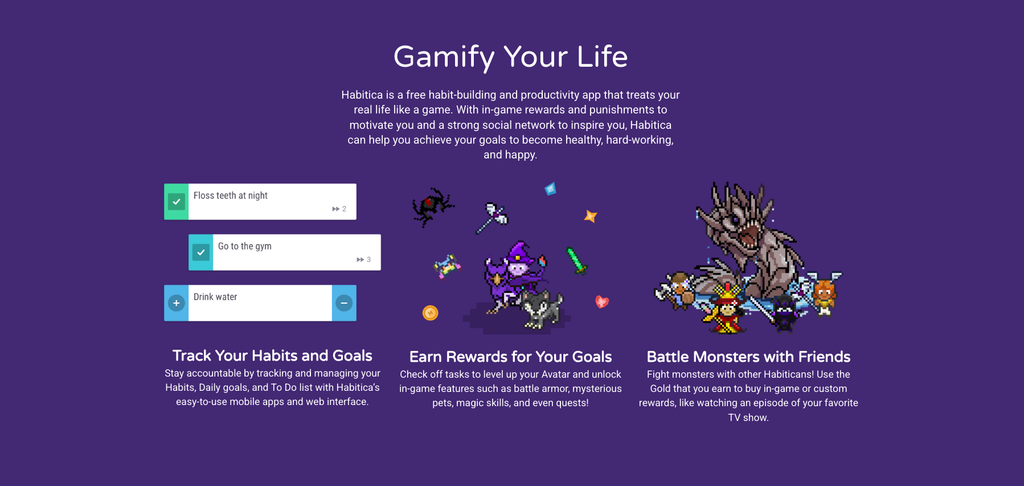
Habitica is one of the best-known gamified habit trackers, and its retro RPG vibe is a big part of why people like it. You build yourself an avatar, then earn gold, XP, gear, and rewards for getting habits done. If you skip a habit, your character loses health. If you’re old enough to remember tamagotchi’s, it’s kinda like that, but for habit formation!
The gamification element can definitely help some people with getting started, especially if you’re the sort of person who finds chores feel extremely dull. For users with ADHD, for example, Habitica’s features like social accountability, quests, teams, rewards, and visible progress can make it feel a lot easier to keep coming back.
Most gamified productivity apps die in your phone within a week.
However, gamification doesn’t automatically mean your new habit plan will turn into a routine that lasts the distance. It can create a fun burst of excitement, and the dopamine hits of the reward loop can be enough for some people to build sustainable habits. But unfortunately, motivation levels are at risk of dropping off once the newness dies off. That doesn’t make Habitica a bad app; it just suits a certain type of user especially well, while being a weaker fit for others.
Everyday: a calmer way to build consistency
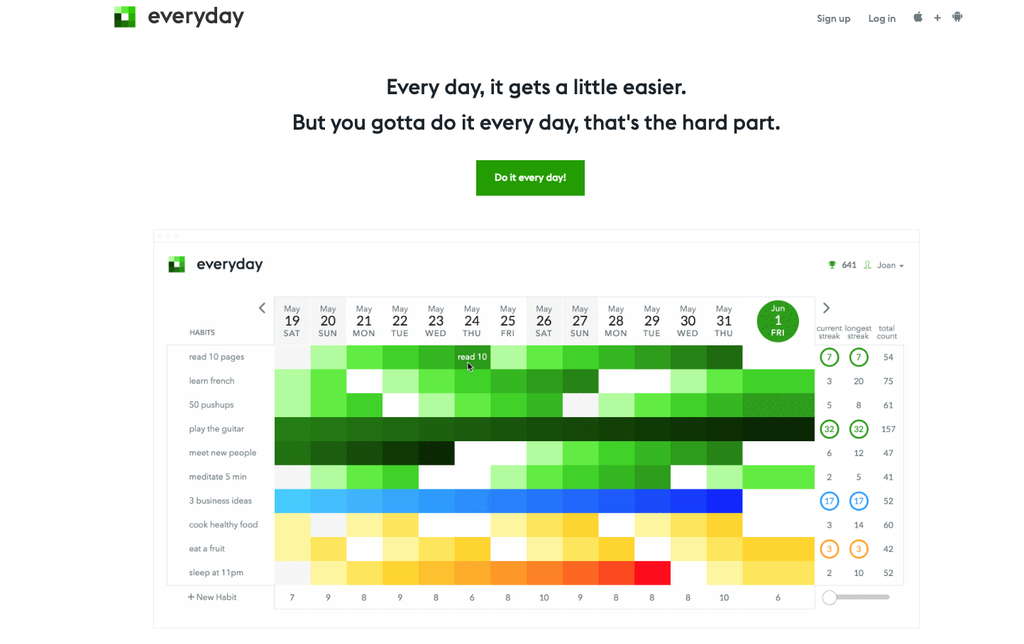
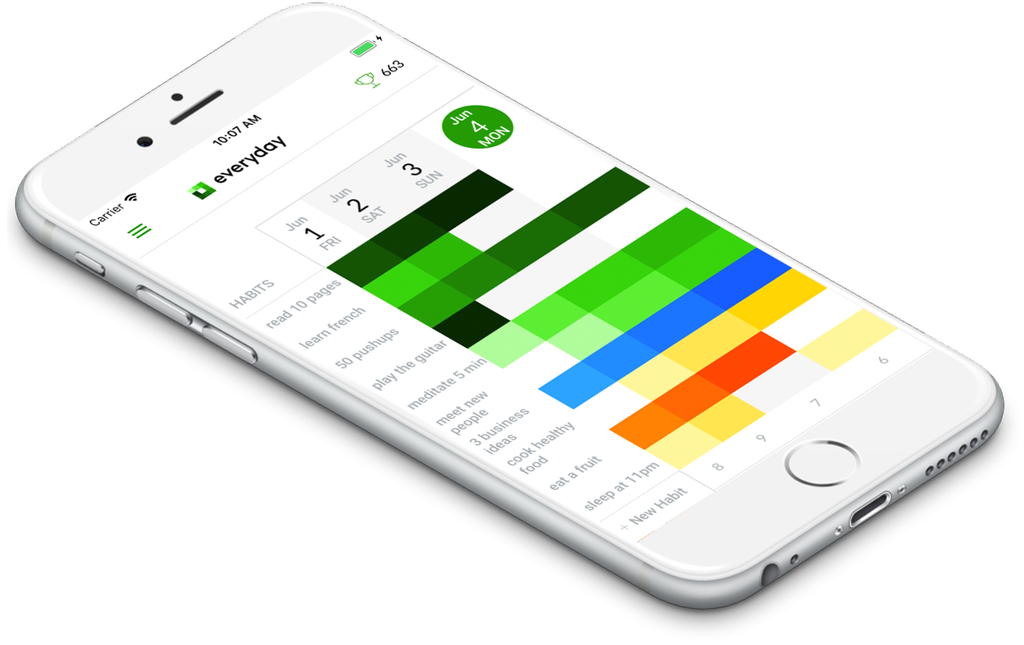
Everyday keeps things simple. It’s build on the premise of ‘don’t break the chain’, which helps you get motivated to form long streaks of days where you’ve successfully performed your habit. The more days you manage to chain in a row, the less likely you are going to quit – based on science! – until ultimately, you do it without even thinking about it, because voilà – it has become an habit!
People looking for the best apps for goal setting often think they need more features, but in practice, less usually works better. Founder Joan Boixadós found most habit trackers on the market too cluttered, trying to cover too many things and offering features that don’t add any real value. His approach with the Everyday habit tracker is to do one thing and do it right: you open the app, find the habit, mark it done, and move on!
The behavioral science behind it is pretty simple. Clear cues help habits stick, and visual streaks can keep motivation up without making each day feel like a performance. In neuroscience, this is called “cue-dependent learning,” where the brain links one action to another, similar to matching puzzle pieces. When you connect a new habit to something you already do, your basal ganglia (the brain’s habit control center) can dial in that routine faster. In fact, research on synaptic plasticity shows that repeating the same cue-action combo strengthens neural pathways until they’re really tough to break.
Flexibility matters too. If a tool is too rigid, one bad day can feel bigger than it really is. Everyday’s simpler design helps reduce that sense of guilt and makes it easier not to overreact. That can make a real difference for stress management and for staying consistent over time.
That is also what makes it feel different from a heavily gamified system. A lot of users are not looking for a fantasy reward loop. They want a gentler way to notice their effort and track progress without also managing a character.
Gamification vs calm consistency: which science matters more?
The real question here is not which app has more features. It is about the kind of motivation someone wants to build over time.
Gamification can definitely help. Rewards, fun characters, progress bars and social features often increase engagement. But there is still a limit.
The ceiling on any productivity gamification is the user's own clarity on what they should be working on. No app can compensate for unclear priorities.
Habitica can spark action, especially at the start. But if a habit list is cluttered, too long, or unclear, the game layer will not fix that problem. Everyday goes in a different direction: fewer habits, clearer focus, and more consistent follow-through.
That difference matters particularly for self-care users. If someone is trying to sleep better, drink more water, stretch, journal, or reduce stress, a high-stakes reward and punishment loop may not feel very supportive. It can feel noisy instead. A calmer productivity app can make it easier to build routines without chasing constant highs or treating every missed day like a setback.
Which app is better for different users?
Habitica usually works better if you:
- Love games, levels, rewards, and playful motivation
- Need extra stimulation to get going
- Enjoy social accountability or group quests
Everyday is usually a better fit if you:
- Want a clean, beautiful habit tracker
- Care about streaks and clear progress
- Prefer self-care over pressure
- Need a cross-device routine that just works
Working out how to choose the best apps for goal setting is personal, but the answer is simple: it’s the app that you still keep opening after that first burst of motivation wears off.
How to choose between Everyday and Habitica
Still not sure? Try a quick gut check.
Habitica makes more sense if starting is the hard part. Maybe boredom is what keeps getting in the way. Maybe tasks just sit there unless they feel at least a little fun. In that case, a gamified habit tracker might give you the push you need.
Everyday fits better if the real issue is being consistent. Maybe overwhelm is the bigger problem. If that sounds familiar, a simpler tracker is the better fit.
There’s a bigger pattern here too. Newer habit and productivity apps often add AI, automation, analytics, and deeper workflow connections (Reclaim.ai; BuildIn.AI). Those extras can be useful, but make things feel more cluttered and overwhelming for some users (guilty as charged!). Not every productivity app needs to become a control center! For daily behavior change, clarity often works better.

Your habit tracker questions answered
Is Habitica one of the best apps for habit tracking? It depends on what keeps you motivated. Habitica is a good choice if novelty and rewards give you a push in the right direction; the avatars, quests, rewards (and punishments!) help lots of people stay consistent. If that kind of stimulation is too much for you, listen to your gut and choose a non-gamified habit tracker that isn’t quite so feature-packed.
What is a gamified habit tracker? It’s a habit app that borrows from game design – we’re talking points, badges, levels, characters. The idea is that the same mechanics that make games addictive can make you ‘addicted’ to your habits too.
Is Everyday better than the Habitica app for self-care habits? For a lot of people, yes! Self-care habits don’t need a reward loop. Sleep, stretching, journaling, wellness routines – these tend to stick better with calm repetition than with points and penalties. Everyday’s design is built around that.
How does habit stacking work with habit tracker apps? You attach a new habit to something you already do. Meditate after making coffee, say. Apps help because they make the pairing visible; seeing it logged is often what makes it feel like a real part of your day. It also gives you that little prick of pride that you’ve achieved something!
Which habit app is right for you?
Both Everyday and Habitica can help you achieve your goals in different ways. Habitica is centred around funsies, creativity and lots of gamification, which may be a great fit if you respond well to that kind of stimulation. But if you’re like me and you’re more focused on wellness and work-life balance, and have a ‘less is more’ mindset, simpler tools often work better.
That gives Everyday the edge here. It stays focused on the real point: doing small actions often enough that they become part of daily life. No costume changes or health bars, and definitely no punishments or pressure to keep things fun. Just clear habits, visible progress that’s beautiful to look at, and a no-fuss system that gets the job done. Every day!
Trying to choose between the best apps for habit tracking? The most useful question is pretty simple: do you need more excitement? Or something minimalistic and beautiful? If the answer is the latter, Everyday is the better fit for you. You can get started for free in just minutes by heading to everyday.app - pick one small habit, attach it to something already in your routine, and track it for a few weeks through small, consistent actions. Because in the end, it’s a simple mantra: you’ve just got to do it every day!