

Life with ADHD can be a real ride. One day you have lots of ideas and energy; the next, everything feels impossible and the best you can do is doomscroll in the corner for hours. If you have ADHD and this sounds familiar, it’s important to know that it doesn’t mean anything is wrong with you. It just means your brain works a bit differently to others. And the great thing about this is it means you have some really amazing strengths we like to call ADHD superpowers!
ADHD is often talked about like something that needs fixing. But many ADHD traits are also strengths. Creativity and hyperfocus come up the most (you’ve probably heard that before!). You just have to figure our how to use them in a steady, sustainable way.
This is where habit tracking can help. A solid system gives the brain what it needs to be able to respond effectively: clear cues, visible progress, and small wins that actually feel rewarding. Seeing the effort visualised over time makes it easier to keep going. It also helps to lower mental load, which can help make the slippery slope of ADHD procrastination easier to handle.
This guide looks at how ADHD brains work and why procrastination is such a prevailing factor. It also looks at how habit tracking builds momentum over time, with examples of what makes an ADHD-friendly app like Everyday easier to stick with than standard productivity tools.
Why ADHD Superpowers Need Structure to Shine
ADHD brains light up around interest, not pressure. Pressure tends to drains energy instead of creating it, and for many people with ADHD, it pushes motivation even further away. That’s why boring but important tasks can feel really hard to start – sometimes even impossible! – even when they matter. If you’ve ever stared down the prospect of unloading the dishwasher while feeling like you’re drowning in dread, you’ll know exactly what I mean.
It’s important to understand something straight up, especially if you’ve been told the opposite for years: this isn’t a personality issue, and it’s not laziness. Louder for those in the back: You’re not lazy!
People with ADHD are interest‑based, not importance‑based. We don’t get motivated by importance or rewards in the future. We get motivated by what’s interesting, challenging, novel, or urgent.
For many people, this idea explains a familiar pattern, and the demand to not just understand it, but work with it, is very real. Searches for ADHD increased by more than 270 percent between 2019 and 2023, according to a YouGov study summarized by Qbtech. People are clearly looking for systems that work in real life, day to day, not just in theory.
This is why a habit tracker is one of the best ADHD productivity tools there are. It moves things out of your head and into a place you’ll actually see, like a page or screen you already check. This kind of external support works so much better than relying on discipline alone. It gives your ADHD superpowers room to help, instead of adding more friction and obstructing your progress even further.
ADHD Procrastination Is Not a Character Flaw
ADHD procrastination is an extremely common trait, and it’s often very much misunderstood. The problem isn’t not knowing what to do or not caring enough. More often, it’s the very prospect of simply starting the task that creates the problem.
The brain is very smart: it senses your discomfort, and looks for quick relief in the form of a dopamine hit. That might come from doomscrolling, snacking, or basically anything that delays what you’re actually supposed to be doing. This might even involve starting a completely different core task!
Habit tracking is an amazingly effective way to make that first step feel more manageable. Instead of asking, “Do I feel motivated enough to do this?”, the question becomes something simpler: “Can I do this for one minute?” That tiny commitment to yourself can lower the bar just enough to get started.
That’s why the best ADHD productivity tools focus on completing small actions to earn micro-rewards. Checking something off gives you that quick dopamine hit, which can feel motivating in the moment and encourages you to repeat the action.
Research from the Attention Deficit Disorder Association suggests habit formation for people with ADHD often takes between three and five months. That may sound like a really long time, but tracking helps make that process rewarding and visible.
If you want more practical ideas that focus on generalized use, we wrote an article about how to stop procrastinating. It’s short and focused on examples like starting with a single habit. We also think that one of the best ADHD apps is ours from Everyday; the setup is super easy, the interface is clean and beautiful, and you can get started on building that single habit right away!

How Habit Tracking Effectively Supports the ADHD Brain
ADHD brains burn a surprising amount of energy on small choices: what to do first, whether something was already done, or even just building up the courage to begin that thought process! You’re not crazy: you often really are more tired than people with neurotypical brain function!
Externalizing information – that means putting reminders, routines and habits outside the scope of the brain – is absolutely essential for effective ADHD management. This is why a habit tracker is one of the best apps for ADHD, because it helps by taking on that mental load. It acts like a visual memory.
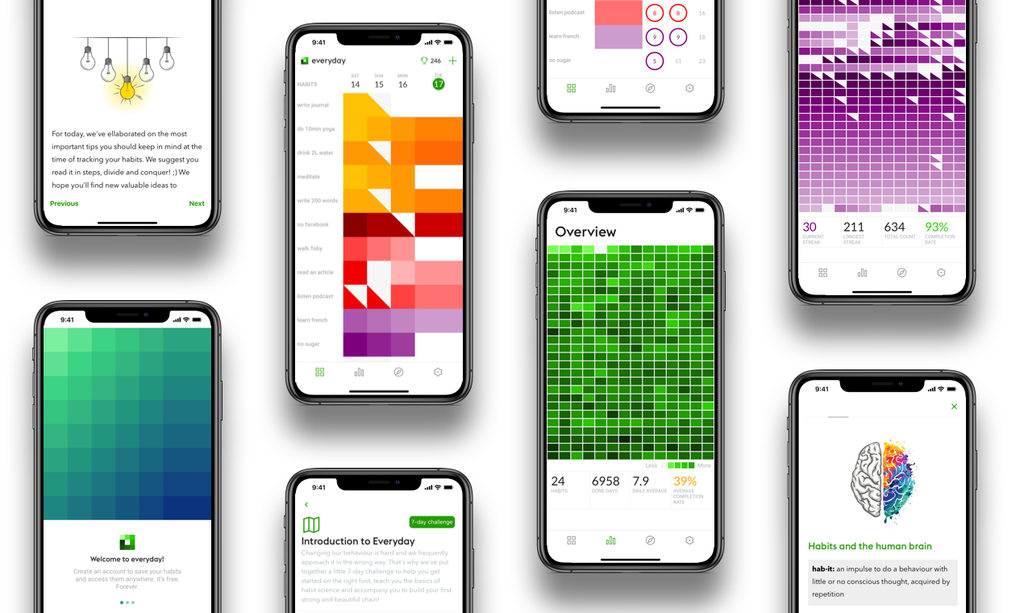
This is also why streak-based systems work really well for tackling the ADHD procrastination beast. The goal isn’t perfection, but rather momentum. An ADHD-friendly app like Everyday focuses on one clear board, easy-to-see streaks, and logging that takes seconds. That simplicity really helps when attention and mental energy are running thin.
If missing days feels like a stressful prospect, we wrote about that here: Daily Habits That Survive When You Miss A Day. Flexibility supports consistency by making it easier to start again without starting over. With the Everyday app, you can even skip a day without breaking your streak!
Choosing the Best ADHD Apps for Productivity
Not every productivity app works well for ADHD, and many people have learned that the hard way – myself included! A lot of tools come packed with tons of features, which can cause decision fatigue pretty quickly. For me, this comes in the form of too many buttons, too many choices, and an instant meltdown. Apps that work better remove extra steps and help users keep moving without stopping to rethink each action.
So what actually helps when picking apps for ADHD? A few details really matter:
- Fast, one‑tap habit completion, so you’re not digging through menus or settings
- Simple visual feedback, like progress bars and checkmarks that are easy to see
- Flexible streaks that allow breaks instead of punishing missed days (because life happens)
- Cross‑device sync, so your data stays the same when switching between phone and laptop
The global ADHD planner and productivity app market is expected to grow from about 500 million dollars in 2025 to 1.8 billion by 2033. This growth points to how many people are looking for systems they can actually stick with.
Everyday fits perfectly into this space by doing less on purpose. It focuses on daily check‑ins and consistency, so users know exactly what to focus on today, not ten things at once. No overload. There’s more on this idea in Habit Formation for Beginners: A 7-Day Challenge That Works.
Turning Small Habits Into ADHD Momentum
ADHD brains do like new things, but when everything asks for attention, those signals turn into static. That’s why experts like Dr. Ari Tuckman suggest focusing on one to three keystone habits at a time. A keystone habit is one basic behavior that triggers other positive actions with minimal conscious effort involved. This helps because those habits usually make other routines easier, without adding extra steps or extra thinking. In many cases, that lowers the overall effort needed to get the tasks done.
Examples include:
- Opening your planner each morning, even if you don’t write anything
- Doing five minutes of movement (a stretch counts!)
They sound almost too small, but that tiny action often builds confidence over time. Habit tracking rewards effort, not results, so you still get credit on low-energy days. For more ideas, we covered this here: Habit Tracker Ideas: What to Track (and How to Stick With It). Moreover, check out Keystone Habits: The Productivity Multiplier You’re Missing for deeper insight on building momentum with those ADHD superpowers of yours.
Using Habit Tracking as an Anti-Procrastination App
A lot of people look for tools to fix procrastination when, honestly, they mostly just need a bit of a jumpstart to begin doing the thing they’re procrastinating over. Habit tracking does this well. It’s not about fixing everything at once; it’s about helping you start. That first push matters more for ADHD than finishing strong.
Habit tracking is an excellent anti-procrastination tool because it keeps your focus on step one rather than the entire task. Once you actually get going, ADHD brains have a much better chance of continuing on. And because there’s nothing to “finish” (let’s face it, we ADHDers are not that great at this), you’re set up for success the moment you make that first move.
You can also pair this with small changes to your environment. Turn off the notifications on your phone, sit down on your favourite chair, mat or garden bench, then open your habit app. This acts as a clear cue when you have a reliable environment or process that can be replicated each time you begin your routine.
Make procrastination a thing of the past with Everyday!
Questions and Answers
Are ADHD superpowers real or just a positive spin?
While they may not come feature packed with capes and laser beams, they’re still very real! Structure is what helps turn these traits into positive results. They’re real, not hype, and with support they can become great strengths.
Can habit tracking really help ADHD procrastination?
Absolutely! It reduces choices and adds rewards, which helps keep that dopamine flowing. The visual feedback of being able to see your progress also dissolves emotional pushback before it starts.
What is the best ADHD app for tracking habits?
The most ADHD-friendly apps are the ones that incorporate simple design with clear progress. Reminders and flexibility help, and the ability to be flexible keeps you on track without the guilt. Everyday’s habit tracking app is built with exactly this in mind!
What if I miss days when habit tracking?
Missing days happens to everyone, and it’s no big deal! Brush away the guilt and get straight back into it. Just try not to let two consecutive missed days stack up!
Now It Is Your Turn to Use Your ADHD Superpowers!
ADHD doesn’t mean you lack discipline. It means that discipline works best when you when your tools match how your brain works day to day. It’s not a flaw. Habit tracking is one of the simplest ways to help get you out of the procrastination hole, giving you some structure without the pressure or strict rules that push you further from your goal rather than closer.
If you keep it almost laughably light, you’ll see that starting small works better. One helpful approach is choosing a habit that you already do most days. Note it down, mark it off, and over time a strong, beautiful chain will form on its own.
The smallest of steps can amplify your ADHD superpowers for sustainable, lasting results. Download our ADHD friendly app from Everyday now, tick off that first day of habit tracking, and repeat. You’ve got this, really. You’ve just gotta do it every day!