

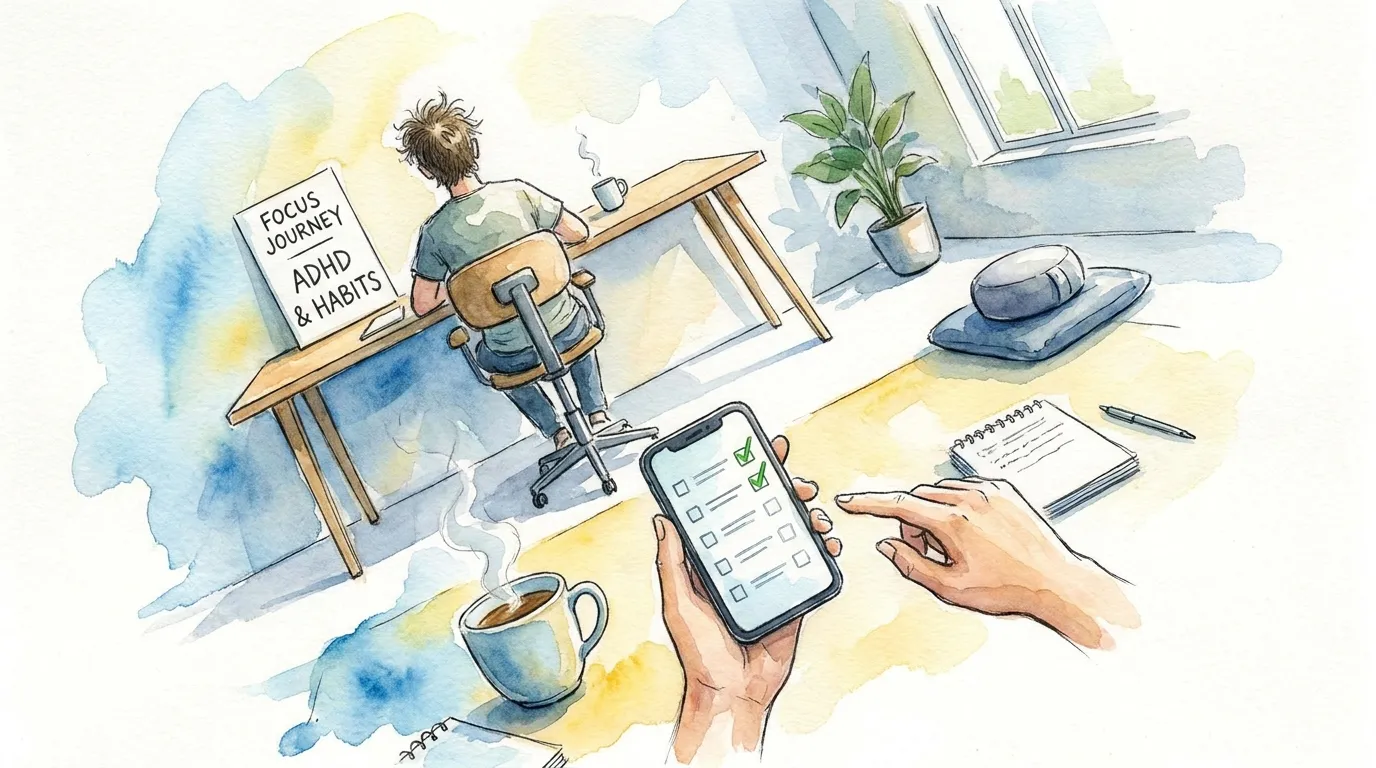
Life dealing with ADHD procrastination can feel especially confusing. You care about something, and still just can’t get started. You may know exactly what needs to happen. You may even really want the outcome. But that first step can feel impossible, so the brain starts looking for relief somewhere else. That relief often manifests through dopamine hits like scrolling, snacking, cleaning some random shelf, or picking an easier task that was never actually urgent in the first place… anything but the original task!
Everyday habit tracking can be so useful in these situations. Instead of relying on memory, motivation, or perfect self-control, it gives the brain a clear path to follow. Stuff starts getting done! In this guide, you’ll will learn why ADHD procrastination happens, what makes some ADHD apps easier to use than others, how to build habits without overload, and how to turn a basic tracker into an anti procrastination app that actually works in real life.
Why ADHD procrastination happens in the first place
ADHD procrastination is not about putting things off because you do not care. ADHD brains often respond better to interest, novelty, challenge, or urgency than to rewards that feel far away and intangible. Even when a task really matters, it can still feel almost impossible to begin, which can be really upsetting – both for them and sometimes for people around them too.
This also helps explain why simple systems can make such a real difference. When a habit is tracked outside your headspace, there’s less need to keep wondering what comes next or whether it already got done. Even if it only helps a bit, that can ease decision fatigue (and by extension, overall mental load).
| ADHD challenge | How it shows up | Why tracking helps |
|---|---|---|
| Task initiation | You know the task but cannot begin | A tiny daily action creates a clear starting point |
| Working memory | You forget what you planned to do | The app becomes an external reminder |
| Decision fatigue | Too many choices shut you down | A simple checklist cuts extra thinking |
Research from the Attention Deficit Disorder Association suggests habit formation for people with ADHD often takes between three and five months. So instead of asking, ‘Am I motivated enough?’ a habit tracker changes the question to something smaller: ‘Can I do one minute?’ That is often a much easier way to begin. Checking the habit off also gives a small reward, and that often makes it easier for the brain to come back to it tomorrow. That’s usually why these tools help so much when getting started is the hardest part.
What makes ADHD friendly apps actually useful for ADHD procrastination
A lot of productivity tools look powerful and exciting with all their features, but using them can feel draining. That’s especially hard for those who suffer from ADHD procrastination. More features don’t always mean better results. In real use, apps for ADHD often work better when they remove steps and barriers instead of adding more.
The best ADHD apps for adults usually share a few things. Logging habits should be quick and easy to follow. Progress needs to feel clear, and missed days should not be punished so much that one slip turns into a full stop. It also helps when apps sync across devices without any complicated setups, especially for anyone switching between a phone and laptop during the day.
When you’re comparing ADHD apps for adults, these are the questions to ask:
Is it quick to use?
If it takes too many taps, people will probably avoid it. The best apps for ADHD productivity make check-ins feel easy, simple, and almost automatic, so people actually use them.
Can you see progress right away?
Visual feedback almost always helps. Colourful but simple streaks and checkmarks make it easier for your brain to see the effort you’re making, even if that sounds very minimalist.
Is it flexible?
Life gets messy. And an app that lets you jump back in after missing a day, which happens, is usually more helpful than one that treats every break like failure, and honestly, that’s just not needed.
Does it reduce mental clutter?
The best ADHD productivity tools often work like external memory, keeping your plan in view so your brain can use more energy for actually doing the habit instead of trying to remember it.
For a clean option, Everyday fits this ADHD-friendly style with visual streaks, simple daily check-ins, and cross-device support, so checking in works on your phone or computer. If you want a broader view of digital support, this guide on Best Apps for Self Improvement: Your Ultimate Guide helps compare tools by goal instead of hype, which makes choosing a little easier.
Additionally, you can explore Best Reclaim.ai Alternatives 2026: Cheaper, Better Habit Apps for options that make ADHD procrastination easier to manage with simpler tracking.
How to build a habit system that you’ll still use next month to reduce ADHD procrastination
One common mistake is trying to fix your whole life in a single weekend, which can feel productive at first. But that usually backfires. For ADHD brains, one or two habits at a time work much better, especially when those habits are tiny. And yes, we really do mean tiny! These are called ‘mini habits’, and the science supports their effectiveness. We wrote more about mini habits here.
Start with a habit that feels almost too easy:
Pick a tiny action
Think “open planner,” “take medicine,” “stretch for two minutes,” or maybe “drink water after brushing your teeth”, just simple stuff, really. Tiny habits can often make things feel a little easier, in most cases.
Attach it to an existing cue
This is habit psychology in action, and it’s pretty simple. A cue could be waking up on time, making coffee, sitting at your desk, or shutting your laptop at night. It’s simple, everyday stuff, and good habit loops can make the next step feel obvious.
Track participation, not perfection
If your habit is ‘write for 20 minutes,’ a safe, low-energy version could just be ‘write one sentence’ (and that’s okay). It still counts. You showed up, and that often matters more than chasing an all-or-nothing streak, which can backfire.
Keep the board visible
The best apps for self improvement usually keep today’s tasks right in front of you, often on the first screen. You don’t want to be looking through menus, and you don’t have to handle a lot of setup every morning. That makes it easier for ADHD brains to just open the app and get started right away.
If you’re looking for a practical place to start researching how to put all of this into practice, this article on Habit Formation for Beginners: A 7-Day Challenge That Works! is a useful next step. There’s also more on cues and routines here: Habit Loops Explained: How To Make Goal Tracking More Effective.
Using habit tracking as an anti procrastination app for ADHD procrastination
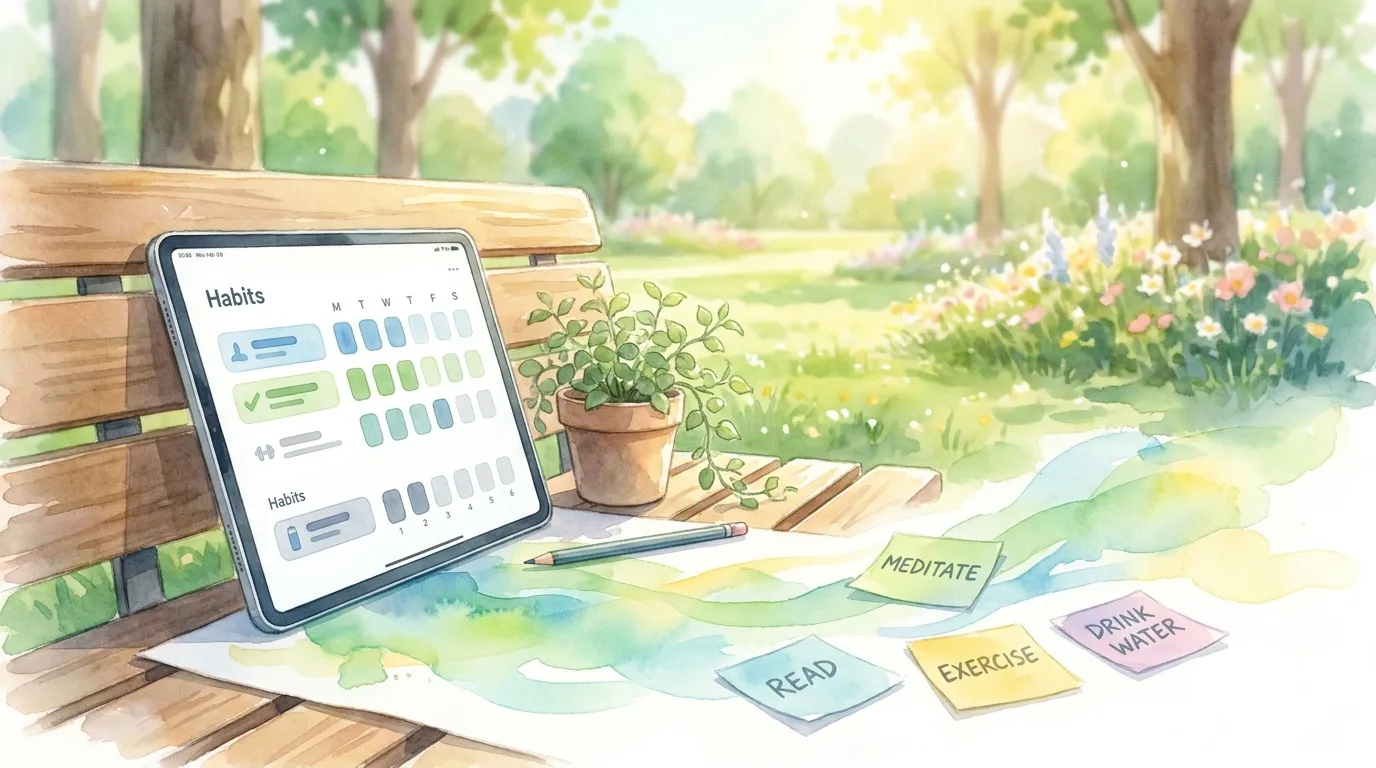
A lot of people get stuck here: they use a tracker like a scoreboard. Then one ‘bad’ day turns into guilt, and that guilt leads to avoidance. A better way to use it is as an anti procrastination app.
So the goal is not really “finish everything.” It is “start quickly.” When someone logs a habit like “start report for 2 minutes” or “open class notes,” they train their brain to get past the hardest part: starting.
A student might track “open study doc after dinner.” A remote worker could track “review top tasks at 9 a.m.” Someone focused on wellness may simply track “walk for 5 minutes after lunch” or another small step that feels easy to repeat, nothing extreme. These are not huge actions, but they often help create momentum.
Maybe the best part is the quick feedback. Even on low ADHD energy days, tracking shows clear proof that someone showed up. Over time, that can often reduce emotional resistance. If an app makes starting feel smaller and safer, then it is doing something truly useful.
A simple rule can help here: miss once if needed, but try not to miss twice in a row. That usually keeps one rough day from turning into a lost month, which is probably the main outcome to avoid.
You can also read How to Harness Your ADHD Superpowers with Habit Tracking for deeper insight into how habit tracking connects with ADHD procrastination recovery.
Common mistakes that make habit tracking harder for ADHD procrastination
Even the best apps for ADHD can still fall short when the setup asks too much from you. Usually, the trouble starts when things get too big or strict, or just a bit too vague.
Tracking too many habits
Starting with ten habits means they all fight for your attention. It probably helps to begin with one or two instead. You’ll have more focus, and it’s easier to stick with, I think.
Making habits too big
‘Get healthy’ is really hard to track. But ‘walk for 5 minutes’ is easy to do. Specific habits often work better.
Treating missed days like failure
A flexible system is shown to last longer. Missing one day doesn’t erase your progress! It just means you’re human, and that’s really okay.
Picking the wrong time of day
If a habit keeps falling apart at night, try doing it earlier; it’s pretty simple, honestly. Good systems should fit your real energy patterns, not the version of you you hope shows up later.
Using an app that creates friction
Some ADHD-friendly apps look nice, but all those settings can start to feel like a lot really fast. Just too much.
It usually helps to pick tools that let you get started quickly and keep going without getting stuck setting things up. That’s often why simple habit trackers feel better than big productivity dashboards, probably because they’re easier to actually use.
A simple setup you can try this week
If daily habit tracking is going to stick, the setup usually needs to stay boring and easy. Start with one habit for the morning and one for work or study. If it helps, add one for health too. Then make each habit smaller until it still feels realistic, even on your busiest day.
Example setup:
- Morning: open planner
- Work: start hardest task for 2 minutes
- Health: stretch for 3 minutes
- Night: brush your teeth
The helpful part is adding a cue to each habit. Open your planner after coffee. Start the hard task right after opening your laptop. Stretch after brushing your teeth at night. You end up with a clear chain of actions, so there is usually less thinking involved.
It also helps when the tool works on both phone and computer. And after a missed day, it should make it easy to get back on track without shame.
This is why streak-based systems work really well for tackling the ADHD procrastination beast. The goal isn’t perfection, but rather momentum. An ADHD-friendly app like Everyday focuses on one clear board, easy-to-see streaks, and logging that takes seconds. That simplicity really helps when attention and mental energy are running thin.
Questions and Answers
Can habit tracking really help ADHD procrastination?
Absolutely! It reduces choices and adds rewards, which helps keep that dopamine flowing. The visual feedback of being able to see your progress also dissolves emotional pushback before it starts.
What is the best ADHD app for tracking habits?
The most ADHD-friendly apps are the ones that incorporate simple design with clear progress. Reminders and flexibility help, and the ability to be flexible keeps you on track without the guilt. Everyday’s habit tracking app is built with exactly this in mind!
What if I miss days when habit tracking?
Missing days happens to everyone, and it’s no big deal! Brush away the guilt and get straight back into it. Just try not to let two consecutive missed days stack up!
Are habit trackers better than regular to-do lists for ADHD brains?
Yes and no – they’re not the same thing! To-do lists are useful for one-time tasks, but habit trackers are better for building long-term routines.
Make your system easy enough to repeat for ADHD procrastination recovery
The main point here is pretty simple: ADHD procrastination usually gets worse when a system depends on perfect focus, perfect energy, or perfect timing, which honestly does not happen very often. It usually gets better when the tools cut down choices, make progress easy to notice, and lower the effort needed to get started.
That is why everyday habit tracking can help so much. It takes a vague goal and turns it into something you can actually return to and repeat. So instead of trying to reset your whole life, start with one habit that is almost laughably light, you’ll see that starting small works better. One helpful approach is choosing a habit that you already do most days. Note it down, mark it off, and over time, a strong habit will form on its own.
If you want progress that lasts, choose tools and routines that work with your brain as it is: small, clear, and forgiving. Download our ADHD friendly app from Everyday now, tick off that first day of habit tracking, and repeat. You’ve got this!