
TL;DR: Busy day? Cut the tiny choices first.
Decision fatigue grows from small repeats: hesitation, procrastination, and mental drag. A habit app sets the action and timing ahead of time, handles reminders, and makes routines easier to keep. Best setup: track 1 to 3 recurring habits, link each to a clear cue, and choose flexible check-ins over rigid streaks. A minimalist app with a small set of high-impact habits comes out on top because it cuts mental load instead of adding more decisions.
Most people don’t burn out because of one huge life choice or because of decision fatigue from one dramatic moment. It usually happens through fifty small decisions made before lunch.
What should come first? A workout now or later? Did you drink enough water today? Do you journal tonight, or just leave it? Each one seems small by itself, but they add up and start to wear on you. That is where decision fatigue often starts to show. It doesn’t always look dramatic, either. A lot of the time, it looks like hesitation, procrastination, or that strange feeling of being tired before the most important part of the day has even really started, which is frustrating. In most cases, it’s less about one major crisis and more about a steady buildup of small choices.
A habit app can help with that. Not because it somehow manufactures discipline, and not because all the research says decision fatigue works the exact same way for everyone. The research is less clear-cut than that. A solid habit app does something simpler and, honestly, often more helpful. It cuts down on small repeated decisions, makes routines feel automatic, and gets reminders out of your head and into a system, which tends to help more than people expect. So you’re not making the same choice every time, you’re following a setup you already made.
This guide looks at what decision fatigue actually is, why recurring habits can be such a practical fix, which features matter in a routine app, and how to build a system that feels lighter instead of more controlling. That’s probably the part that matters most here: fewer decisions, clearer routines, and reminders that no longer have to be tracked mentally.
Why repeated small decisions wear you down
Psychologist Susan Albers puts it simply:
Decision fatigue is the mental exhaustion that we experience from making many decisions in one day.
That definition probably feels familiar right away, because decision fatigue is usually pretty ordinary. It can show up when someone picks breakfast, chooses what to work on, decides whether to begin, then has to make those same sorts of choices again after an interruption and later on, which is basically how a lot of days unfold. It really is everyday stuff.
What’s interesting about the research is that it doesn’t back the too-simple idea that every decision wears a person down in the same way. A 2025 systematic review found that 58 of 130 quantitative tests, or 45%, supported a decision-fatigue effect, while the rest were non-significant or inconclusive (Health Psychology Review). So yes, decision fatigue is real, but a lot seems to hinge on context. In most cases, it’s not as simple as saying every single choice wears a person down equally.
There’s also strong real-world evidence that repeated decisions can shape behavior under load. A 2024 study covering 262,456 encounters involving 2,909 general practitioners found the odds of prescribing antibiotics increased by 8.7% for every 15 additional patient encounters in a workday (PubMed). In other settings, though, the effects look less clear and often less consistent. Not always dramatic.
In everyday life, that mental strain usually feels more like friction than outright failure. Someone might hesitate, put things off, or keep re-deciding minor things instead of just moving on. That’s often how it shows up.

How a habit app cuts decision fatigue at the source
The biggest benefit of habit tracking isn’t just accountability. A big part of it’s deciding important things ahead of time.
If someone decides to stretch after coffee, plan the day at 9 a.m., and read for ten minutes before bed, then sticks with it, those questions usually stop coming up every day. The app works like a place to offload that stuff, and that’s genuinely useful. It holds the plan in one place, shows what comes next, and lets you see whether the habit already happened.
That matters because repeated deliberation can get expensive over time. As social psychologist Roy F. Baumeister explained, “People can make an impulsive decision, or they can really think things through carefully. It’s the latter that piles up into decision fatigue.” (Discover Magazine)
A good habit app reduces that pileup in a few practical ways:
- It pre-sets the action. There’s no need to stop and ask what to do next.
- It pre-sets the timing. The habit doesn’t have to be renegotiated every day.
- It externalizes memory. There’s less need to keep checking whether it already got done.
- It lowers activation energy. In most cases, one tap feels easier than planning again from scratch.
- It makes progress visible. A streak or pattern can make things feel more obvious and a little easier to handle.
Simple tools often win for the same reason. When an app is packed with extra dashboards, too many choices, or lots of setup decisions, it can create the same kind of mental load it was supposed to remove. That’s not very helpful. It’s probably one reason minimalist options like Everyday often feel more sustainable for people who want consistency without all the extra noise.
For a deeper behavior-design angle on this, it’s covered here: Behavioral Psychology for Better Time Management
The best habit app setup for a lighter day
A habit app usually only cuts decision fatigue when the setup gives you fewer choices, not more. That’s where a lot of people get stuck, and it often happens fast. They download an app, add twelve goals, change every setting, miss a few days, and by midweek they can end up feeling even more mentally cluttered.
A better setup is simpler. Much simpler, and honestly that’s usually the whole point.
Start with one to three recurring habits
Choose habits that cut down on those little everyday arguments, the ones that really get old. Good options might be:
- drinking water after waking up
- reviewing your top task before you open email
- taking a short walk after lunch
- setting a bedtime shutdown routine
These habits often work well because they already happen every day and usually don’t need much creativity, which is probably the point. That simplicity tends to make them really good candidates for automation.
Attach each habit to a stable cue
Vague plans like “exercise more” or “be healthier” are easy to ignore, so clear cues usually work better:
- after brushing my teeth
- when I open my laptop
- after lunch
- before I get into bed
This is one of those situations where habit apps and routine design often work really well together. It’s pretty simple: the app can remind you, and the cue gives the action a clear place in your day, which likely makes it easier to repeat in real life.
Choose flexibility over punishment
A rigid streak can push some people to keep going. But after one miss, it can also kick off a new spiral: “Did I ruin everything? Should I restart? Does this even count?” That emotional cost usually adds up fast, and honestly, it’s a lot.
A looser schedule and less strict tracking can take some of that pressure off. That’s part of why a lot of newer habit tools stick to simple check-ins and softer reminders, so there’s room to be inconsistent instead of falling into all-or-nothing thinking. Routines have to work in real life, not just on ideal days, and that choice often matters most when things get busy or messy.
What this looks like in real life
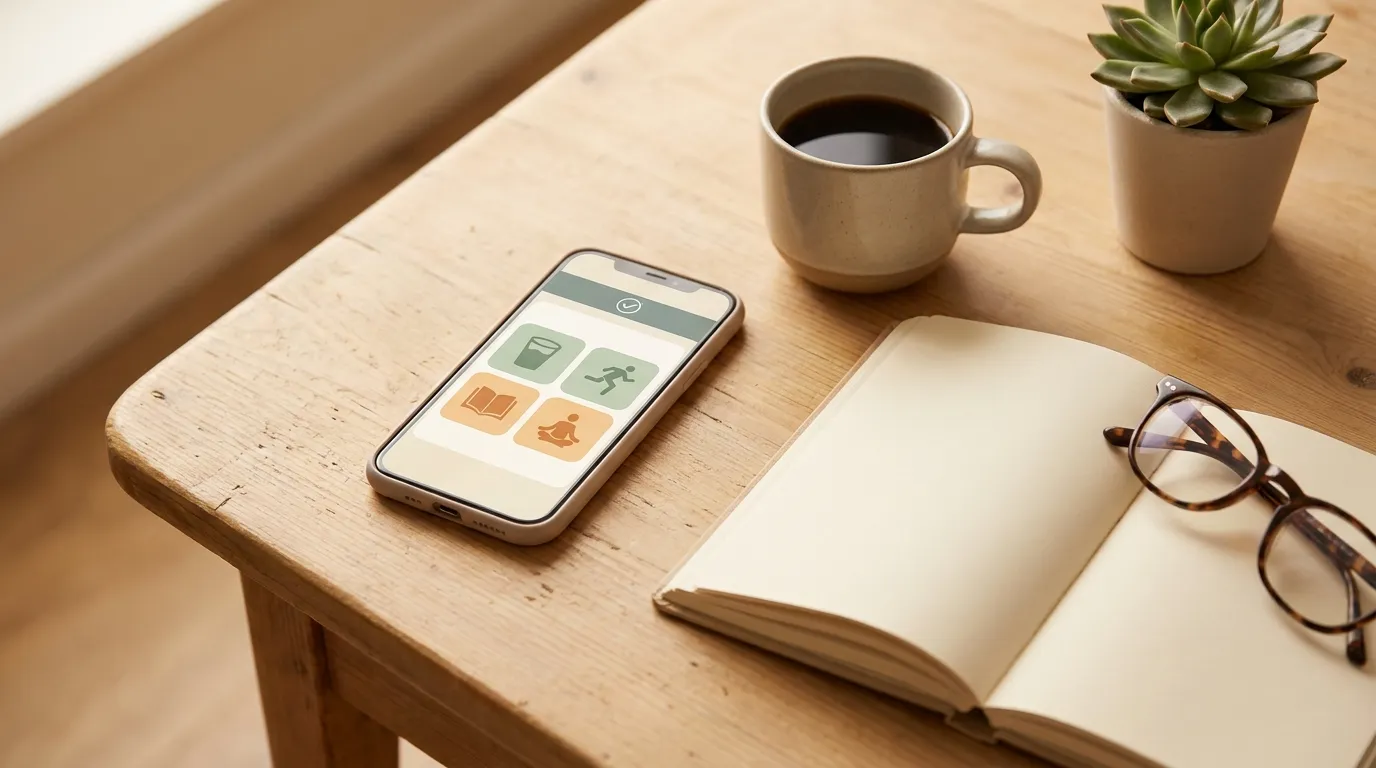
Think of someone whose mornings are usually a bit messy. They get up and immediately have to decide things: shower first or check email, coffee now or later, what needs attention first, did I already take my vitamins? Each choice is small on its own, but piled together, they can create more friction than you’d expect.
Now imagine that same person using a small set of tracked daily habits:
- Drink water after getting out of bed
- Review one priority before opening messages
- Do a two-minute evening reset before bed
- Keep the setup simple enough to follow without thinking too hard about it
There’s nothing dramatic here, and that’s really the point. The app isn’t meant to change your life in some huge cinematic way, and honestly, that would be a lot to expect. It’s there to quietly cut down how many repeated decisions come up every day.
Consumer survey data points in a similar direction. In Samsung UK’s 2025 Daily Decisions Census, 55% of surveyed adults said small repeated choices caused the most stress, and respondents reported making an average of 80 decisions per day (Samsung UK). Those numbers come from a survey, not some universal rule. But they line up with something a lot of people notice in daily life.
Common setup mistakes
A few mistakes to watch out for:
- tracking too many habits at once
- choosing vague habits without a clear cue
- using an app that feels busier than the routine itself
- checking stats all the time instead of simply doing the habit
- treating one missed day like everything has been reset
If missed days tend to knock things off track, Habit Forming Myths: What Science Really Says can help set expectations in a healthier way, which usually makes it easier to keep going.
Why simplicity matters more than extra features
One often-missed part of decision fatigue is that the tool itself can either make things easier or, honestly, make them worse.
Neuroscientist Dr. Jack Lewis summed it up well:
Decision fatigue, the mental exhaustion caused by making too many minor decisions, can quietly erode patience and focus throughout the day.
If a habit app needs too much setup, too much analysis, or constant tweaking, it turns into another run of small decisions. That’s usually where clean design helps most. Faster check-ins, simple boards, recurring reminders, and cross-device sync cut down friction, which is probably the whole point. They’re small details, but they often add up over time.
The same pattern shows up in the modern habit app market. The global habit tracking apps market was valued at USD 1.94 billion in 2025 and is expected to keep growing, and product development is putting more focus on simpler, more adaptive support (Straits Research).
If you move between phone and desktop during the day, a cross-platform habit tracker keeps your routine in view on both screens without dragging you into a complicated productivity system. It’s simple, but still useful, especially if you switch devices a lot.
How to choose habits that save the most mental energy
Some habits make decision fatigue easier to handle than others. Usually, the biggest help comes from the ones that head off those small, repeated second-guesses before they pile up over the course of the day.
A good place to start is with habits that automatically answer questions like these, because that’s often where the real relief comes from:
- What do I do first in the morning?
- How do I restart after lunch?
- What tells me the workday is over?
- What’s my lowest-effort healthy choice?
- What’s one tiny thing I can do before a bad habit takes over?
That’s part of why habits like morning anchors, work-start rituals, meal-prep routines, hydration, stretching, reading, and evening shutdown routines work so well. They’re simple, sure, but they do their job at very specific times. Often, they cut down on choices at the same pressure points every day: the first 10 minutes after waking up, the move back to your desk after lunch, or that tired stretch when snacking or working too late starts to feel automatic.
If you want to work on good habits while also making change on the other side, Break Bad Habits: Strategies for Change You Can Do Today complements this approach well.
A practical app for this should make logging fast, let habits repeat on your schedule, and keep the layout clear without feeling like a lot. Everyday fits that use case well because it sticks to simple daily tracking instead of trying to turn into a full life-management dashboard. For a lot of people, that lower mental load is really the main feature.

Frequently Asked Questions
Can a habit app really reduce decision fatigue?
Yes, it can help because you’re not making the same small decisions over and over. Rather than figuring out each time how or when to do something routine, you stick with a setup that’s already there. It won’t change everything, but it can take some pressure off and make day-to-day life feel a bit easier.
What kinds of habits are best for reducing decision fatigue?
The habits that stick tend to be simple, happen often, and fit into parts of the day that already repeat. That can be drinking water, stretching, deciding on the first task, meal prep, short walks, and a quick evening reset. Small habits that help you stop asking “should I do this now?” over and over.
Can too much habit tracking make mental overload worse?
Absolutely. If you try to track too many habits, read too much into the data, or use an app that feels cluttered, it can end up adding stress instead of easing it. It’s a lot to deal with, so keep the setup small, clear, and easy to use.
Is a streak the most important feature in a habit app?
Not always. It helps to see progress, but strict streaks can turn on you when one missed day suddenly makes the whole thing feel wrecked. People usually stick with flexible systems longer because there’s less pressure, and they don’t have to keep deciding the same thing every day.
What should I look for in a habit app if I feel mentally overloaded?
Look for a tool with a simple interface, fast check-ins, recurring reminders, and scheduling you can adjust as needed. Everyday is one example of a tool like this. It keeps tracking visual and easy to follow, so it’s simpler to stay consistent without adding extra noise.
Does decision fatigue affect everyone in the same way?
No. The research doesn’t point all one way, and sleep, stress, workload, and the situation you’re in can all make a difference. According to Susan Albers at Cleveland Clinic, not getting enough sleep is a big part of it. Usually, the best results come from combining better routines with more rest.
Put fewer decisions between you and action
The real promise of a good habit app shouldn’t be perfect discipline. It should be relief.
If you want to try this, keep it small at first. Pick one habit that keeps you from having to make the same choice every day. Give it a clear cue and track it in a simple system. Then repetition can do some of the work that motivation often can’t. Usually, the next step will feel more natural, or at least a little easier to start.
That’s the overarching point of a habit app here: it helps the day run more smoothly and makes repeated choices feel like a steady, calming affair. It’s also part of why the founder of Everyday built the app for himself in the first place! Give it a go and let us know how you get on? :)